
How does the Fast & Furious franchise innovate under constraints?
After watching Fast & Furious, I suddenly thought of an article by Wan Weigang I had recently read, called “Human Labor with Differences.” One section was about how people innovate under constraints, and I felt it was a perfect lens for understanding the design of the action sequences in Fast & Furious.

How does innovation under constraints have anything to do with Fast & Furious?
Let me tell you a story:
Wan Weigang says in his article that, in ordinary people’s minds, we always link innovation with freedom.
As if innovation has to mean kicking everything existing to the ground, breaking free of all constraints, and going wild. The wilder and more unrestrained, the more likely it is to produce something new.
But this idea may very well be wrong.
Limited conditions, unlimited creativity
A lot of the time, restrictions—and having less freedom—can actually stimulate more innovation.
For example, set a budget limit first, then ask a designer to design a product. What they come up with is often better than what they produce when the budget is generous and they can spend freely. Ask students to imagine themselves in a resource-starved environment before solving a problem, and the resulting ideas are often better.
This point from Wan Weigang’s article also fits pretty well with what I’ve observed in everyday life.
Take filmmaking. The most creative films are often small- and medium-sized productions made with insufficient investment, while big A-list productions made by throwing money at them are often creatively mediocre.

Or take coding. A programmer friend once sighed to me:
Back when computers had only 8k of memory, programmers had to make their programs run on extremely poor hardware while still implementing all kinds of functions. The ingenuity with which so much code used system resources was breathtaking. Program code back then was a work of art.
Today, when mainstream memory configurations are measured in G, some code has become a little brute-force. Those ingenious tricks for squeezing every last bit out of system resources are gone for good.
Old things, new functions
Limited conditions can actually produce more creativity. The principle behind this is:
Most of the time, creativity isn’t about inventing something completely new. Creating something from nothing is too hard, and opportunities like that are vanishingly rare.
More often, creativity means developing a new function for an old thing.
Manufacturers added cameras to phones, originally just for taking pictures. Then WeChat used them to scan QR codes. That is already a perfectly good idea—you don’t need to reinvent the camera.

And when resources are limited, doesn’t that practically force us down this path?
If all you have is a pile of junk metal, then you have no choice but to rack your brain and develop new functions for that junk metal. At a time like that, how could the result not be creative?
Fast & Furious: half realism, half romance
That brings us to the Fast & Furious franchise. In my view, starting with the fifth installment, Fast & Furious took exactly this path of innovating under constraints.
How should I put it? According to a fairly common classification, action films roughly split into two schools: realism and romance. Of course, I’m using “action film” broadly here: hand-to-hand combat, gunfights, car chases, even missiles fired at each other—all of it counts.
And the eight Fast & Furious films split neatly down the middle: 1-4 are realism, while 5-8 are romance. In between, the style undergoes a major transformation.
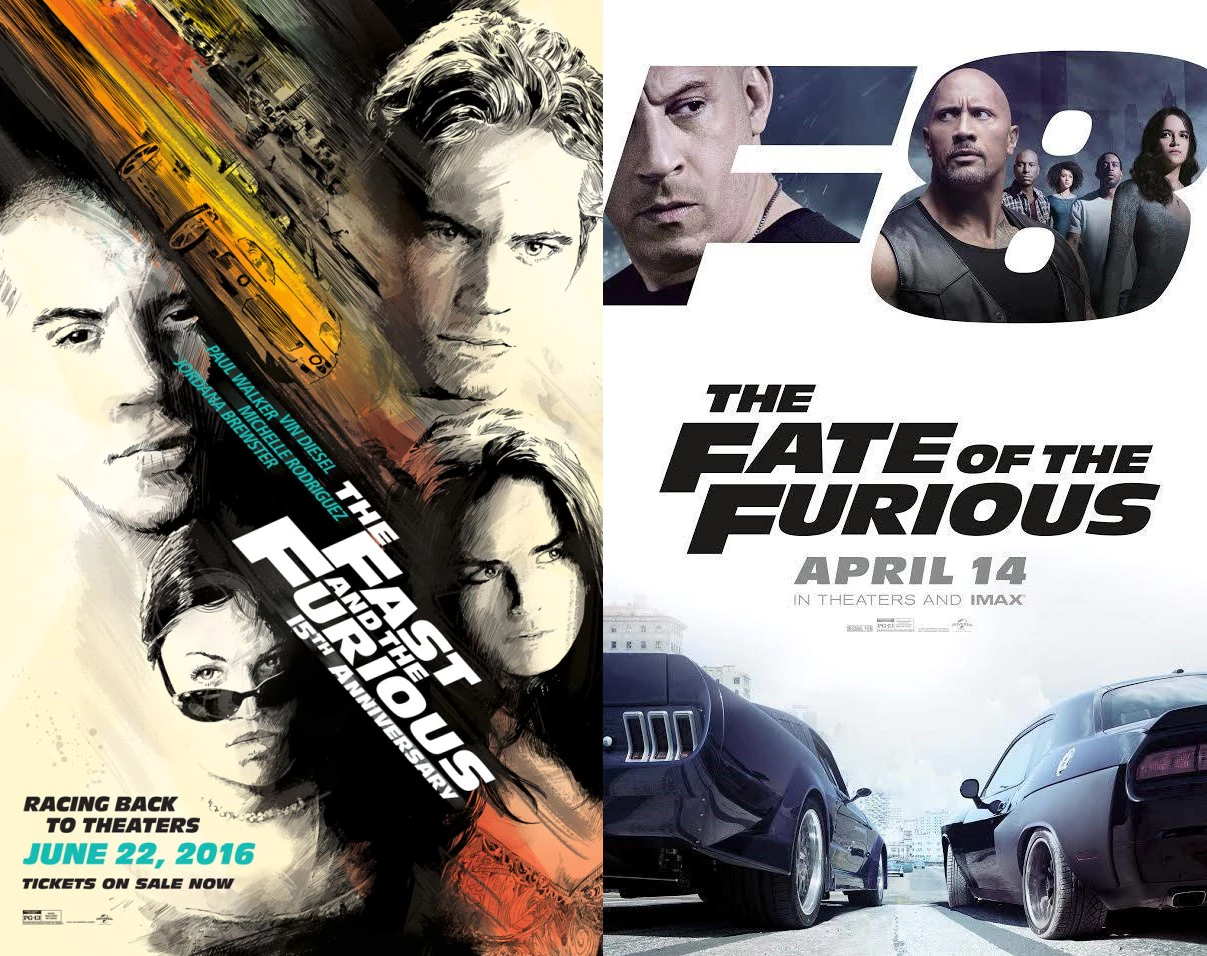
In the realistic first four films, the cars simply race at high speed like good, honest cars. The most exaggerated thing they do is launch off a ramp and stay airborne for 3 seconds. But starting with the fifth film, they go to heaven and earth, do everything imaginable, and become more and more outrageous.
Why did this happen? The filmmakers were probably driven to it by desperation.
Because when you design action scenes around cars, taking the realistic route is actually a bit thankless. There are only so many realistic things cars can do.
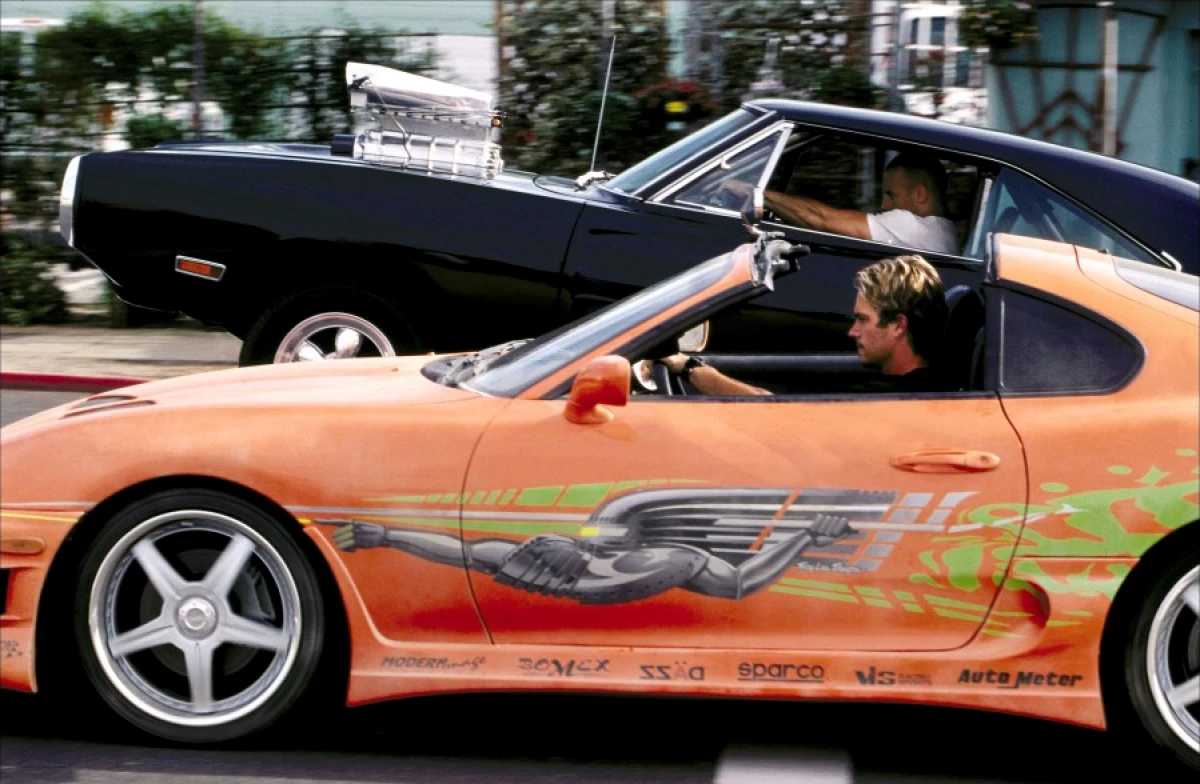
After watching people race cars two or three times, everyone gets bored. So what next?
If the films went deep into car culture or spent a lot of time talking about modifications, they would probably become more and more niche, until only car reviewers were having fun. That would be a dead end nine times out of ten.
So what do you do? Just change the style—take the romantic route and get creative.
The constrained innovation of Fast & Furious
But when the writers and directors tried to get creative on the platform of Fast & Furious, they ran straight into one constraint—cars.
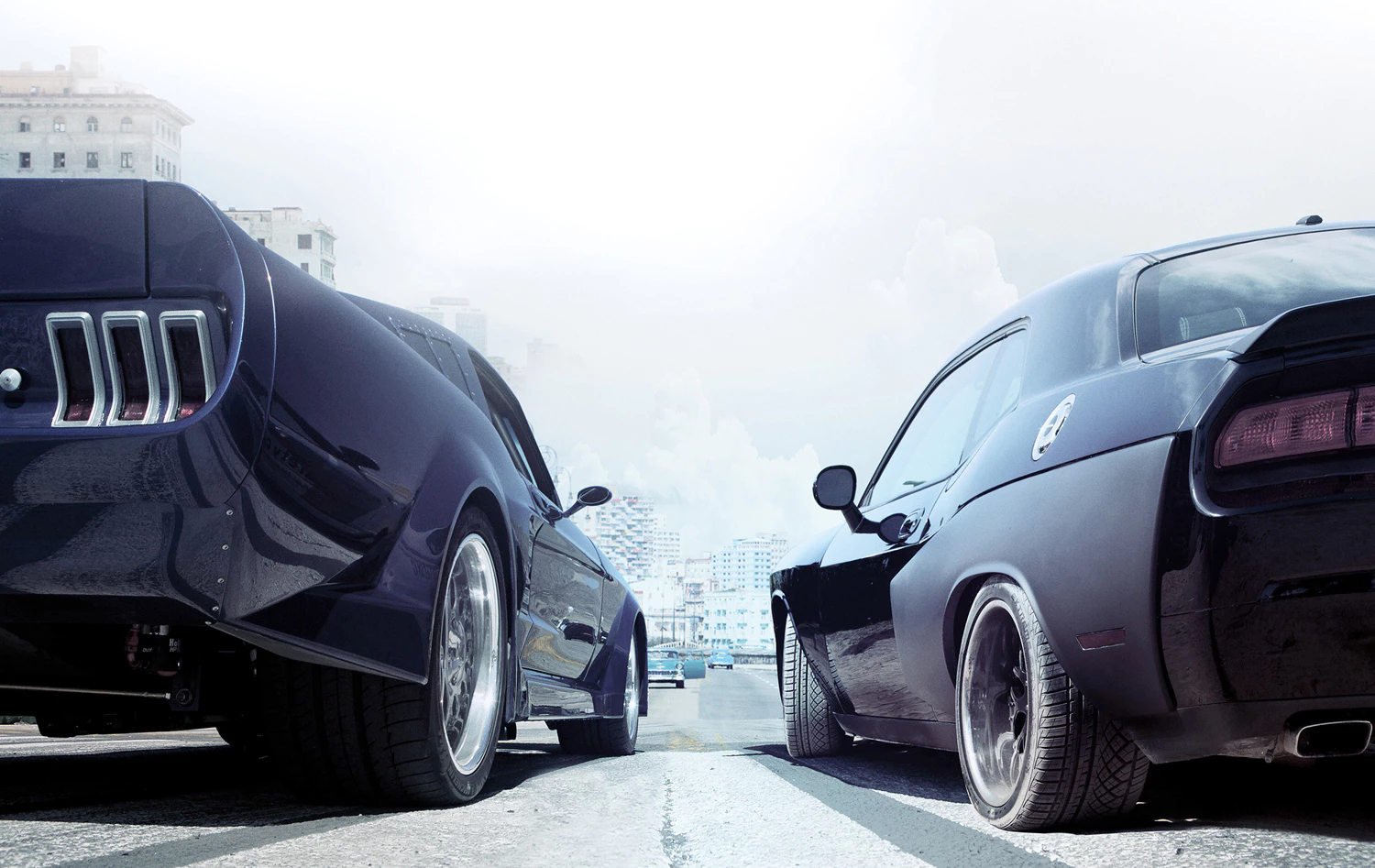
The Fast & Furious franchise can throw away almost anything. The lead can be replaced, a supporting character can die. But the one element it absolutely cannot lose is the car. That is its reason for existing. Whatever you do, you have to do it around cars.
Isn’t that exactly the “innovation under constraints” formula I mentioned earlier?
The cars can’t be discarded—that’s the constraint. But old things have to be given new functions.
So starting with the fifth film, the writers and directors had to rack their brains to make cars do all kinds of spectacular things. When designing action scenes, they really had only one principle: make cars do things cars were never supposed to do.
Can a car ram a tank?
Of course not.
Then let’s make it ram a tank anyway.
Can a car drive through a skyscraper?
Of course not.
Then let’s make it crash into a building anyway.
Can a car fight a nuclear submarine?
Of course not.
Then let’s make it ram a nuclear submarine anyway!

And that’s how the cars in the Fast & Furious franchise started out as Bruce Lee, gradually became more like Wong Fei-hung, and eventually trained themselves into Asia the Invincible.
The hammer pretending to be a spatula
When many people see the increasingly unhinged scenes in Fast & Furious, they immediately think of our anti-Japanese fantasy dramas—isn’t using a car to ram a nuclear submarine basically the same as using a grenade to shoot down a plane in one of those dramas?
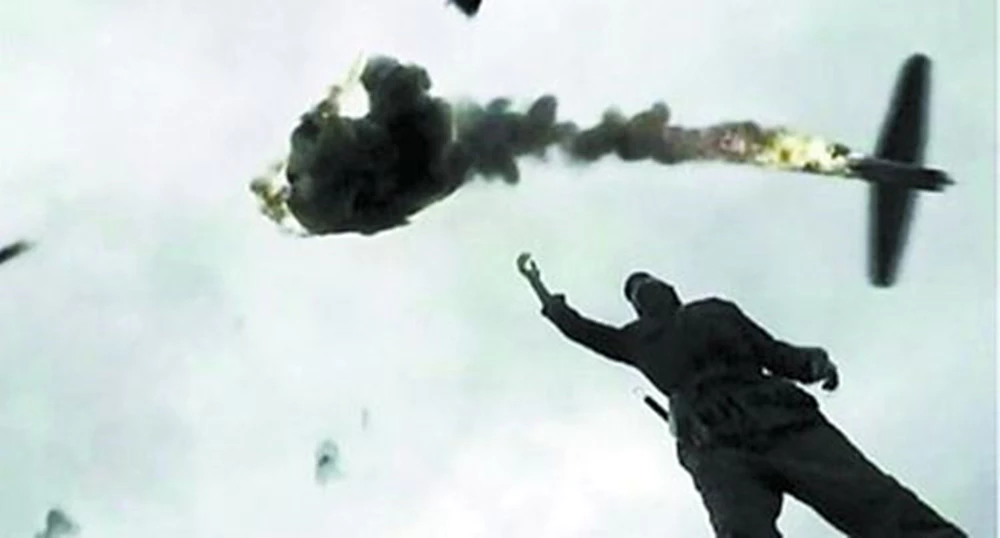
I think it’s actually different.
To put it another way, an anti-Japanese fantasy drama is like holding a hammer, tapping a nail in the wall, and—wow—the whole building collapses.
But Fast & Furious is like the writers and directors clearly holding a hammer, yet insisting on using it as a spatula to stir-fry—and somehow actually producing a plate of yu xiang shredded pork.
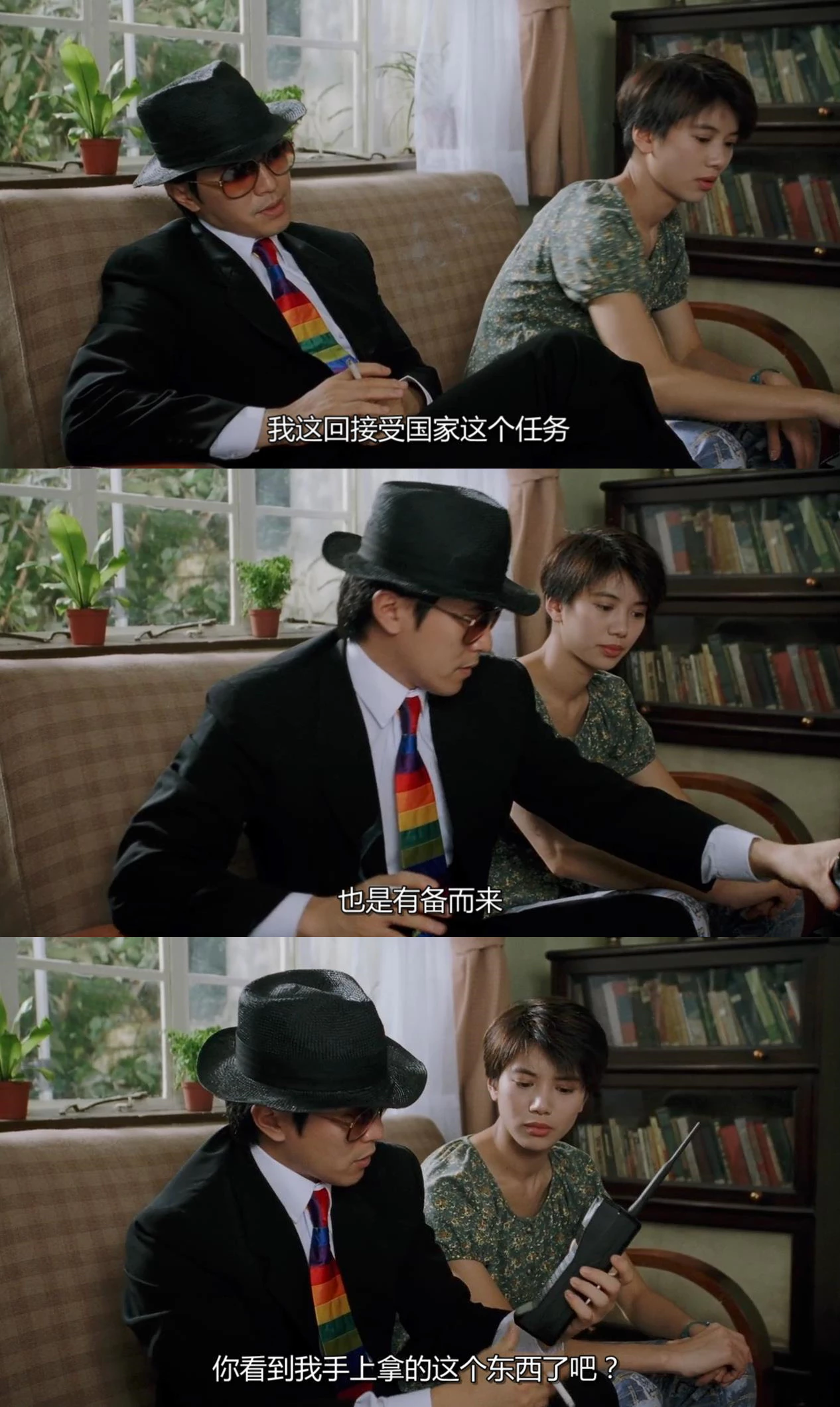

The starch sauce on this plate of yu xiang shredded pork may be uneven, and the heat may be a little off, but when I think of the chef’s “performance-art” flair as he cooks with a hammer, I can’t help finding it delightfully perverse.
I can vividly imagine the subtle expression on the chef’s face: a mixture of helplessness, slyness, and self-satisfaction.
So the joy brought by this guilty pleasure makes up for the disappointing flavor of the yu xiang shredded pork.
Flashy tricks and clowning around
This makes me think of another reason constraints can stimulate creativity: for geniuses with creative potential, limited conditions are a challenge.
And geniuses love a challenge.
Tang poetry and Song lyrics have such strict requirements for meter and form. Why have they still attracted so many geniuses throughout history to create under these absurd constraints?
I imagine the mindset behind it is something like this:
“You’ve restricted me this much, and I can still make something spectacular. Just look at how clever I must be!”
In other words, creativity produced under constraints may naturally come with an element of showing off and clowning around—a kind of show-off quality.
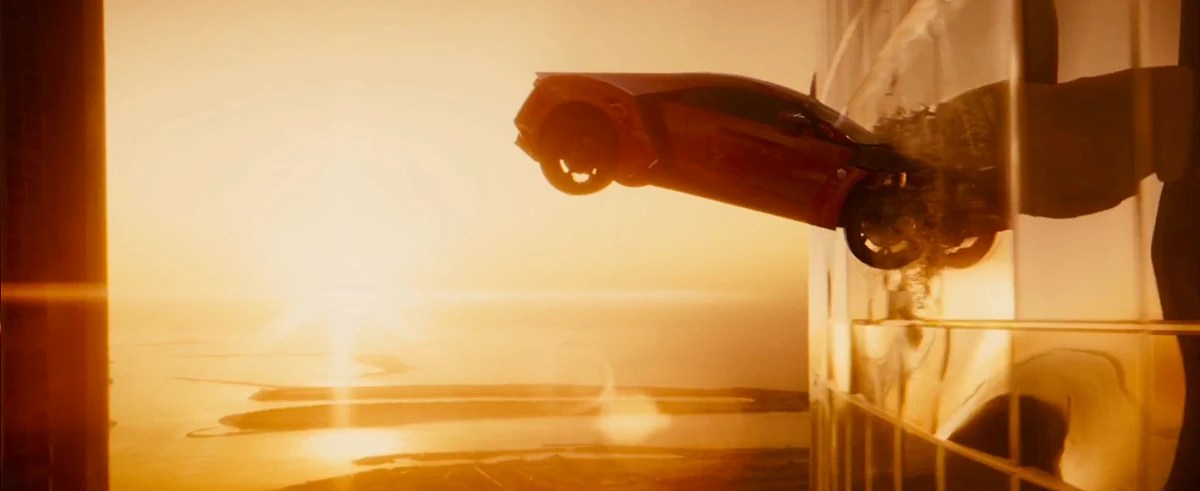
A dance in shackles may not be the most graceful dance, but it is certainly the most show-off one.
So whether or not the final creative result is truly outstanding, I find it fascinating simply to feel the joy radiating from this attitude of showing off and clowning around.
“Isn’t this just playing with cars? Let’s see how many tricks we can come up with! We’ve rammed just about everything on the ground already. Fast & Furious 9, see you in space!”
Eight things mentioned in this article
1. Wan Weigang
Wan Weigang and I have a bit of a connection. His first book and my first book came out from the same publisher, edited by the same editor, one right after the other. His Unexpectedly became a phenomenon, while my The Alluring Illusion bombed. Ha ha.

2. Anti-Japanese fantasy dramas
We’ll do a whole episode sometime about how to make anti-Japanese fantasy dramas properly.
Leave a Reply