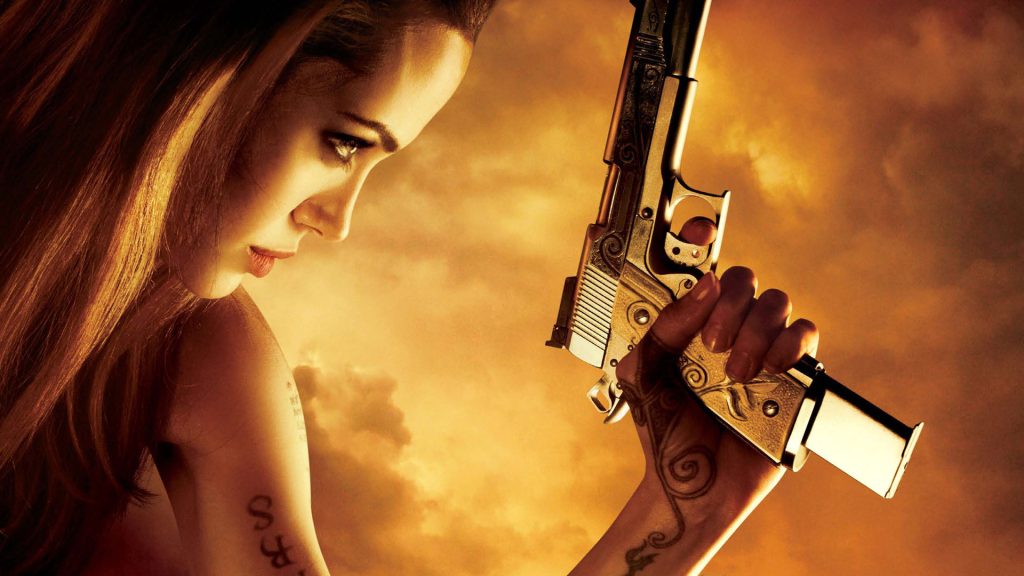
Wanted is a movie about playing with guns—and playing with them hard. It takes the romanticism of gunfights to an almost absurd level.
This Russian director, Timur Bekmambetov, has an unusually twisted visual imagination. If you have seen his Night Watch, you surely have not forgotten those famous scenes: Timur’s warhorse bursting through a city wall, and a sports car drifting along the glass facade of a skyscraper.
Foreign directors usually become timid and cautious when they first arrive in Hollywood. Not this guy. He came in swinging just as arrogantly as he had back home. Angelina Jolie and James McAvoy blowing each other’s heads off in such dazzling style—again and again—was truly sniper work at its most dashing.
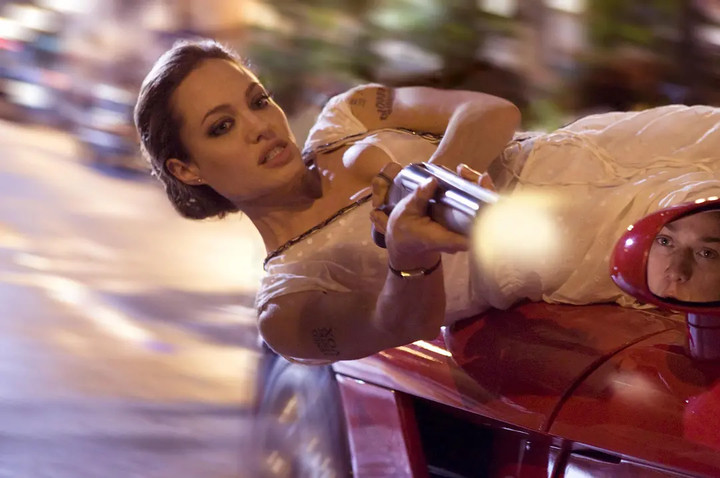
When I was little, I loved gunfight movies. Looking back, most gunfights in Hollywood and Hong Kong films from that era qualify as “extreme romanticism.” The supposedly “unkillable lone hero” would stand there while everything around him was shredded by bullets and showered with sparks, yet he himself remained perfectly fine. Heroes never had to reload, either; sometimes not even a single shell casing fell out of the gun after they fired.
So how did this wonderfully ridiculous romantic tradition of gunfights evolve into the dazzling form it has today?
Let’s work backward and take a look.
Shooter
Wanted opens with an impossibly gorgeous long-distance curved bullet headshot. This shot is practically a “god shot”—who knew sniping could be so romantic?
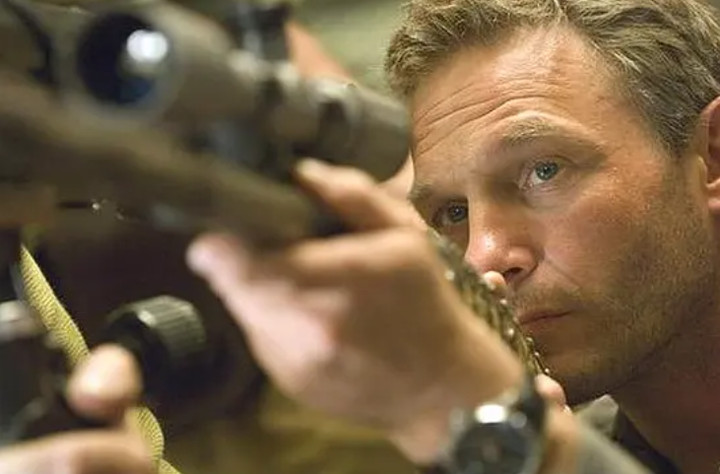
By sharp contrast, there was an earlier movie called Shooter. The film as a whole is nothing special, but its explanation of sniping technique does show the most “realist” side of sniping.
The film’s most realistic treatment of sniping is that it finally faces the fact that “a bullet’s trajectory is not a straight line over long distances”—after traveling far enough, a bullet actually rises slightly before dropping. So in real long-range sniping, the reticle is not aimed directly at the target. The sniper has to calculate in his head how far the reticle should be offset, based on factors such as the distance to the target and the wind speed. Sniping is not merely a “craft”; it may demand more brainpower than hand skill.
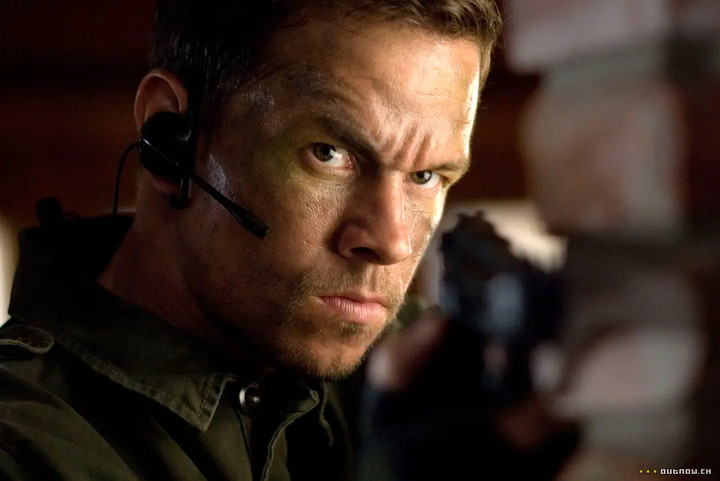
Before Shooter, almost every point-of-view shot depicting a sniper simply put the reticle on the target. That was probably not entirely because directors lacked knowledge of sniping; perhaps they were afraid ordinary viewers would not understand. Rather than spend time explaining, they just aimed the reticle straight at the target and called it “looking accurate enough.”
City Hunter
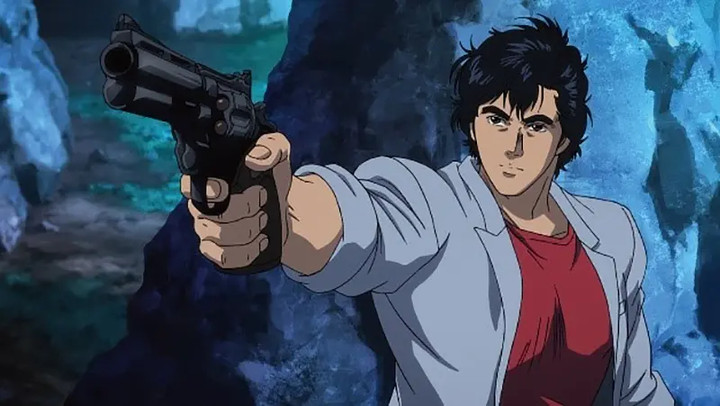
Before seeing the “god shot” in Wanted, the greatest sniper in my mind had always been Ryo Saeba from City Hunter. As a child, I was always bothered by one question: compared with Olympic-level shooting champions, special-forces snipers, and top assassins who are good at sniping, whose marksmanship is actually better?
My guess is that, in overall gun-handling ability, an Olympic champion obviously cannot compete with the latter two; in a real combat showdown, the champion would be killed instantly. But what about pure marksmanship? I still do not have an answer.
City Hunter’s answer is that even if you compare marksmanship alone, an Olympic champion is no match for a professional. Ryo says an Olympic champion is merely the world’s best at the amateur level, while he is the world’s best at the professional level. In City Hunter, Ryo can repeatedly hit an Olympic champion’s rifle barrel from several kilometers away, and even shoot off an opponent’s belt buckle. Amateurs simply cannot hold their own against professionals.
Black Hawk Down
If sniping is the ultimate in “deadly accuracy,” then the AK-47s in bandits’ hands represent the ultimate in “can’t hit a thing.”
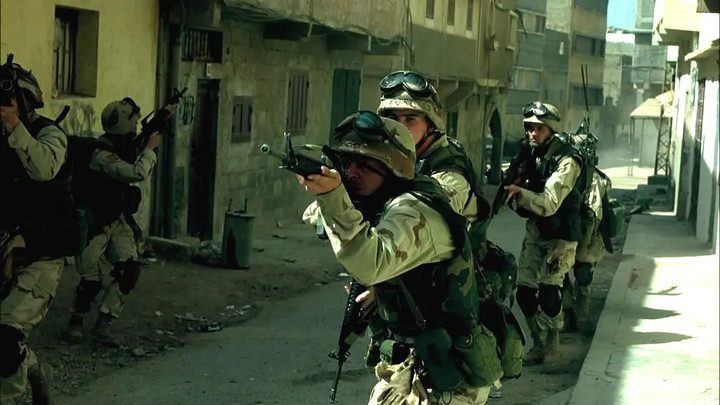
The film that left the deepest impression on me in this regard was Black Hawk Down. Like several earlier realist works of the same kind, it goes all in on the gruesome consequences of being hit by bullets—limbs flying everywhere. But Black Hawk Down also conveys another message: getting hit by a bullet really is awful, but sometimes getting hit is not that easy, especially when the people shooting at you are bandits with wildly erratic AK-47s who do not even like using sights.
There is a scene like this in the film: because the American troops are peacekeepers, they cannot attack first. They have to confirm that they are under attack before they are allowed to defend themselves. And the signal confirming that they are under attack is actually “hearing a bullet fly past your ear”!
What impressed me was that the American soldier who says this amid a storm of bullets does not look particularly nervous, as if there were no danger of one of those bullets hitting him while he was “hearing a bullet fly past his ear.”
There is another scene in which American soldiers later retreat desperately on foot behind an armored vehicle. Some rioters chase them from a short distance away while spraying bullets at them. Yet no soldier is hit and falls down, and nobody panics or dives for cover.
These seemingly irrational images are precisely another rare kind of realism. The two sides in Black Hawk Down’s gunfights are “professionals versus amateurs.” Although the Somali rioters have overwhelming advantages in numbers and firepower, that advantage is canceled out by the huge gap in hit rate. That is why the battle can keep going.
Munich
This kind of realist gunfight in Black Hawk Down only gradually became popular after Steven Spielberg’s Saving Private Ryan pioneered a new look for realistic combat.
Spielberg himself has never tired of it. Even in a thoroughly futuristic sci-fi film like Minority Report, he stuck to the realist philosophy, deliberately making all the action scenes look extremely clumsy.
Later, in Munich, Spielberg pushed this extreme realism about as far as it could go. This time, though, old Steve seems to have taken it a little too far. I suspect most viewers could not recall a single gunfight from Munich afterward.
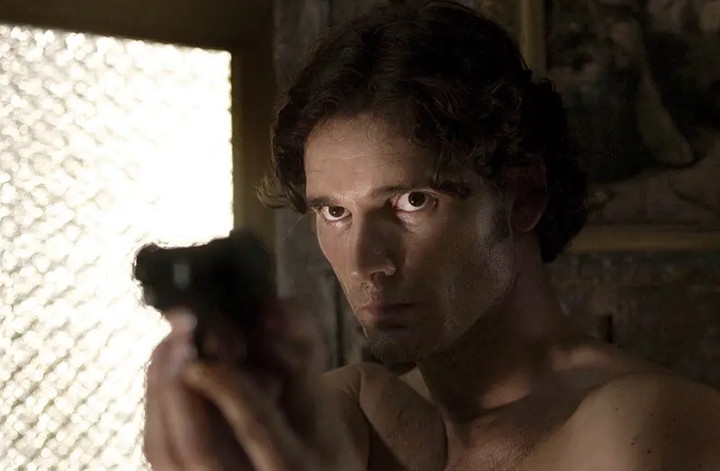
Most of the time, movie gunfights are exciting precisely because they have been romantically exaggerated, while real gunfights are usually incredibly boring. The weapons in war films such as Black Hawk Down and Saving Private Ryan have tremendous firepower; the bloody carnage caused by their enormous destructive force is even more shocking without romantic decoration. But if a street shootout with much lighter firepower is portrayed with the same extreme realism, it is not “exciting” at all.
That is the problem with Munich: guns go off without even a flash, and being shot looks barely different from tripping and falling. What is there to watch? Spielberg brought realist gunfights to an unprecedented height, but later he seems to have gone a little too far down the rabbit hole.
The Art of Bullet-Dodging
In a realist gunfight, if someone across from you opens fire, all you can do is dodge. If you cannot dodge, you are destined for another scene of flying limbs and torn flesh.
The romanticist school does not work that way. In Wanted, besides dodging, bullets can actually be “blocked.” These impossibly dashing sharpshooters control bullet trajectories so precisely that they can use one bullet to knock another bullet out of the air. It is just like the palm duels in wuxia novels: the opponent throws a palm strike, and I throw one back to meet it head-on. They can do this, of course, because Wanted’s sharpshooters have superhuman abilities, raising their movements and reaction times to the level needed to keep up with bullets.
In City Hunter, Ryo can also use one bullet to intercept another, though this obviously does not stand up to scrutiny. After all, even Neo, whose speed reaches bullet level, can only perform one impossibly stylish backward lean to dodge a bullet—what hope does an ordinary human like Ryo have?
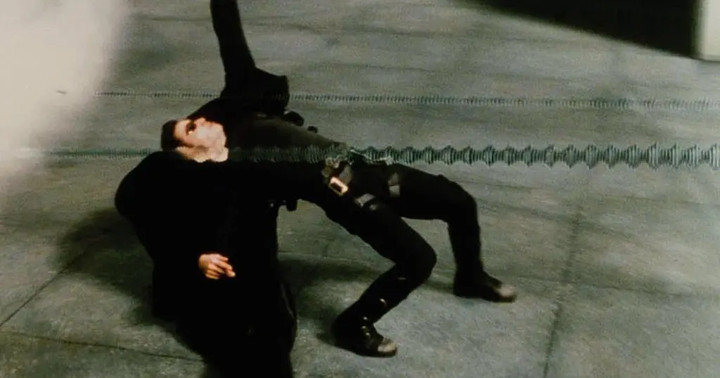
Both are bullet-dodging, but Neo’s elegant backward lean is technically miles behind “gun kata.”
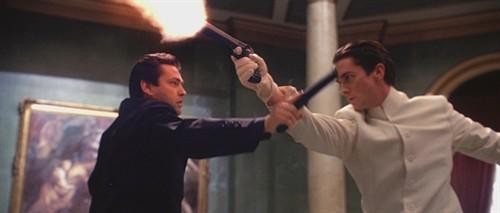
“Gun kata” is a fun invention by American director Kurt Wimmer that combines martial arts with gunfighting.
He used it in both Equilibrium and Ultraviolet. Gun kata is Wimmer’s fictional form of bullet-dodging; its essence is finding a way to keep the opponent’s gun from pointing at you. At long range, it is like the “Linganwei Steps” style of movement in wuxia fiction: by changing your posture and position, you avoid the opponent’s trajectory. Up close, it becomes something like grappling technique, knocking the gun aside so that even if the opponent fires, they still cannot hit you.
Of course, gun kata is romanticist too, and does not stand up to scrutiny. If the opponent’s marksmanship is good enough, gun kata is almost meaningless, at least in a long-range duel. Imagine a long-distance fight in Counter-Strike: if you keep jumping and the other player is a novice, your constant movement may make you harder to hit. But if the opponent is an expert, they can effortlessly blow your head off in midair no matter how much you jump. You would have to twist yourself into knots to dodge the trajectory, while the other shooter only needs to make a tiny adjustment to the muzzle.
Still, I have to admit that although gun kata looks spectacularly, gloriously ridiculous, the concept is extremely amusing.
Gunfights and Martial Arts
Speaking of combining gunfights and martial arts, Star Wars was actually one of the early attempts. Aren’t the Jedi using cold weapons to fight hot weapons?
Of course, the Jedi’s bullet-dodging does not stand up to much scrutiny either. Their movements plainly look about as fast as an ordinary person’s, so how could they possibly stop firearms? At that level, they should have been turned into Swiss cheese in any ordinary gunfight movie. The reason they do so well in Star Wars is probably that the “bullets” from those laser guns travel so slowly you can see them with the naked eye. So it is not that the Jedi are especially impressive; the Empire’s weapons technology is simply rather poor.
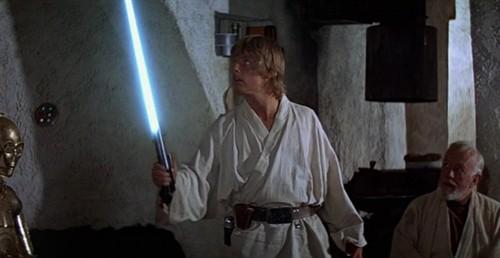
If cold weapons absolutely have to fight hot weapons, then the masters wielding the cold weapons must also move at bullet speed. Compared with Star Wars, the clash between cold and hot weapons in Final Fantasy VII: Advent Children is much more convincing, because the fighters are fast enough.
Tsui Hark and John Woo’s “Double-Gun Standoff”
Back to gun kata.
Actually, Tsui Hark and Hung Yan-yan had already played with the concept of gun kata in Time and Tide, a masterpiece that was severely underrated. The relevant shots are simply too brief, not nearly as flamboyant as Kurt Wimmer’s later treatment, so they seem to have been largely forgotten.
As an aside, I think Hung Yan-yan’s talent as a fight choreographer has always been seriously underrated. The ferocity of the action in Time and Tide is all credited to Tsui Hark’s camera work, and somehow all the credit for Seven Swords went to Lau Kar-leung.
Xiong Xinxin designed a showdown for Time and Tide that feels a lot like the close-quarters fights in Gun Fu that came later. In fact, this sequence is many times sharper than Kurt Wimmer’s fancy-pants flourishes:
Apart from the gunfight above—the precursor to Gun Fu—the scene that left the deepest impression on me in Time and Tide is this one:
Was Tsui Hark shooting a satire of his ‘old friend’ John Woo with this bit? After all, two people pointing guns at each other has always been Woo’s signature move.
In a John Woo movie, the standard progression for two people pointing guns at each other goes like this: they bicker and yak for ages without firing, and once they have nothing left to say, they both fire at exactly the same time as if they had rehearsed it—and somehow neither of them dies.
John Woo’s ‘two-guns-pointed-at-each-other’ set pieces were a ‘mystery I could never solve’ that tormented me for years as a kid. Whenever I watched a Woo movie, I would wonder: how could a scene like this possibly happen? Both people are pointing guns at each other; whoever pulls the trigger first wins, surely. Face to face, it’s nearly impossible for the other guy to see whether your finger is on the trigger, so just pull it. By the time he realizes what’s happening, he’s already gone to heaven. And when the two of you are fighting to the death, how could you possibly point a gun at the other person and not fire?
No wonder some Western viewers think John Woo’s movies are gay. When two people point guns at each other and still somehow refuse to die, they’re obviously flirting.
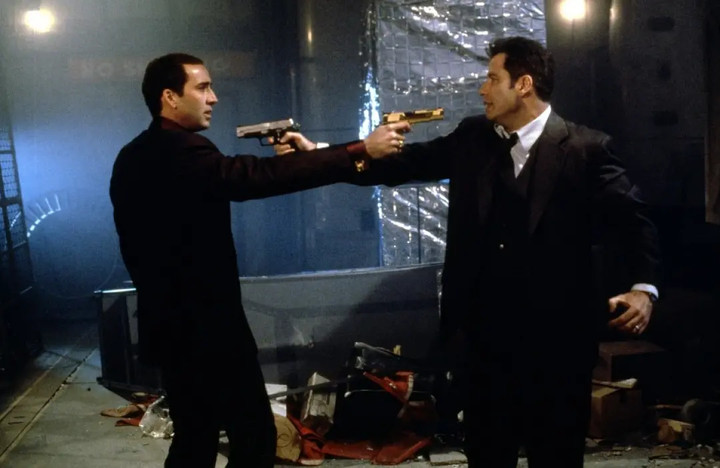
So when I saw that ‘two guns pointed at each other’ scene in Time and Tide back then, I was practically jumping for joy. This is what a scene like that is supposed to look like!
“We’re tied.”
“Tied? You idiot! Guns are for killing people, not for talking!”
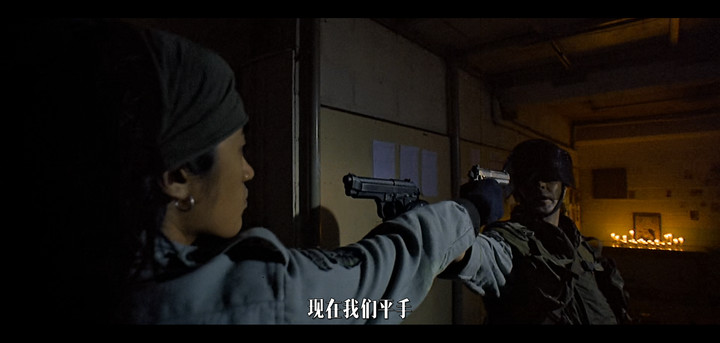
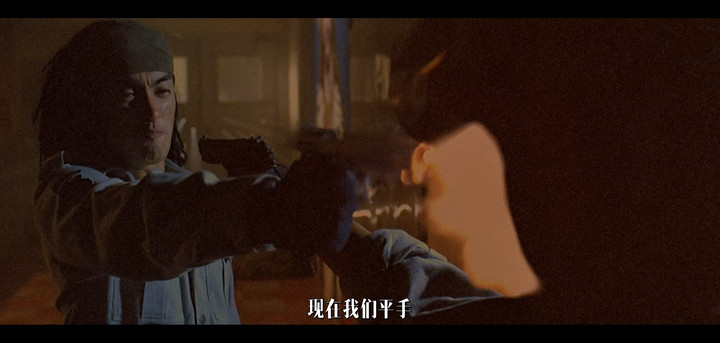
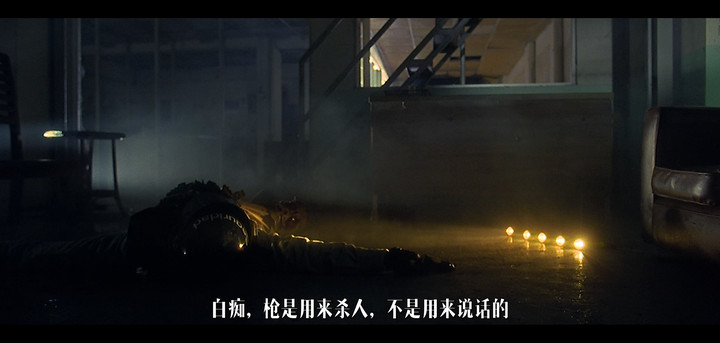
That line was obviously Tsui Hark talking straight to John Woo.
Once you think about the long, tangled history between Tsui Hark and John Woo, this sequence in Time and Tide becomes even more fun to savor.
The original gunplay classic A Better Tomorrow was something Tsui Hark and John Woo cooked up together, but all the credit later went to Woo. Tsui then got vicious, held Woo up like a puppet, and made A Better Tomorrow—only to leave both men battered and humiliated.
By the time Tsui Hark made Time and Tide, John Woo had already made Face/Off in Hollywood and had become a golden boy with the clout to handle major productions, while Tsui’s own two Hollywood films had lost even their coffin money.
So I imagine that when Tsui Hark returned to making a gunfight movie after going their separate ways from John Woo for many years, Woo must have been on his mind. He must have wanted to say something to this old friend with whom he could never quite settle the score.
As a die-hard fan of 1990s Hong Kong movies, I have always felt Tsui Hark was treated unfairly. He spent his whole life trying to change, yet kept getting criticized. John Woo, meanwhile, had the same three moves forever—two heroes, doves, and slow motion—and still managed to make a living off one trick. Every master has a signature flourish they love to play with, but with Woo, the flourish is so narrowly defined that it is, frankly, a little embarrassing.
John Woo’s signature routine is so monotonous that when you watch works in the same style, the first feels incredibly cool, the second starts to feel awkward, and by the third it feels downright chūnibyō. The Woo films that put those three moves away actually have more life in them, such as Once a Thief and Hard Boiled.
Flick Shot
Since I’ve brought up the two-guns-pointed-at-each-other scene, I might as well talk about my earliest impression of gunfights from my moviegoing life.
The early gunfight scenes I remember were all basically ‘two guns pointed at each other’: the showdown between a pair of Western cowboys.
When I was little, there was a period when the TV was constantly showing Westerns (and, for some reason, they were all made by 20th Century Fox, so for a while I thought America had only one movie company). One scene from one of those Westerns made an especially deep impression on me (sadly, I have forgotten the title). I probably remembered it because it was the only one that actually mentioned the technique of shooting.
The scene was probably an old cowboy teaching a young cowboy who had just started out how to draw and fire faster than his opponent. The old cowboy’s trick was this: to beat the other guy, you do not actually need to make the drawing motion faster. You should start pulling the trigger while you are drawing. That way, the instant your muzzle points at the other man is exactly the instant the trigger is pulled.
It seems the romantic gunplay in Wanted has a historical source after all. By the time the old cowboy’s trick evolved into Wanted, it had become the breathtaking ‘flick shot’: the bullet is sent flying along a curved trajectory, allowing it to dodge obstacles and hit the opponent.
Finally, I want to end this piece with the coolest gunfight showdown in my book:
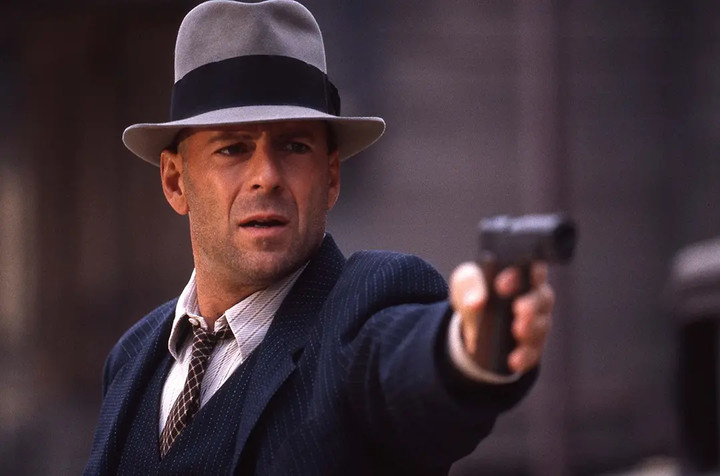
In Last Man Standing, Bruce Willis arranges a showdown with the BOSS. The BOSS is a spectacularly filthy villain, and his most shameless trick is to deliberately turn his back on his opponent and say, ‘You wouldn’t stoop so low as to shoot me in the back, would you?’ Then, when the other guy’s code of chivalry kicks in, he suddenly spins around and shoots him dead.
In the final showdown, the BOSS uses this trick on Bruce Willis.
“You wouldn’t stoop so low as to shoot me in the back, would you?”
Bruce Willis answers with a crooked grin:
“I’ve done worse!”
And that’s how this filthy BOSS gets shot dead in the back by a hero a hundred times filthier than he is.
Version history
This piece is revised from an older article, ‘Wanted: God in the Loom and the Peerless Flick Shot.’ The original also discussed the film's premise that God places murder orders inside a loom. The original link has been deleted by Mtime.
Leave a Reply