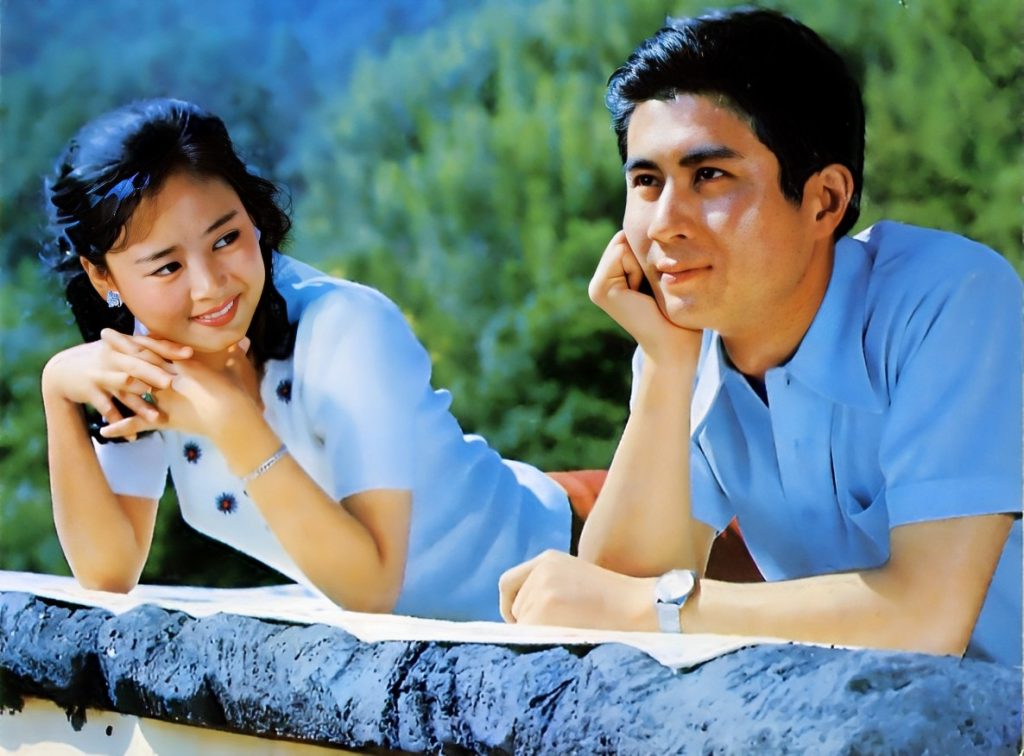
A rant I wrote after my workplace organized a trip to Mount Lu in 2010.
I had just returned from the leisurely Mount Lu tour organized by my workplace. It was supposed to be leisurely, but it still left me exhausted in body and mind.
Mount Lu is one of the Three Mountains among the Three Mountains and Five Great Mountains, and is naturally famous for being “the finest of Kuanglu’s extraordinary beauty under heaven.” Culturally, Li Bai, Bai Juyi, Su Shi, and others left behind lines celebrated for generations. Politically, it was not only Chiang Kai-shek’s summer capital but also the site of a certain conference that had a huge impact on contemporary China. So before visiting, I had quite a few romantic expectations about Mount Lu.
In reality, I was astonished by how ordinary Mount Lu’s natural scenery was—never mind that you could pick any nameless peak in Huangshan and it would be a hundred times prettier than Mount Lu’s best offering; even the little hills and streams in my recently developed hometown tourist town are no worse than Mount Lu. If Mount Lu is supposed to be a cultural landmark, most of its culture remains in books and history, and what survives in the present-day world is probably rather meager. Most ancient cultural sites were rebuilt by later generations, or even in our own time. Worse still, what actually fills Mount Lu is all kinds of shoddy, cheap Kitsch culture. “Cultural landmark” leaves a much weaker impression than “Kitsch mountain.” Perhaps only its status as a political mountain truly lives up to the name: **’s name and ghostly presence keep appearing in the tour guide’s spiel, the hawkers’ loudspeakers, the posters, and among Mount Lu’s peaks and gorges, refusing to disappear.
1. The Kitsch Mountain
A picture is worth a thousand words.
At every vaguely photogenic spot on Mount Lu, someone has inevitably put up a shabby umbrella and a ramshackle frame. Their position is always just right: they block every possible camera angle, leaving only the spot beneath the umbrella where you can barely take an unruined panoramic shot. Want to go under the umbrella to take a picture? Pay up. Mount Lu barely has any scenery to begin with, and the few decent views have been ruined by these shabby umbrellas and frames—
This is Some Pond, probably considered a famous attraction:

This is Wulong Pond:


This is Flower Path Pavilion on the “Flower Path” where Bai Juyi wrote that “the peach blossoms at the mountain temple begin to bloom.” To an uncultured person like me, its design looks extremely “unique”:

Almost all the flowers I could see on the “Flower Path” were in the nursery (perhaps I came at the wrong time):

Calligraphy and paintings for sale at Bai Juyi’s cottage:

The view from the peak in “the perilous peak where infinite scenery lies”—I am not exaggerating when I say that my hometown tourist town can also offer a much better-looking hilltop:


The Immortal’s Cave from “a natural Immortal’s Cave”:

A certain villa, where apparently ** he only came to take a few afternoon naps:


The villas built by Li Deli and his gang. This is the Old Villa Bar—it looks lovely, right?—


Precisely because it looked so lovely, I planned to go there with my friends that evening for drinks and conversation. When we arrived, we got a huge scare: horribly off-key singing was shaking the heavens. We asked around and discovered that the bar was actually for karaoke…
Among the villas was the residence of a certain Kuomintang general:

Inside the residence was a mahjong table, around which wax figures of three Kuomintang officers and their wives sat, creating the irritating situation of three people waiting for a fourth. Visitors could dress up as an official or his wife, play a round with them, and take commemorative photos. The moment I picked up my camera, a hawker said, “No photos. If you take one, we’ll charge you 5 yuan for the camera too.”
The only view worthy of a famous mountain: Sandie Spring:


This pool of emerald water is actually enclosed by an artificial barrier:

This fellow shouted at me, “Which work unit are you from?”

The guy is calculating loneliness:

Is mountain water necessarily clear?—


White Deer Grotto Academy, outside the gate (enter White Deer Grotto Academy, get into Tsinghua or Peking University):


Inside White Deer Grotto Academy (the boating business is everywhere):

The white deer at White Deer Grotto Academy were imported from the Mediterranean:


2. The Camp Movie
On Mount Lu there is a “Romance on Lushan Mountain Cinema” that has shown only *Romance on Lushan Mountain* for decades:

The most fun I had on Mount Lu this time, apart from rafting, was the hour and a half spent watching *Romance on Lushan Mountain*. Whether the screen was showing romantic love or solemn devotion to the nation, I was laughing so hard I nearly fell over. “Classics are products of their times”—that saying really is true. A classic thirty years ago became a Camp classic thirty years later, at least to this presumptuous young nobody who knows nothing about the heights of heaven or the depths of earth.
Camp refers to an aesthetic attitude that appreciates unwittingly affected behavior or poses. Anyone interested in the meanings of “camp” and the “Kitsch” mentioned earlier can look for Guan Zhong Chen’s essay *Camp, Trash, Kitsch: For People Who Have Had Too Much Humanities Education*. In it, Chen gives several examples of camp; here they are (although I don’t agree that all of them are camp):
“The intonation and stock phrases used by hosts of major television programs.
The CCTV Spring Festival Gala (don’t curse it; if you’re going to watch it, watch it through camp-colored glasses).
A leader suddenly raising his voice and waiting for applause when his speech reaches the moment when he wants people to clap.
Some enormous buildings belonging to institutions on Beijing’s Chang’an Avenue and the road to the airport, such as the China Travel Service building with its little green roof.
Shanghai’s nostalgic calendar beauties.The old Sichuan restaurant in Beijing’s Rongxian Hutong and the “China Club” on the top floor of Hong Kong’s old Bank of China building.
Old opium-smoking beds used as decorative furniture.
Cutting one’s toddler son’s hair to look like the children in New Year pictures.
After singing sentimental songs with friends in a karaoke room, choosing revolutionary songs and parodying the “loyalty dance.”
The pink Rolls-Royce and golden toilet of Hong Kong old-family second-generation couple Chow Kai-pong and his wife.
Older Shanghai couples putting on proper suits and going reverently to see popular stage performances.
Yu Hsi’s own hairstyle and facial makeup.
The rhyming lines in Taiwan writer Wang Wen-hua’s novel *The Protein Girl*.
Strange female masters in wuxia novels, such as Li Mochou, Abbess Miejue, and Mei-shi.
The first section of Wang Anyi’s *The Song of Everlasting Sorrow*, the story set before the founding of the People’s Republic—the parallelism and splendor of its prose and plot, like a Broadway show.
The “love line” between Tony Leung Chiu-wai and Maggie Cheung in Zhang Yimou’s *Hero*, and the moment Qin’s king, played by Chen Daoming, sheds a tear of sympathy.”
Chen Guan Zhong said: “Truly ‘camp’ human affectation must be earnest, strenuous, ambitious, and preferably ornate, exaggerated, theatrical, passionate, extravagantly elaborate, even absurd—but somehow a little off, with slight slips and an unfinished quality.” “Pure ‘camp’ is innocent. It doesn’t know it belongs to ‘camp’; it takes itself completely seriously.” “Unselfconscious ‘camp’ is the finest form of camp taste.”
Camp began as a Western concept, but over the years China has cultivated the broadest possible camp thanks to the awakening brought on by one thing: “Chinese blockbusters.” *The Promise* is camp, *Hero* is camp, and *Red Cliff* was classic camp before John Woo started arguing that he had meant to be funny. If you don’t simply curse or mock them, but find pleasure in them, then you are appreciating camp. Zhang Yimou meant to tell a story with a straight face, and Chen Kaige even hoped *The Promise* would move audiences, but the result brought the whole country more joy than a Stephen Chow movie, and with even greater force. That is the essence of camp: the creator doesn’t realize he is being coy and affected, while the audience gets endless pleasure from that very affectation.
Thirty years ago, *Romance on Lushan Mountain* played itself straight. Thirty years later, every expression, gesture, and line delivered by Zhang Yu is so affected that the film becomes camp—gloriously, hilariously camp.
But one thing in *Romance on Lushan Mountain* did not turn into camp through the passage of time. To me, the film’s central secret is the sexual fantasy of the frail intellectual. The male lead is such a textbook frail intellectual, while the female lead is such a textbook ball of fiery passion: he is shy, bashful, coyly refusing while secretly inviting; she is exuberant, throwing herself at him. Isn’t this the classic scholar’s sexual fantasy? Every generation of young gentlemen dreams that a Lin Daiyu who has escaped the mortal world will drop from the sky, and every generation of frail intellectuals dreams that a fiery, uninhibited Lin Xian’er will land in their lap. The core secret of *Romance on Lushan Mountain* is really the scholar-and-lady routine that has played out for centuries in Chinese literature and on the stage, never getting old. Ah, where is my Lin Xian’er?
3. The Beautiful Scenery
Finally, to avoid being hunted down by the locals of Mount Lu, I’ll end this piece with a little reversal from disparagement to praise. There is beautiful scenery after all, especially with the help of a DSLR and Photoshop—
Around Three Treasures Tree:


Flower Path:


Around Splendid Valley:


They look like two dragons French-kissing:

Guling Town:


The villa complex:


Chiang Kai-shek’s Meilu Villa:


The Founding Father’s calligraphy is truly… plain:

The stream in front of Meilu is quite nice:

Outside the former site of the Lushan Conference:


Cable car:

Sandie Spring:


Rainbow:

 Rafting starting point:


White Deer Grotto Academy:


(The End)
Leave a Reply