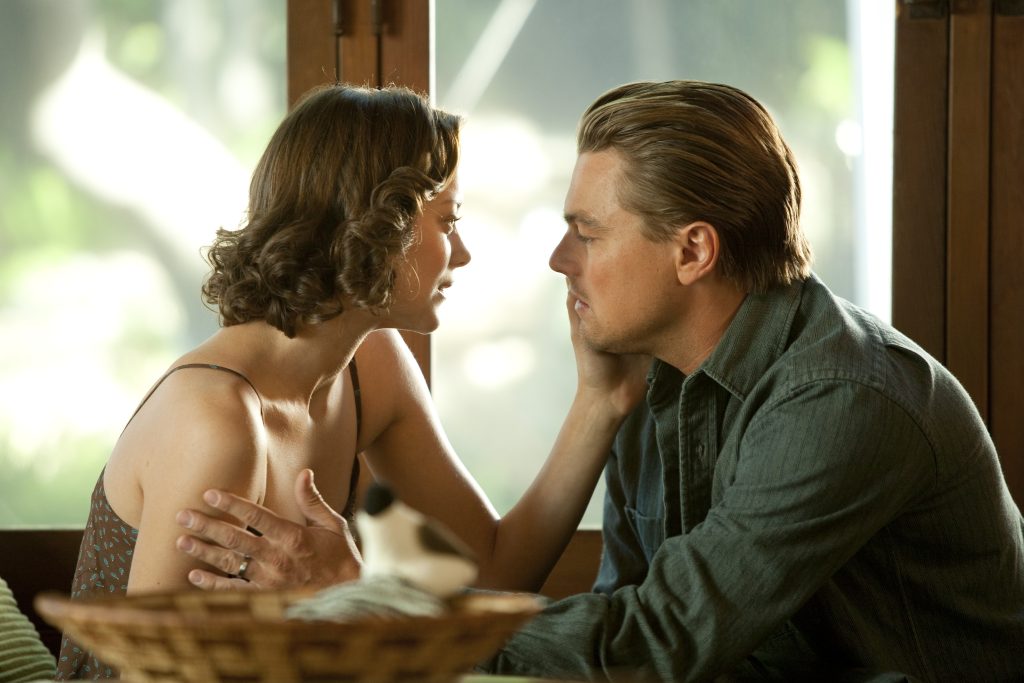
This post was originally supposed to ramble about the relationship between “steampunk” and Inception. I hadn’t planned to analyze the dream setting in Inception; I meant to breeze past it in a few sentences in that other article. But the digressions kept multiplying until they somehow ran away and produced my longest post. So I decided to make this part a separate article. As for “steampunk” and Inception, I’ll save that topic for another time.
I. The So-Called “Complexity and Obscurity”
Inception was declared a masterpiece before anyone had even seen it. As far as I remember, even Avatar never received that kind of treatment; Avatar, powerful as it was, only got crowned a masterpiece after its release. It seems that after the enormous success of The Dark Knight, Nolan had transformed from a director into a cult leader worthy of worship, acquiring a certain “Chun Ge” quality. But I don’t think this did the film itself any favors. A deification campaign with no basis in fact is, whichever way you put it, a bit of a con.
Inception was also declared a complex and obscure film in advance. Although I imagine most reporters and editors knew next to nothing about its details before its release, most reports and introductions went out of their way to hype its difficulty and obscurity, often hinting that without sufficient intelligence it would be hard to understand. Presumably, the writers were extrapolating from Nolan’s earlier films. And the “complexity” of a commercial blockbuster is really a tease aimed at the audience, naturally making for effective publicity to draw people into theaters. I think this advance exaggeration of the film’s complexity and obscurity was, to some extent, irresponsible. In fact, after seeing it, I felt that Inception was among the least complex of Nolan’s films.
The so-called complexity and obscurity of Nolan’s earlier work came from two sources.
The first was the old-fashioned nonlinear narrative that scrambled time and space: beginning with Following, dazzling the world with Memento, and reaching its peak in The Prestige. In practice, though, Nolan’s nonlinear storytelling merely makes his films look “cool”; it doesn’t actually make them excessively obscure. You may not realize until the film is over that Following’s scenes are really told in three separate strands, for instance, but that doesn’t affect your understanding of it at all. Even with The Prestige, whose narrative structure is so tangled that it’s hard to sort out, understanding the film is hardly difficult. You rarely hear of anyone who didn’t understand The Prestige, but I believe very few people could clearly explain its narrative structure. Nolan shows real skill here: nonlinear storytelling serves to enhance his expressive power, or simply to look cool, rather than to obstruct the audience’s understanding of the plot. I don’t recall many viewers being unable to understand a Nolan film because of its narrative structure.
The other source of Nolan’s “complexity and obscurity” was the enormous amount of information in his plots. Before Inception, his three films were Batman Begins, The Prestige, and The Dark Knight, in that order, and the amount of plot information in them increased steadily. In these films, almost every sequence and every line of dialogue moves the plot forward. This is especially true of The Dark Knight: miss a few seconds of footage while you’re not paying attention, and the next sequence may suddenly feel a little abrupt. If a nearly three-hour film is like that from beginning to end, its total plot information is bound to exceed that of most commercial films in the same genre by a wide margin. In other words, the plots of Nolan’s recent films have become increasingly “packed.” That certainly tests the audience’s attention, but it still shouldn’t be called “obscure.” The way to deal with this kind of “obscurity” is simply to concentrate harder or watch the film a few more times; it doesn’t require some special body of knowledge or unusual aesthetic perspective. You can say that Kubrick is obscure, or that David Lynch is obscure, because viewers need a particular background or aesthetic perspective to truly understand Kubrick and David Lynch. (My analysis of Mulholland Drive is completely useless for anyone trying to understand David Lynch from an aesthetic perspective. To this day I still can’t find the right words for the beauty radiating from Lynchian mystery. But only by feeling that beauty can you truly understand David Lynch.) Nolan, however, can’t really be called obscure. Nolan is “full.”
In my view, before Inception, the complexity and obscurity of Nolan’s work came from those two points. As an aside, The Prestige reached the peak of his nonlinear storytelling, while its plot still wasn’t packed as tightly as The Dark Knight’s. It struck just the right balance. So, in my mind, this film—which received less than stellar reviews—is Nolan’s best work.
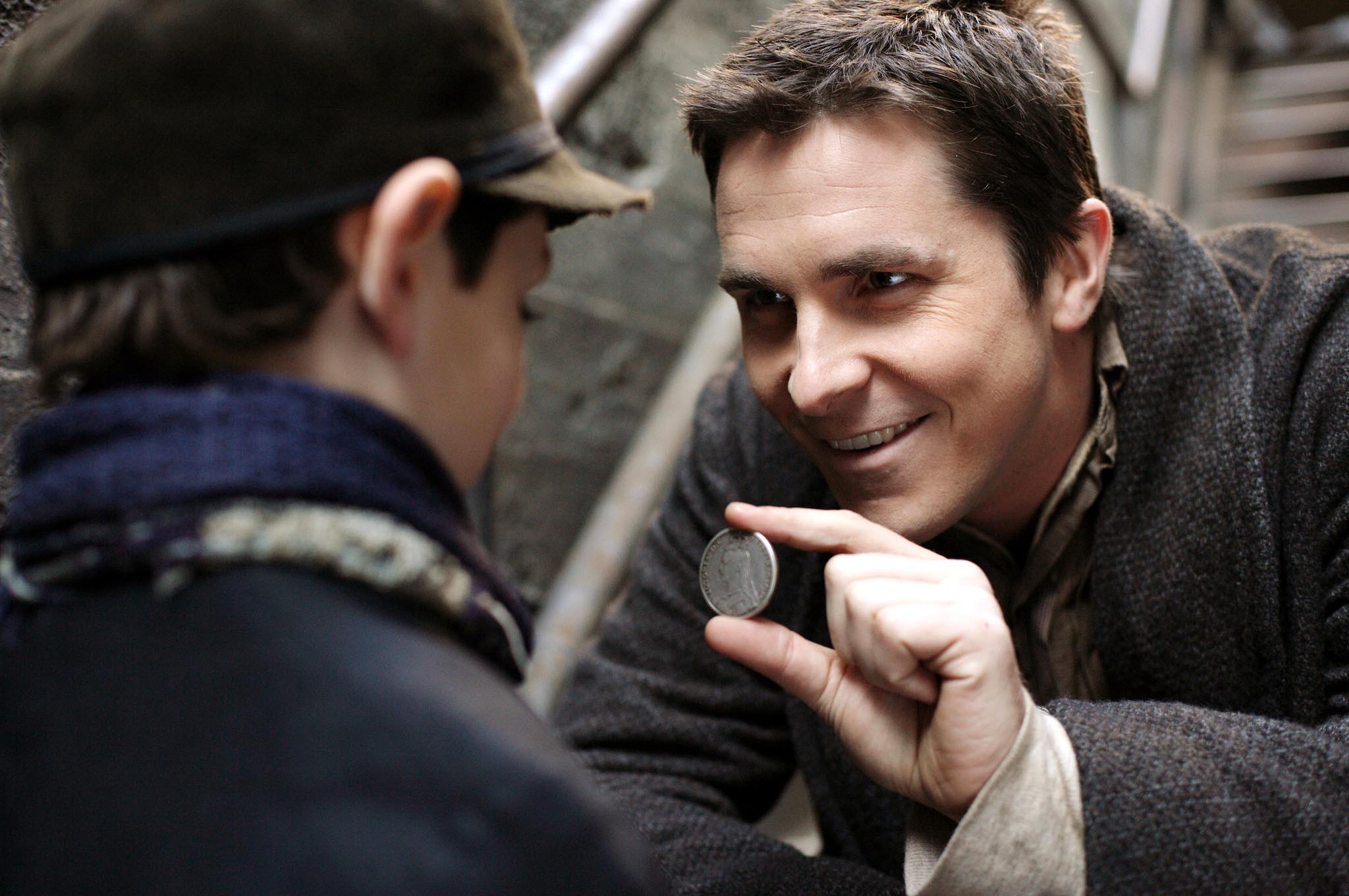
So, looking at those two aspects, where exactly is Inception complex?
As far as nonlinear storytelling goes, Inception is simply a linear narrative. The flashbacks woven into it amount to a little reverse chronology within straightforward narration, an utterly conventional technique—not Nolan-style time-twisting at all. Other than Insomnia, I don’t think any Nolan film has a less complex narrative structure than Inception.
As for plot density, if we divide a plot into its main storyline and its details, Inception has fairly rich details, but its main storyline is surprisingly simple—simpler even than Insomnia. If we compare the films to games, The Dark Knight is a game with ten levels. Batman encounters different troubles and solves different problems at each level: one crisis barely ends before another begins, until he reaches the final level and defeats the big boss. In Inception, by contrast, the game has only one level. From the start, it is aimed straight at the big boss: implanting an idea in the heir Fischer’s mind. Every effort moves plainly toward this single goal. So, overall, Inception isn’t particularly dense in plot either.
The two factors that supposedly made Nolan’s earlier work “complex and obscure” are both absent from Inception. What kind of obscurity is that supposed to be?
If we really must call it complex and obscure, Inception’s complexity lies in its “setting”—an aspect Nolan’s earlier films never brought to the foreground. Many people say that the entire first half of Inception is spent introducing all kinds of rules about dreams, and that the plot only gets going in the second half. That claim obviously doesn’t match the facts: the plot is moving forward throughout the first half as well. It is true, however, that the film spends a great deal of time explaining its various dream settings. But are these dream settings really so hard to understand? Not necessarily. In fact, when it comes to dream settings, Nolan is still using the same technique he used for plot in his earlier work: “fullness.” None of the individual rules is particularly complex. It’s just that throwing them at you one after another, all together, can make your head spin a little. Another reason is that a few of the rules seem to contain bugs. Let’s take a look at the settings governing Nolan’s dreams.
II. Is This Still a Dream?
Inception has roughly the following rules about dreams; I’ll discuss them one by one. (The most basic rule, multiple levels of dreams, is connected to all the others, so I won’t discuss it separately.)
Setting One: Defense Mechanisms
Inception is, in a sense, a psychological science-fiction film. Nolan never spells this out, but the bits of psychology it uses—consciousness and the unconscious, defense mechanisms, traumatic memories, and so on—all come from Freud’s psychoanalytic system. Psychology has developed for a hundred years since Freud, and contemporary psychology looks completely different from psychology a century ago. Yet the only psychology that has truly influenced the general public, literature, and the arts is still that stuff from Freud, our old patriarch, a hundred years ago. As someone who makes a living off psychology, I find that pretty embarrassing.
Films about psychology, no matter how many get made, keep making Freud’s kind of film. The whole thing boils down to this: first, beneath consciousness lies the unconscious; consciousness handles reason, while the unconscious handles emotions and desires, representing instinct. Second, consciousness has defense mechanisms that keep certain psychological secrets from being easily exposed; when consciousness weakens, those defense mechanisms weaken with it. Third, certain negative emotions, memories, and desires are repressed in the unconscious and not allowed into consciousness, creating a form of self-protection. This is less a psychological theory than something that has long since become common knowledge.
In reality, there are only Freudian films, not psychological films. Inception counts as a Freudian film too.
Dreaming is a state in which a person’s consciousness becomes very weak. At that point, the person’s defense mechanisms drop to a low level, and the secrets buried deep in the mind begin to emerge. But what kind of secrets does this “secret” refer to?
If the human mind can be divided into consciousness and the unconscious, then human secrets should also be divided into secrets held in consciousness and secrets held in the unconscious.
People rely on a clear conscious level for abstract thought, logical judgment, analysis, inference, and judgments of social value. So secrets held in consciousness are thoughts produced through clear abstract thought, logical judgment, analysis, inference, and judgments of social value—thoughts they nevertheless don’t want other people to know. Suppose, for example, that I’ve written a piece of software and want to apply for a patent. If a competitor comes along trying to pry out my source code, I won’t tell him. That code was produced through highly abstract thought and analysis; reproducing it in full requires clear consciousness. So it is a secret held in consciousness.
What is hidden in the unconscious, by contrast, is instinctual stuff: emotions and desires. When we talk about defense mechanisms, we usually mean that certain desires in the unconscious conflict with social norms or moral demands. As a result, people feel a powerful urge to hide those desires. That is a secret held in the unconscious. For example, suppose I’m married but really want to have sex with a young woman in my office. If someone asked whether I wanted to have sex with her, I’d deny it until the day I died. But if I got drunk one day and my conscious defenses weakened, I might blurt out: “I really do want to have sex with what’s-her-name.”
So what the defense mechanism is defending against is the latter: secrets at the subconscious level. As a person’s consciousness weakens, the defense mechanism drops, and the desires in their heart start showing themselves. But with the former—secrets at the level of consciousness—this defense mechanism is useless. The reason is that once your consciousness weakens, the secrets stored in it become impossible to retrieve along with the loss of consciousness. For example, if that competitor got me completely plastered and coaxed me into writing out the software code, what do you think? I would be so dizzy I couldn’t even work out what one plus two was—how could I still write a program? The secrets in my consciousness would disappear right along with the defense mechanism.
So whether you can steal someone else’s secrets in a dream depends on what kind of secrets they are. Not every secret can be stolen in a dream. In *Inception*, stealing business secrets in dreams seems to be all the rage. But business secrets are actually the kind I mentioned above: secrets at the level of consciousness, not subconscious secrets. In a dream, this kind of secret becomes fuzzy along with the weakening of the defense mechanism. So any such secret you manage to steal in a dream has to be simple—simple enough that you can still remember it while dreaming. A secret like the software code in the example above would be impossible to steal in a dream. I doubt you could even successfully steal a slightly long bank-account number and password. If you don’t believe me, think back over your own dreams: when have you ever organized anything resembling clear thought or logical reasoning in a dream? Forget logical reasoning—even a slightly long sentence may not come out smoothly in a dream. Sometimes you can’t even remember the names of people you know.
Fortunately, although I seem to remember *Inception* mentioning that people’s defense mechanisms weaken in dreams, making it possible to steal secrets, the actual dream theft in the film doesn’t exploit that weakening at all. For instance, at the beginning, Cobb’s team goes into a dream within a dream to steal some business secret from Saito’s dream. In that dream within a dream, the mechanism for stealing the secret isn’t that Saito becomes happy to ‘confess and receive leniency.’ It’s that Saito projects the secret into the outside environment, where it becomes a document inside a safe (a pretty ridiculous setup, but I’ll get to that later). So all Cobb has to do is open the safe, take out the document, and read it. There’s hardly any technique involved. The method of stealing the secret at this level can be summed up in one word: ‘steal.’
After that trick fails, there’s a backup plan. Once the dream within a dream collapses, they hijack Saito in the first layer of the dream. At that point Saito thinks he has arrived in reality, so he—will—be—afraid—of—dying. Cobb only has to press a gun to Saito’s forehead and force him to reveal the secret. This backup plan involves even less technique. In short, the method of stealing the secret at this level is also one word: ‘rob.’
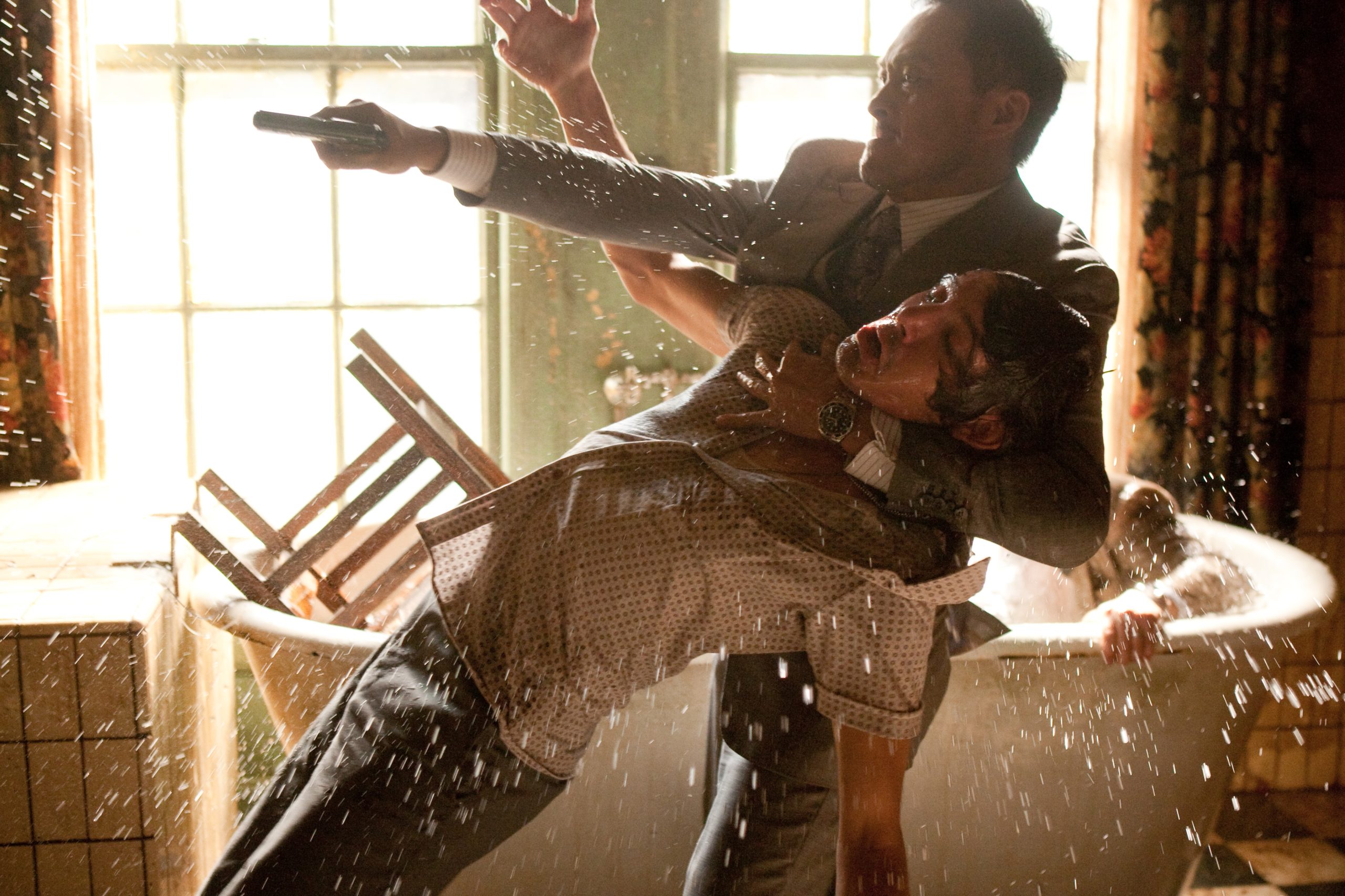
So, in fact, the methods of stealing secrets in dreams in *Inception* have absolutely nothing to do with the weakening of the defense mechanism of consciousness in dreams.
The methods of stealing secrets in the film are, in practice, nothing more than the standard tricks used by thieves, robbers, bandits, kidnappers, and con artists every day: ‘steal, rob, kidnap, and deceive.’ The dreams—or layers of dreams—merely make it possible to use those tricks. In the operation I just mentioned, for example, the setup in which the secret is projected as a document in the second layer makes ‘stealing’ possible. And the dream-within-a-dream setup creates the possibility of ‘robbing.’ The film’s slogan is ‘Your mind is the scene of the crime,’ and it really is on point: a dream really is just a crime scene.
The function of dreams in *Inception* is to set the stage for ‘steal, rob, kidnap, and deceive.’ Creating such a setup in reality would cost a fortune, but doing it in a dream costs almost nothing—you think of something, and there it is. That’s the economic advantage of dream theft over theft in reality. But let me stress this again: in essence, the methods of theft in dreams and in reality are the same. They’re just ‘steal, rob, kidnap, and deceive.’ There’s another important point: dream theft has an incomparable safety advantage. And that brings us to the second dream setting in *Inception*.
Dream Setting Two: Remembering Dreams
We often get up in the morning and say, ‘Last night,’ I had such-and-such a dream. That ‘last night’ is usually wrong. Over the course of one night, we go through many cycles in which different sleep states alternate, and we dream during some of those cycles. We have many dreams every night, but we usually remember only the short stretch of dream we had just before waking up. So the dream we call the one we had ‘last night’ is usually really the one we had ‘this morning.’ We forget most of the dreams from the rest of the night unless we happen to wake up immediately after them.
As for remembering dreams, *Inception* has a ridiculously convenient setting: after a ‘Subject’ wakes up, they don’t remember the dream, while only the ‘dream thieves’ do. Basically, while in the dream, Cobb’s team can use any underhanded method they like to steal secrets without worrying about the consequences, because the Subject will lose all memory of the dream upon waking. Unless they run into a badass like Saito, who already has Cobb’s intelligence, they generally don’t have to worry about the Subject coming after them later. That’s the incomparable safety advantage of dream theft.
Even if the dream thieves remember the dream within a dream clearly after waking, the Subject forgets even the first layer of the dream completely. That’s awfully ‘convenient.’ I don’t like this setting; it’s simply too contrived. It’s a setting created entirely to advance the plot. In theory, whenever the plot is missing something, you can just add it. Without the setting that the Subject doesn’t remember the dream after waking, many scenes couldn’t happen. Let’s assume it’s difficult for the Subject to remember the dream within a dream. They should at least be able to recall the first layer. In that case, the dream thieves could hardly do anything in the first layer that would let the Subject know they had been robbed; otherwise, the moment the Subject woke up, they would take remedial action. Similarly, in the first layer, the dream thieves couldn’t show their faces to the Subject. Even if the stolen secret couldn’t be recovered, the Subject could still hunt them down and take revenge based on their appearance.
Nolan really only needed to add a few lines explaining why the Subject wouldn’t remember the dream to make this setting much more plausible. For example, following the rule I mentioned earlier—that in reality we remember only the dream immediately before waking—he could simply have the dream thieves avoid cutting off the Subject’s connection to the dream machine immediately after the dream theft. Instead, the dream machine could make the Subject have several more meaningless dreams, intermittently, after the ‘dream of dream theft.’ We could call them ‘redundant dreams’ or ‘blocking dreams.’ Then, when the Subject wakes up, they would remember only the meaningless dream that came right before waking. Wouldn’t that make the setting feel a lot less contrived?
Dream Setting Three: Implanting Ideas in Dreams
In the film, the word ‘inception’ refers to changing another person’s deeply rooted beliefs by implanting an idea in their dream. We aren’t strangers to the idea of implanting ideas; the nightly news does it every day. In suspense stories with surreal elements, we’ve often seen master hypnotists hypnotize someone with a phone call—or even a look—and then order them to do anything. That’s also idea implantation. But something a hypnotist used to accomplish with a single glance takes the dream experts in *Inception* an entire film to attempt. Is Nolan taking the long way around? Actually, it’s the people before him who were being wildly imaginative. In reality, it’s impossible to change someone’s deeply rooted beliefs through simple hypnosis. In fact, a great deal of scientific research shows that even in a hypnotic state, a hypnotist cannot make a subject do something against their will. So I think *Inception*’s setting—that implanting an idea is difficult—is reasonably grounded.
In the film, the difficulty of implanting an idea is handled through an elaborate con built from multiple layers of dreams. In the first layer, Fischer is led to believe that his father left another will. In the second layer, a simple prompt (‘Did you see your godfather being tortured with your own eyes?’) makes him suspect his godfather and start believing that his father wanted him to dissolve the company. Then, in the third layer, a simple trick—putting the paper windmill Fischer made as a child into the safe—confirms that suspicion and allows Fischer to reconcile with his father. In this elaborate con, Cobb and the others actually don’t have to do much at any individual level. They use a few simple prompts and deceptions to make Fischer suspicious of certain things, then let Fischer’s own self-reinforcement confirm those suspicions. As *The Dark Knight* puts it, ‘Crime is like gravity. All it takes is a little push…’ What Cobb and the others do is also just ‘a little push,’ and Fischer’s beliefs change. But the ease of the con is really thanks to the cleverness of its design.
As for the other difficulties during the implantation process—such as the gunfights and fistfights on every level—they are really extra difficulties for the scheme itself. For the film, they exist purely to make it more entertaining. Without all those gunfights and fights, it would turn into a con movie like *Matchstick Men*, and the audience would be much smaller.
In the film, an idea can be successfully implanted only by descending into the deepest layer of a person’s subconscious and spreading it there, where the Subject can neither call on the defense mechanism to protect themselves nor easily identify the idea’s source. Only then might the Subject believe the idea comes from within and accept it. In other words, the success of idea implantation mainly depends on two things. First, you have to go deep enough into the subconscious. The deeper you go, the less defense there is, and the easier it becomes to change a person’s beliefs because of their emotions or desires. Second, the Subject must not notice where the idea came from. If the Subject remembers the source of the idea, the implantation will fail.
In the film, Arthur has the following exchange with Saito to explain why implanting an idea is impossible.
Arthur asks Saito: ‘I tell you not to think about elephants. Okay, what are you thinking about now?’
Saito says: ‘Elephants.’
Arthur: ‘…The Subject will always trace an idea back to its source. You can’t fake a genuine inner thought.’
This exchange points directly to the difficulty of idea implantation: the Subject will always find the source of the thought. Once they discover that the thought came from an enemy, even if they realize they have the thought, they will choose to reject it—and the idea implantation cannot succeed.
So the success of implanting an idea in Fischer’s mind depends, on the one hand, on entering a dream deep enough that his consciousness has trouble tracing the idea’s source. More importantly, though, it actually depends on that convenient setup mentioned in the previous section: once the dreamer wakes up, he doesn’t remember the dream, not even the first layer, which is wiped completely from his mind. Suppose Fischer at least remembered the first layer. Even if he couldn’t remember whether an idea had been planted in the second or third layer, he would still remember being kidnapped in the first layer and start questioning and examining where his ideas came from. The moment he suspected the idea had come from his enemies, the implantation would very likely fail. That’s why I said I don’t like the setup above: its existence clears the biggest logical obstacle out of the way for successful idea implantation. But it is also far too “convenient.”
When Cobb implanted an idea in his wife Mal, she wasn’t the dreamer being robbed, so she didn’t forget the dream after waking up. Why did the implantation succeed anyway? It succeeded because even though Mal knew that the idea that “the world isn’t real” had come from her husband, she chose to accept it rather than reject it. The person feeding her the idea wasn’t an enemy, but the person she loved and trusted most.

Setup Four: The Wake-Up Mechanism
In *Inception*, dying in a dream was originally supposed to eject you from the dream and wake you up. But later, during the idea-implantation mission, they used a powerful sedative, so dying in a dream no longer woke you up. Instead, you fell into the deepest layer of the subconscious: limbo. To wake up from a dream, then, you needed another wake-up mechanism—the kick. In the mainland theatrical version, *kick* was rendered as “穿越” (“crossing over”). But why not simply translate it as “kick” or “boot”? A kick is when the dreamer is made to experience an imbalance that the inner ear’s vestibular system can detect—something like going from balance to weightlessness, or from weightlessness to excess gravity—and wakes up from the dream.
Midway through the film, there’s a scene testing the kick. We see Arthur get kicked in reality, and he wakes up from the dream. In other words, the kick pulls that portion of consciousness/subconsciousness from the next layer up into this one. At the beginning, when Cobb’s team robbed Saito, the kick seemed to work the same way: after the architect kicked Cobb in the first layer, Cobb jumped from the second layer back into the first. Fine, let’s assume, then, that the kick works downward—that it pulls the consciousness/subconsciousness in the next dream layer back up into the layer above.
Another rule about the kick is that it can work only one layer downward, and only when the consciousness/subconsciousness in the next layer is complete. If the person’s consciousness/subconsciousness has already gone into a deeper dream, the kick is ineffective. You first need a kick in the next layer to call that deeper consciousness/subconsciousness back to this layer, and only then can the kick in the layer above work. So when there are multiple dream layers, the kicks have to happen in order from the bottom up, pulling the consciousness of each next layer upward one layer at a time. Otherwise, the kick won’t work.
For now, let’s assume the kick follows the rules above. Let’s look at how the film uses it.
According to the plan, the instant Yusuf’s car smashed through the barrier and began to fall was the instant everyone in the car went “from balance to weightlessness”—a kick. Unfortunately, the layer below hadn’t kicked before that, so most of the people’s consciousness was still in deeper dream layers and the kick was ineffective. Only when the car hit the water, making everyone go “from weightlessness to excess gravity” and creating a second kick, did they have a chance to return. But the lower layers had to kick first.
Under the kick setup described above, every kick pulls the consciousness from the next layer upward. The kick when Yusuf’s car hits the water in Yusuf’s layer, the first layer, pulls the consciousness of the people in the hotel layer upward. The kick in the hotel, the second layer, when the architect uses the elevator crashing into the shaft to create acceleration, is responsible for pulling the consciousness in the snowy hospital layer upward.
And now we run into a contradiction. What is the kick in the third layer, the snowy hospital, supposed to do? Before Cobb and the architect Ariadne planned to enter the fourth layer—never mind for now whether the fourth layer is limbo—they had already planned to set off the explosives. In other words, this kick had been prepared from the start; it wasn’t prepared to wake anyone from the fourth layer. So what was the snowy hospital’s kick originally for? If a kick pulls the consciousness/subconsciousness from the next layer upward, then in the original plan the third layer had no deeper consciousness to pull up at all.
Besides, if we assume that the kick pulls consciousness upward from below, other bugs appear. Arthur never entered the third dream layer; he was awake in the hotel, the second layer. So when Yusuf’s car hit the barrier, the kick might not wake the others, but it should have sent Arthur back to the layer above. Yet obviously Arthur didn’t jump back up. What’s more, if the kick really pulled upward from below, then Yusuf had already had one spectacular rollover earlier, and Arthur should have been woken up by that kick.
Now look at the fourth dream layer. In that layer, Fischer and Ariadne both jump down from a building themselves, creating a kick and jumping back to the snowy hospital layer above. So at least in the fourth layer, the kick doesn’t pull the consciousness from the next layer into this one; it makes the consciousness in this layer jump upward by itself.
Fine. If the kick’s job isn’t to “pull from below” but to “jump upward,” then Ariadne and the others jumping from the building in the fourth layer jump themselves up to the snowy hospital in the third layer. The collapsing floor of the snowy hospital creates a kick that jumps them up to the hotel elevator, and the elevator crashing into the shaft creates a kick that sends them up to Yusuf’s car in the layer above.
But here comes another contradiction. Why didn’t either of the two kicks—the one when Yusuf’s car hit the barrier and the one when it hit the water—send Yusuf, at least Yusuf, up to the layer above that, namely reality?
Compared with the dream layers, does the layer of reality have some other mechanism constraining the dreams? Yes. That would be the dream machine. (The dream machine in the dream isn’t actually a real dream machine; I’ll get to that later.)
The dream machine in the film can precisely control when people connected to it enter a dream and when they wake up. If the kick can wake someone up, and the time set on the dream machine can also wake someone up, which wake-up mechanism takes priority? I think the dream machine takes priority. Under the dream machine’s control, a person can’t break out of the sleep state. That’s why Yusuf’s car can kick repeatedly in the first dream layer without ever working: without the dream machine, the kick in the first layer would wake the dreamer up in reality.
That leaves one more question: what effect would a kick in reality have? A kick in a dream pulls you upward, but in reality there is no higher layer. So a kick in reality wakes the dreamer up. This actually has nothing to do with the film’s rules for kicks inside dreams; it’s simply everyday common sense. If you suddenly drop in reality, you’d have to be asleep not to wake up. Judging from how Arthur was kicked in reality during the test before the operation and woke up immediately, a kick in reality can at least instantly wake someone who is in a single dream layer. But if the dreamer’s consciousness is spread across deeper dream layers, the film never explains whether a kick in reality can wake that person, whether waking them would cause harm, or whether it can wake someone whose consciousness is in limbo.
As you can imagine, an accidental kick in reality is extremely dangerous for an inception operation. In fact, because of turbulence, a plane can suddenly go weightless or suddenly experience excess gravity at any moment, so accidental kicks happen on planes all the time. If a kick in reality can at least wake a dreamer from one layer, then before entering the second dream layer they would be in constant danger of waking up. That’s another reason I think the dream machine’s control over sleep takes priority over the kick. As long as the dream machine is working, it at least ensures that the dreamer remains in a single dream layer. Whether there’s a kick in reality or in the first dream layer, the dreamer won’t wake up in reality.
So my conclusion is that the kick mechanism doesn’t pull consciousness from the layer below into the current layer. Instead, the kick in each dream layer pulls the consciousness in that layer up into the layer above.
So the kick from Yusuf’s car in the first dream layer wasn’t a kick at all. It was a signal for the lower layers to kick, because according to their plan, they were going to create a situation in which Fischer and his godfather were thrown into the water, car and all. The first layer had simply become so dangerous that the lower layers had to kick before Yusuf’s car hit the water. Otherwise, if they couldn’t wake up after the car landed in the water, they could quickly suffocate, fall into limbo, and ruin the whole plan. So when Cobb says they have to catch the second kick as the car hits the water, he doesn’t mean they must kick at that exact moment; he means that moment is the deadline.
So how do we explain the opening scene, where the architect pushes Cobb into the water and kicks him awake? It looks very much as if Cobb in the second layer is being pulled up into the first layer. But we’ve been fooled. Look closely at the scene again and you’ll find that when Cobb loses his balance from the kick, he doesn’t wake up. He still hasn’t woken up when he falls into the bathtub, and for a moment after falling in, he’s still in the second dream layer because he sees a great rush of water flooding into the room. Clearly, neither the initial loss of balance nor the impact of hitting the water wakes Cobb immediately. A kick in the first dream layer cannot pull the consciousness from the next layer upward. So pushing him into the water was really just a strong signal to Cobb below. Once the Cobb below saw the water rising everywhere, he knew he absolutely had to wake up. At that point he could choose suicide, loss of balance, or some other method to make himself jump upward. So Cobb wasn’t kicked awake by the kick in the layer above; he pulled himself up from the second dream layer—possibly by drowning in that flood.
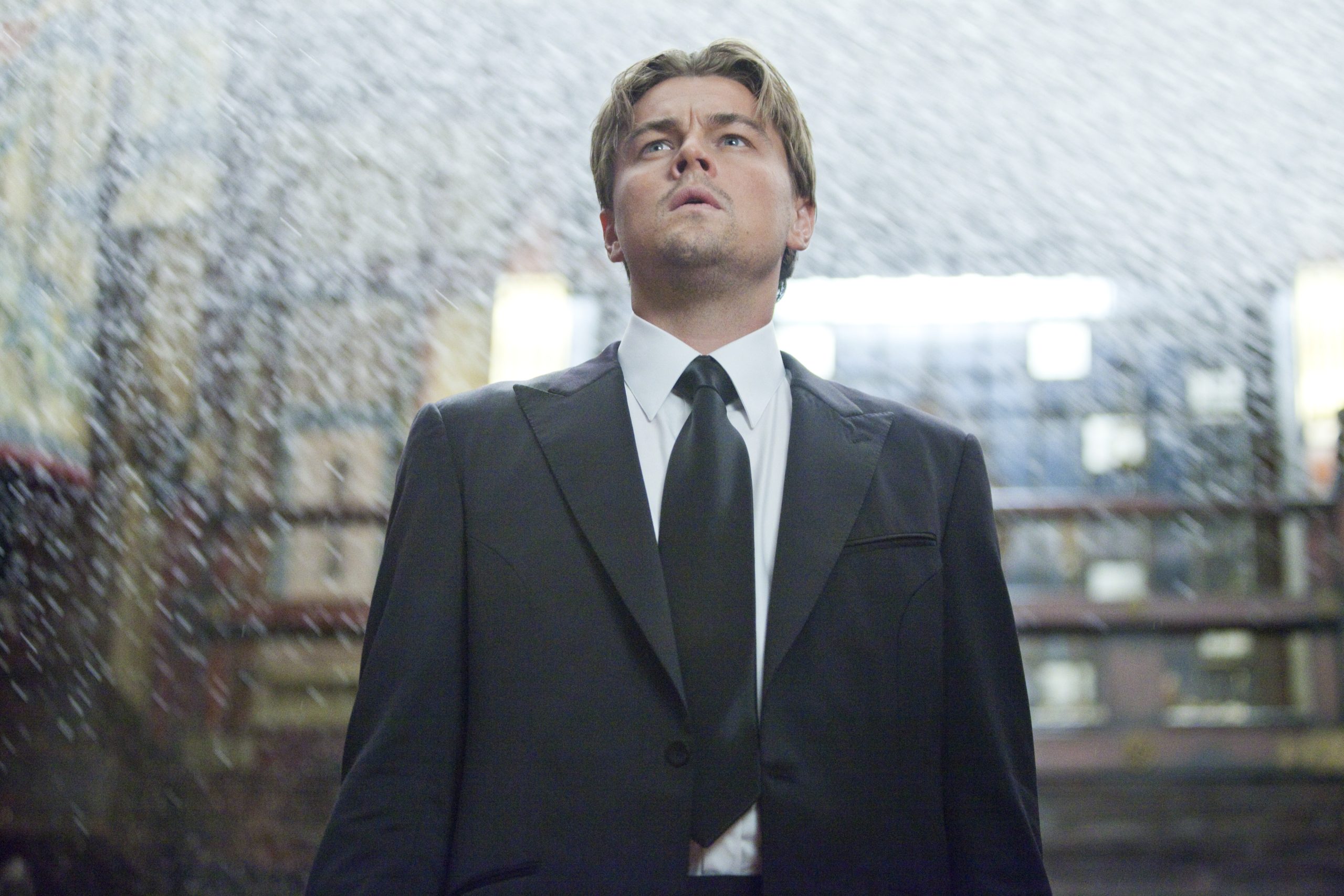
Setup Five: Limbo
Limbo was already mentioned in the previous section. In the film, limbo is defined as the deepest layer of the subconscious. With each deeper dream layer, the passage of time slows geometrically. In this final layer, limbo, time naturally moves incredibly slowly—so slowly that Cobb and Mal once fell there and lived for 50 years, though only a few hours may have passed in reality. The most controversial part of the film’s limbo setup is probably whether the fourth dream layer that Cobb and Ariadne enter is actually limbo.
Clearly, the fourth dream layer looks an awful lot like limbo. The buildings throughout that layer are the ones Cobb and Mal spent fifty years constructing. Cobb also says, “Saito must be dead by now. He must be somewhere around here. I’m going to find him.” According to the setup, people who die in a dream enter limbo. So “here” is plainly limbo. I agree: the fourth dream layer really is limbo.
But if the fourth level is limbo, the biggest contradiction is that when Cobb and Mal, and later Cobb and Saito, wanted to leave limbo, the only way out was suicide. In fact, it was precisely because leaving limbo required death that the story began in the first place—with Mal’s tragedy. So why can Ariadne and Fischer leave by jumping off a building to create a kick? If the fourth level is limbo, these two ways of leaving it are clearly self-contradictory.
The reason is actually quite simple: don’t forget, a kick can only bring consciousness up one level. One level.
When Cobb and Mal fell into limbo, regardless of which of them was the main dreamer, there were only the two of them in the shared dream. Once the main dreamer fell into limbo, that meant the dream above had already collapsed or no longer existed. So even if they created a kick in limbo, they couldn’t jump to the ‘level above,’ because that level was gone. The same was true later for Cobb and Saito: the dreamer Eames had already left the level above, so in effect that upper dream no longer existed. Because the level above no longer existed, a kick in limbo was useless. That’s why Cobb and Mal, and Cobb and Saito, had to leave limbo through death.
For Ariadne and Fischer, however, the dream level above—the snowbound hospital level—still existed at the time, so they could leave limbo by creating a kick. That’s why the two apparently contradictory ways of leaving limbo actually aren’t contradictory.
The conclusion is: the fourth dream level is limbo.
There’s one more problem: if the fourth level is limbo, why is Saito much older than Cobb when Cobb, who fell into limbo first, later meets Saito, who fell in afterward? Shouldn’t Cobb be older? The reason is that our appearance in a dream is really a projection of how we perceive ourselves—in other words, whatever you think you look like is what you look like. Saito became lost in limbo. Like Mal back then, he increasingly came to believe that limbo was reality, so he believed he would gradually grow old there. Cobb, meanwhile, remained lucid. He knew that limbo wasn’t reality, so his projected image of himself didn’t change much. So although several decades had obviously passed by the time he found Saito (good grief, Cobb was now the oldest person in the world), Cobb was still a young man, while Saito had become an old man.
There was actually a flashback earlier, when Cobb and Mal said goodbye. Cobb said, ‘Don’t you remember? We’ve already grown old together.’ In that scene, Cobb and Mal were elderly. That was how the two of them appeared in limbo from Mal’s perspective, because she believed limbo was reality. In Cobb’s earlier flashbacks, the two of them appeared young in limbo.
Setup Six: The Passage of Time in Dreams
One broadly accepted point seems to be that the most interesting premise in *Inception* is that time passes more slowly in dreams, and slows down exponentially as you go deeper into them. Much of the breathtaking dramatic tension in the film’s second half depends on this premise. But many of *Inception*’s ideas about dreams were not invented by Nolan; almost all of them have precedents. There are layered dreams in *eXistenZ*, for example, dream connections in *Paprika*, and even Zheng Yuanjie’s obsession with dreams and abandonment of reality in *Patent No. 3180*. The premise that time passes more slowly in dreams is no exception—Junji Ito’s horror manga *Long Dream* is the most creatively imaginative work about the passage of time in dreams that I’ve ever encountered. It also touches on limbo, and takes the idea even further than limbo does, giving the work a certain philosophical quality that *Inception* lacks. By comparison, *Inception*’s treatment of limbo still doesn’t quite let itself go. Still, for a film about dreams, demanding that every concept be entirely original would obviously be asking too much. Fictional works in film and literature have never stopped imagining dreams, and Nolan was far from the first.
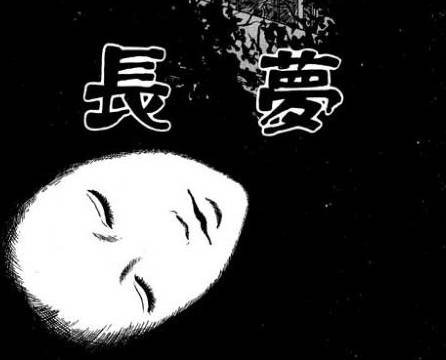
The idea that time passes more slowly in dreams actually matches our everyday experience of dreaming. When we wake up in the morning and recall the dream we just had, it often contains a rich sequence of events, making it feel as though the dream must have lasted a long time. In fact, that’s not so. The length of time we estimate when recalling a dream after waking is much longer than the actual time we spent dreaming it. The ‘long’ dream we remember in the morning, which seems to contain at least half an hour or an hour’s worth of events, may have taken place only in the few minutes—or even the few dozen seconds—before we woke up.
Although I haven’t seen any academic literature on this, there are other real-world examples that make the point. In certain states of consciousness resembling dreams, it’s especially obvious that the time we estimate a dreamlike experience to have lasted can far exceed the actual time. For example, many years ago a ‘death game’ became briefly popular in primary and secondary schools and certain entertainment venues across China. The basic procedure was to hold your breath, have someone suddenly shove you hard in the chest, and slip instantly into unconsciousness; a few slaps to the face would then wake you up. The strange thing was that in those few seconds of unconsciousness, people would experience long, bizarre dreams, as if they had taken a stroll through the underworld. That’s why it was called the ‘death game’ (you can probably still find the news reports online). It’s remarkably similar to the idea of time passing more slowly in dreams.
The explanation *Inception* gives for why time passes more slowly in dreams is that the brain’s potential is released during sleep and the brain operates faster, making dream time subjectively longer. But I think the reason is exactly the opposite: the brain actually operates more slowly during sleep, especially because consciousness is in a dormant state. As a result, events in dreams have trouble forming coherent, precise chains of logic. They lack detail and proceed in leaps. For example, in a dream, going from one street to another may take only a second, because your brain simply doesn’t have the resources to organize all the details and links involved in completing that action. In the dream, you just ‘jump’ there. After waking, we use the standard of performing the same action while washing up to perceive the dream sequence—turning a ‘jump’ into a ‘walk’—and so we stretch out the dream’s duration. Thus, time passing more slowly in dreams is merely an illusion, produced by using our waking standard of time to perceive dream events.
There are many explanations for the function of dreams, but whatever the explanation, sleep is ultimately meant to let the organism—including the brain—rest. So in dreams, the subconscious takes the lead, while the brain as a whole operates more slowly. Consciousness in particular is in a state of rest. Many people will say: aren’t there plenty of scientists, writers, and musicians who got inspiration from dreams? Doesn’t that prove the brain works better in dreams? Actually, it depends on what kind of inspiration we’re talking about. Inspiration obtained in dreams is mostly connected to emotions, desires, instincts, and other things in the subconscious. It’s simple and direct, not abstract but sensory. For instance, the chemist who discovered the structure of the benzene ring supposedly saw that structure in a dream and then drew it. That inspiration was just an image, something simple and direct. But actually calculating whether the structure could make a molecule stable, or whether it obeyed all the rules governing molecular formation, is work that is far beyond what a dream can accomplish.
If the story in *Inception* were really right, and our brains worked faster once we fell asleep—if one night’s sleep were equivalent to several days awake—wouldn’t sleeping through the night just wear us to death?
Setup Seven: The Shared-Dream Mechanism
What elements do our dreams contain in real life? First, there is at least one ‘I.’ Every dream has an ‘I’ experiencing or observing the dream from a first-person perspective. This ‘I’ is, of course, the dreamer’s self-awareness—only, compared with waking life, the conscious aspect of that self-awareness is much weaker. Besides the ‘I,’ there is the entire dream environment: all the physical surroundings in the dream and the people in them—in short, everything seen. These objects, naturally, are also generated by the ‘I’s’ consciousness or subconscious. This is what dreams are like in reality: both the subject—the ‘I’—and all the objects are created by the dreamer’s consciousness or subconscious.
So the two most important features that distinguish dreams from reality are: first, the conscious aspect of self-awareness is weak in dreams but strong in waking reality; second, the objects and environment in a dream are generated by self-awareness, whereas the objects and environment of reality do not bend to self-awareness.
That’s a real-life dream.
But once shared dreaming takes place, as in *Inception*, things get strange. The film’s basic setup for shared dreaming is this: in each dream level, there is a main dreamer; if the main dreamer wakes up, that dream level collapses. If the mission is dream theft or idea implantation, one of the people sharing the dream is also the dreamer being robbed. The other dream thieves on the team enter the dream at the same time.
Let’s still look at shared dreaming from the perspectives of subject and object. On the subjective side, in a shared dream, the ‘I’ who experiences or observes the dream from a first-person perspective is replaced by ‘we.’ A shared dream isn’t experienced by just one self-awareness; every person who enters the dream has their own self-awareness present within it.
I’ve said repeatedly that one of the most crucial features of dreams is weakened consciousness. In dreams, our desires and instincts stand out while consciousness becomes hazy; we have trouble organizing coherent logic, clear abstract thought, and reasoning. Yet in *Inception*’s dreams, whether dream thief or dreamer being robbed, everyone who enters the dream thinks lightning-fast, speaks with astonishing fluency, analyzes problems with perfect clarity and order, and adapts their strategies on the fly as circumstances change. They don’t look remotely like people with weakened consciousness. Subjectively, these people in the dream are indistinguishable from their waking selves: every one of them is frighteningly clear-headed. And that destroys the most crucial feature of a dream. The people in *Inception*’s dreams don’t seem like dreamers at all; they enter the dream carrying their entire, intact, crystal-clear self-awareness. —Can this still be called a dream?
Now let’s look at the objects in the dream. The object side can be divided into two parts: the objective physical environment and the people within it.
Unlike the physical environment in a dream or the environment implanted during an inception mission, the objective physical environment is not created by any one person’s conscious or subconscious mind in the shared dream. It is designed in advance by the architect on the inception team. The architect first designs the dream’s physical environment according to the requirements of the mission, then stores that physical environment in the PASIV device. During the shared dream, the device reads the data, and the dream environment’s physical setting is generated.
Notice here that the architect does not have to participate in the shared dream during an inception mission. Ariadne was not originally going to join the inception mission; she only decided to join at the last minute because she could not let Cobb go in alone. So, in an inception mission, most of the shared dream’s physical environment exists independently of the dreamers’ conscious or subconscious minds. The dreamers are merely brought into, or connected to, this environment; they do not need to create it. That makes shared dreaming look much less like a dream and much more like a video game—or the Matrix.
So, although dreamers do not have to create the environment, can they change it? The dreamers on the inception team seem able to. For example, Yusuf drank too much water, causing it to rain in the first-level dream. That is the dreamer Yusuf’s physiological state changing the physical environment. And because Cobb could not keep his subconscious under control, he summoned a freight train in the first-level dream.
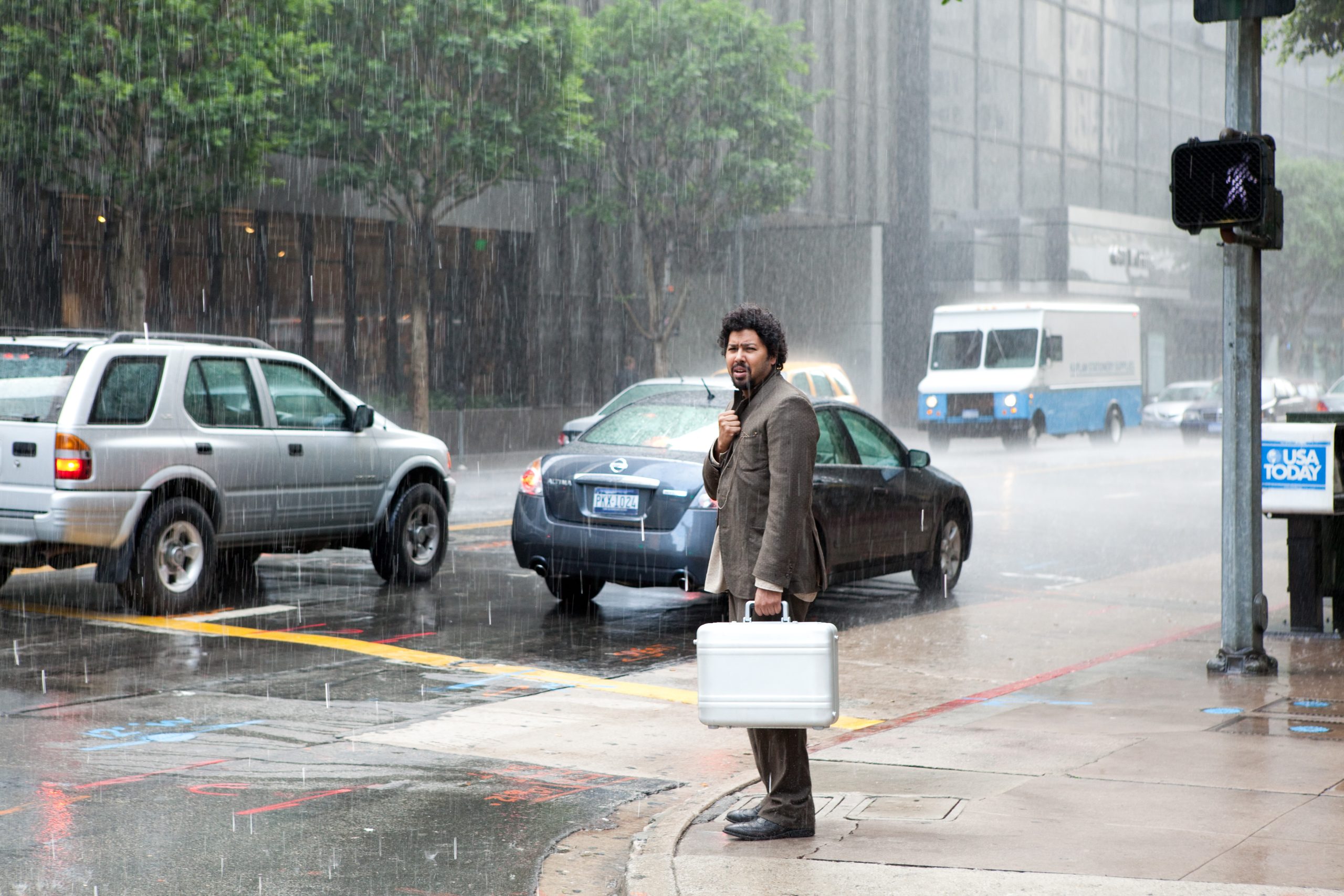
But Cobb said something when he was training Ariadne: the more freely a dream environment is altered, the more easily the dreamer’s subconscious realizes that it is in someone else’s dream. That is why the people on the inception team have to be strictly self-disciplined. They try not to alter the dream’s physical environment. (I do not know whether you noticed that even the seasick Arthur had to use a room keycard when he left the hotel room.) But can the subject also change the physical environment? I believe that is absolutely not allowed. If the subject could casually alter the physical environment, would the fights in Inception still be as orderly as they are? Would we still need armed security personnel? Surely we would at least get something on the level of Neo versus Agent Smith. There are exceptions, though: in fact, the physical environment does retain a very small portion that the subject can create. In Inception, the subject projects secrets they do not want others to know into the dream as things like files in a safe. In other words, the subject creates certain objects in the physical environment, and those objects happen to be the secrets they do not want anyone to know. The inception team can then really steal the subject’s secret in the dream, just as they might steal a physical object in reality. Personally, I find this setup absurd. I cannot imagine turning my secrets into a diary or a file locked in a cabinet in my dreams.
Whatever the case, for the subject, most of the physical environment in a shared dream does not shift according to their will.
Now consider the passersby in the subject’s environment. In an ordinary dream, the people in the subject’s environment, like the physical environment itself, are created by the dreamer’s conscious or subconscious mind. During a shared dream, however, not every dreamer uses their conscious or subconscious mind to create the people in the environment. In fact, under normal circumstances, the passersby who appear in the environment during the shared dream in the film are all created by the subject. But that does not mean the subject cannot create characters from their own conscious or subconscious mind: Cobb regularly creates Mal to cause trouble. So the fact that the dreamers do not create environmental characters during a shared dream, just like they do not alter the physical environment, is a form of self-discipline. The reason for this self-discipline is the same as the reason for not altering the physical environment: to reduce the traces left by outside intruders as much as possible. So, for the dreamers, the passersby in the dream also do not shift according to their will.
To sum up, subjectively speaking, both the dreamers and the subjects enter the dream with a complete, clear sense of self. The self-awareness in a dream is no different from self-awareness in reality; there is no trace of consciousness being weakened. This breaks the dream’s first characteristic. Objectively speaking, for the dreamers, neither the objective physical environment nor the characters shift according to their will; for the subject, the physical environment does not shift according to their will. Taken together, this breaks the dream’s second characteristic. So, does this still count as a dream?
More excessively still, the architect does not merely set the dream’s physical environment. More importantly, the architect sets the physical “rules.”
In an ordinary dream, there are no physical rules worth mentioning. The dream is governed by the subconscious, so it is full of all kinds of absurd, impossible images: one moment you are walking, and the next you may be flying through the sky. Gravity? To hell with it. In dreams I occasionally play the hero, fighting hordes of enemies single-handedly; let them fire bullets like rain, and I remain invulnerable. Ballistics? To hell with that too.
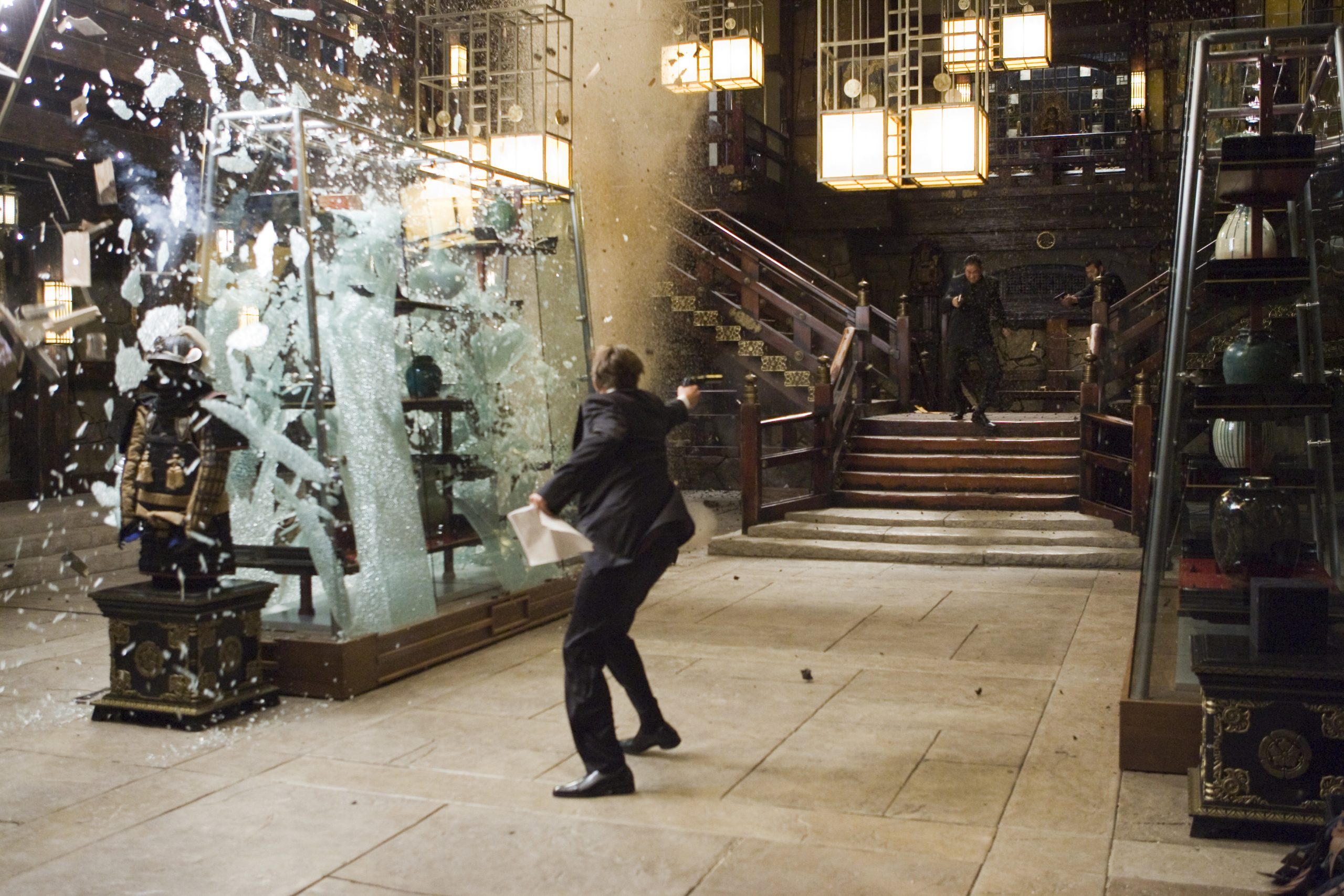
But in the dreams of Inception, the shared-dream environments are governed by strict physical rules. For example, in the first-level dream, Fischer’s subconscious armed personnel counterattack. A bullet hits a car window, the glass shatters; they open fire on the van, and the van is damaged. In this dream, pulling a trigger fires a bullet, and the bullet follows a perfectly physical trajectory. The human body also has realistic organs; once injured, there is a real danger to life. The physical rules in the dream are so strict that even the absurd flight through the air from an ordinary dream is nowhere to be seen in a shared dream. Not only can the dreamers not act beyond the physical rules; the subjects cannot organize forces beyond those rules to counterattack either. That is why in the dream Fischer can summon only ordinary people such as armored guards and mercenaries. He cannot summon golden-armored warriors, superheroes, or invincible martial-arts masters.
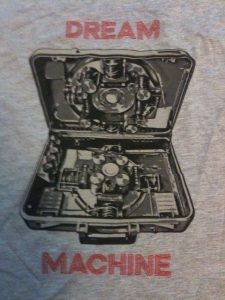
Even stranger, every dream level apparently has a PASIV device! And the PASIV device in the dream can even let connected people enter a shared dream at the level below. Come on, this is a dream environment that does not actually exist—how could it also contain a fully functional PASIV device? Actually, the PASIV device in the dream is of course not a real PASIV device. It is merely code generated in the dream by the program inside the real PASIV device at that level. When the dream uses this PASIV device, it is actually sending a signal to the real device through that program code. The real device receives the signal and, based on the shared-dream connection, sends instructions that let the people connected to the “PASIV device code” in the dream enter the corresponding dream level below.
My God, this PASIV device is so advanced—and yet it looks as though it does not even have a display. Could it be the shuffle edition?
This makes me think of a passage from The Black Hole (Hei Dong Di Guo), where the bald uncle explains things in detail. He is in the Matrix, holding a fork and pointing it at a steak: “I know this steak does not really exist. When I put it in my mouth, the Matrix sends an instruction to my brain telling me that this steak is juicy and delicious.”

So let me write a piece of fake dialogue for Yusuf: “I know this PASIV device does not really exist. When I press its big button, the real PASIV device in reality sends an instruction to the people connected to it, letting them enter the next dream level.”
In a virtual world generated by code and tightly controlled, apart from the subconscious of the subjects wandering around inside it, what difference is there between it and the virtual worlds in Ready Player One or the Matrix in The Matrix? The subjects have essentially been wired into a video game: if you are a warrior, do not even think about using a mage’s spells; if you are level 30, do not try to use an ultimate move that requires level 50. Is this still a dream?
In one sentence, Nolan’s dream environment actually lacks most of the characteristics of a dream. Nolan’s dream is not really a dream.
Setup Eight: The Boundaries of Dreams
When it comes to setting the physical environment of a dream, what is especially interesting is the setting of the dream’s boundaries. Since the dream’s physical environment is ultimately stored in a PASIV device, its capacity is limited; it is impossible to design an infinite world. So if a subject wanders to the boundary of the physical environment, they will see through the fact that it is a dream. This is exactly what happened in the wonderfully imaginative film The Thirteenth Floor: someone in the dream discovered the edge of the world.
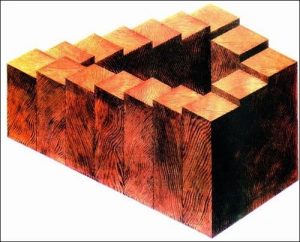
Perhaps inspired by The Thirteenth Floor, Nolan devised a way to conceal the boundary in the dream environment of Inception: use impossible figures. Impossible figures are spatial structures that cannot exist in real three-dimensional space. One such impossible figure shown in the film is a looping staircase. Look closely at that staircase and you will find that, viewed one section at a time, every stairway goes upward; but follow it around once and you discover that it has completed a loop, going down and then up again. The overall and local clues contradict each other. The point of using impossible figures to hide the boundary is roughly this: in a dream, people’s consciousness is hazy and cannot logically judge the clues in a figure normally. So they do not notice the contradiction in the clues, and the impossible figure becomes “possible” in the dream environment. By using lots of impossible figures at the boundary, the dreamer can be made to loop back into the prescribed area without seeming to “walk out.”
Setup Nine: The Trouble with Not Distinguishing Dreams from Reality
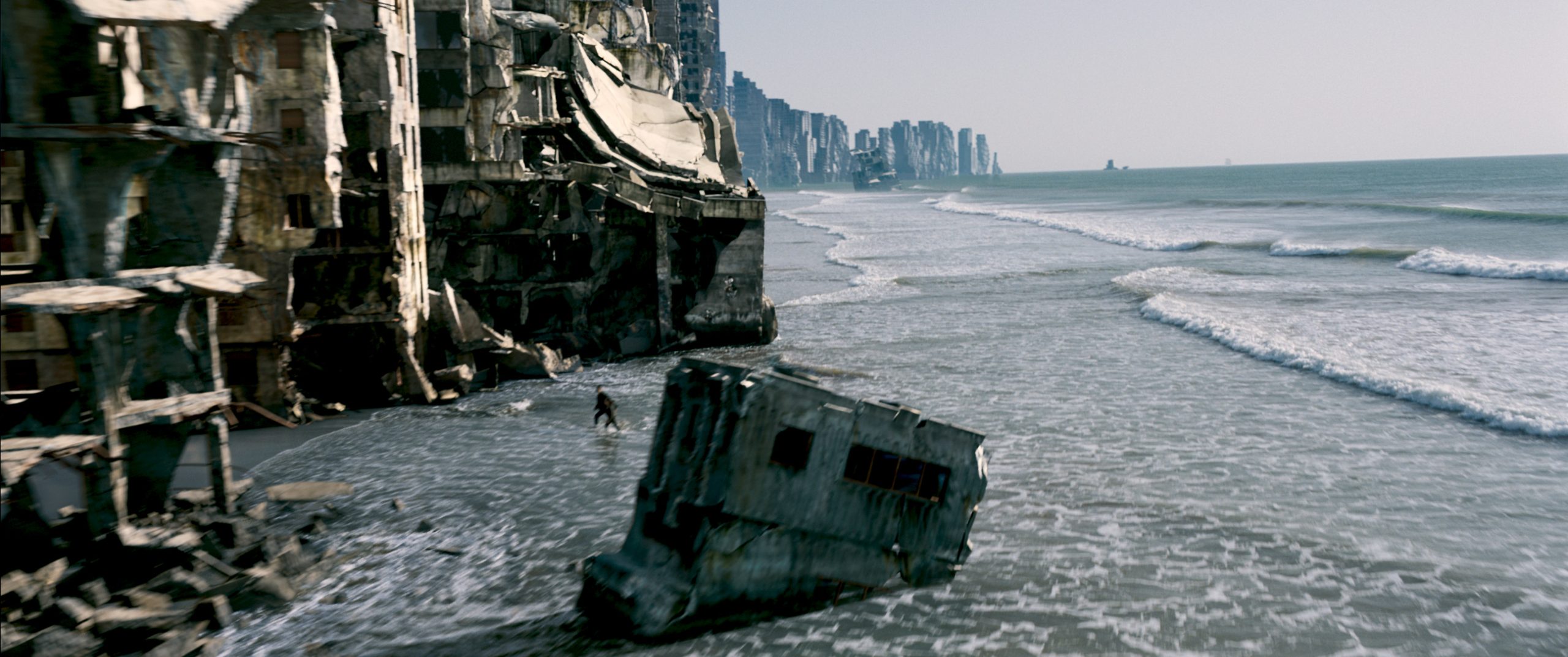
In philosophy there is the famous “brain in a vat” thought experiment. It asks: if we put our brain in a vat of nutrients and use a computer to transmit various kinds of information to it, so that the world experienced by the brain is actually a hallucination manufactured by the computer, how could the brain verify whether the world it perceives really exists? When films such as The Matrix became popular at the end of the last century, the “brain in a vat” became a hot topic. A dream environment is also a kind of brain-in-a-vat situation, so Inception inevitably has to touch on the subject. That is what happens after falling into limbo. Mal identifies limbo as reality and refuses to wake up. Later, Fischer also believes that limbo is reality. When we fall too deeply into a dream environment, how do we tell the difference between the dream and reality? At that point, waking up from the dream requires enormous courage—the “leap of faith” mentioned repeatedly in the film. But as for whether limbo is reality, I think this is one of the weakest themes in Inception. As I said earlier, Nolan’s dream environments do not really resemble dreams; they are too strictly rule-bound. In fact, only limbo has even a little of the feel of a dream: freely constructed architecture, impossible architectural combinations, and eventually the collapse of the entire limbo, all of it saturated with a dreamlike quality. The most confusing limbo is actually the one that looks most like a dream.
For Neo, the Matrix is so real that he finds it hard to believe it isn’t reality. For Mal, though, it isn’t that Limbo is too real; it’s that she willingly chooses to treat it as reality. What Mal did was essentially perform an inception on herself: she made the top in her subconscious stop spinning. A stopped top corresponds to reality, so this created a psychological suggestion in her subconscious: Limbo is reality. Later, Cobb’s inception of Mal simply performed the reverse operation: he made the top in Mal’s subconscious spin. A spinning top, constantly turning, corresponds to a world that is unreal, so this created a psychological suggestion in Mal’s subconscious: the world isn’t real.
So the confusion between dreams and reality in Inception isn’t because the dream is too real, but because the dreamer actively wants to define it as reality. It’s not confusion; it’s obsession. The film mentions several times that waking up from Limbo requires enormous courage, that it requires a leap of faith, but I don’t find that very convincing. The film never made me feel that Limbo was a place where it was especially difficult to tell reality from illusion.
I don’t think Inception succeeds very well at presenting the idea that dreams can instead resemble reality. The most interesting treatment of that idea, to my mind, is Mamoru Oshii’s Avalon. If you’re interested, give it a look.
That’s everything I wanted to say about the various aspects of Inception’s dream design. It may sound as if I’ve said quite a few mean things, but do you think I don’t like this movie?
No, I love it.
Nolan’s work rarely has the compassionate sensibility of a master, and some of his ideas aren’t even original, but he can certainly tell a story that keeps hitting one climax after another.
And I love stories that keep hitting one climax after another…
Collected
- Some of the arguments in this article, revised, have been included in The Alluring Illusion: Psychological Secrets in Film and Television.

Leave a Reply