
【Zhihu question】What are some easily missed details in the Netflix series Stranger Things?
Let me point out one detail:
Why does Eleven have to soak in a bathtub to unleash her ‘soul-traveling-beyond-the-sky’ superpower to its fullest?
In Season 1, Eleven achieves an out-of-body experience in a huge bathtub (really a water tank), travels psychically to the Soviet Union, then accidentally travels into the Upside Down and opens rifts between the two worlds.
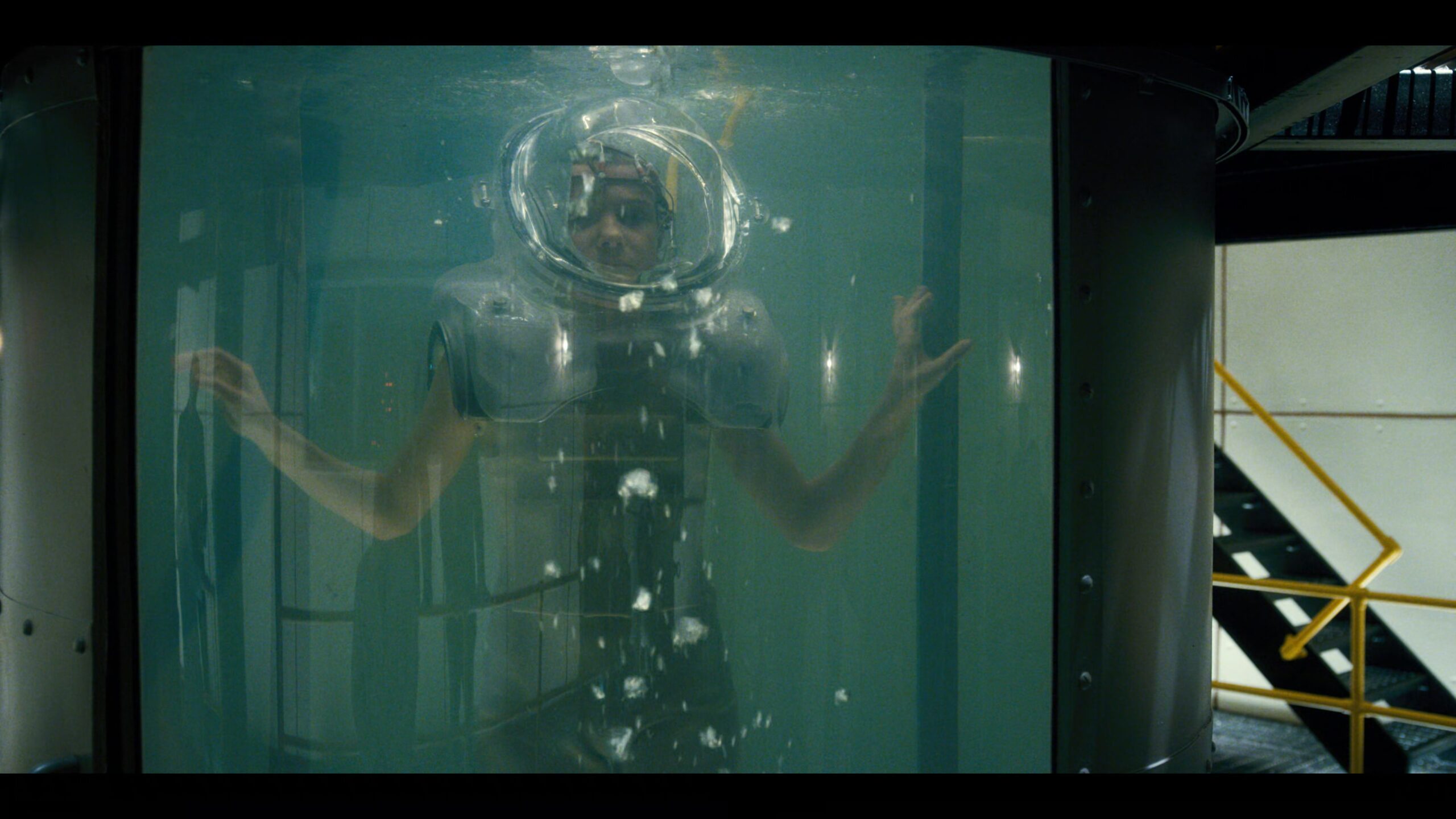

Still in Season 1, Eleven later uses the bathtub to travel psychically into the Upside Down and locate the missing Will.


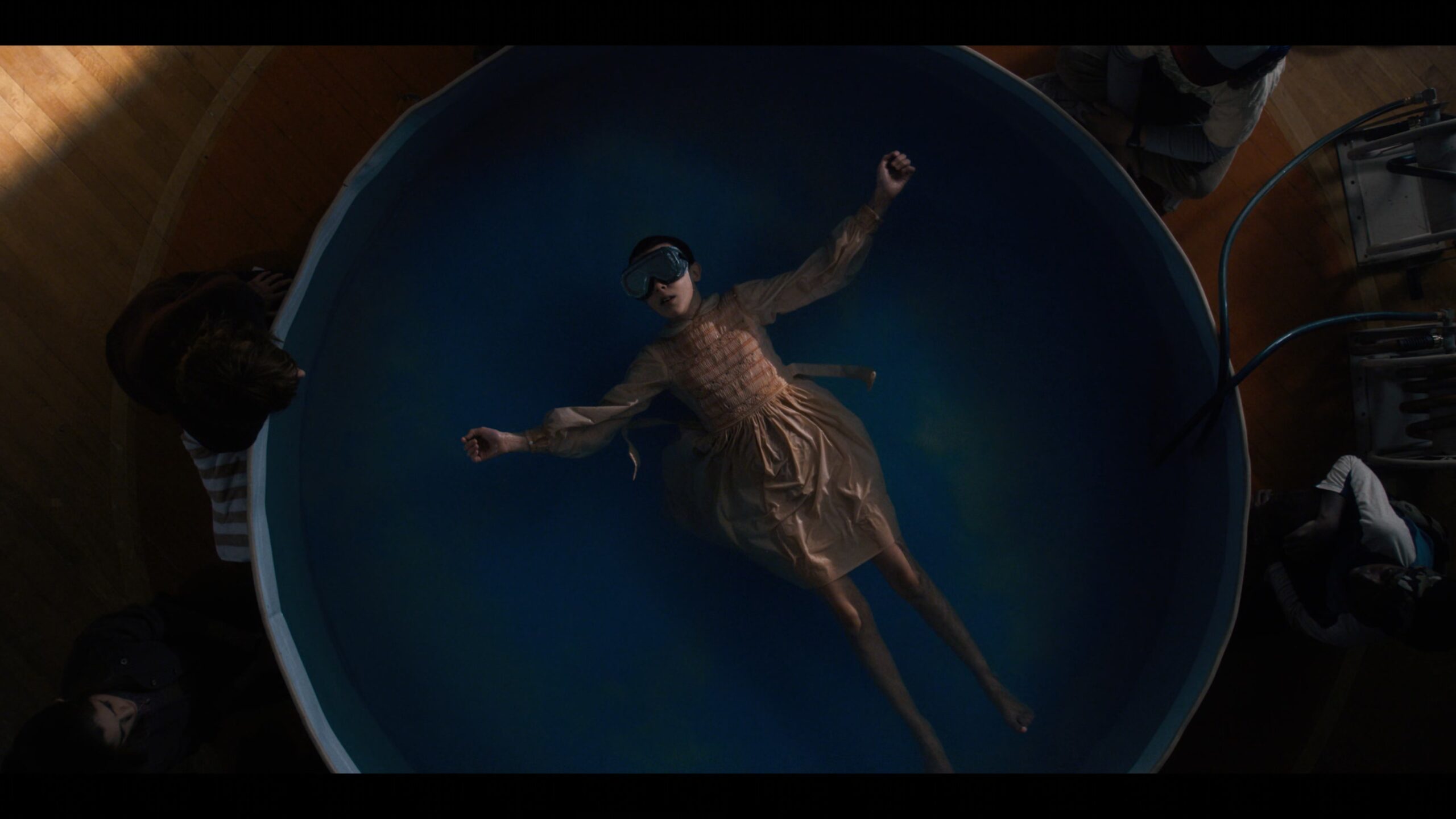
In Season 4, Eleven levels up again: after traveling psychically from a bathtub into Max’s mind thousands of miles away, she links up with Vecna and literally creates a ‘brain network.’
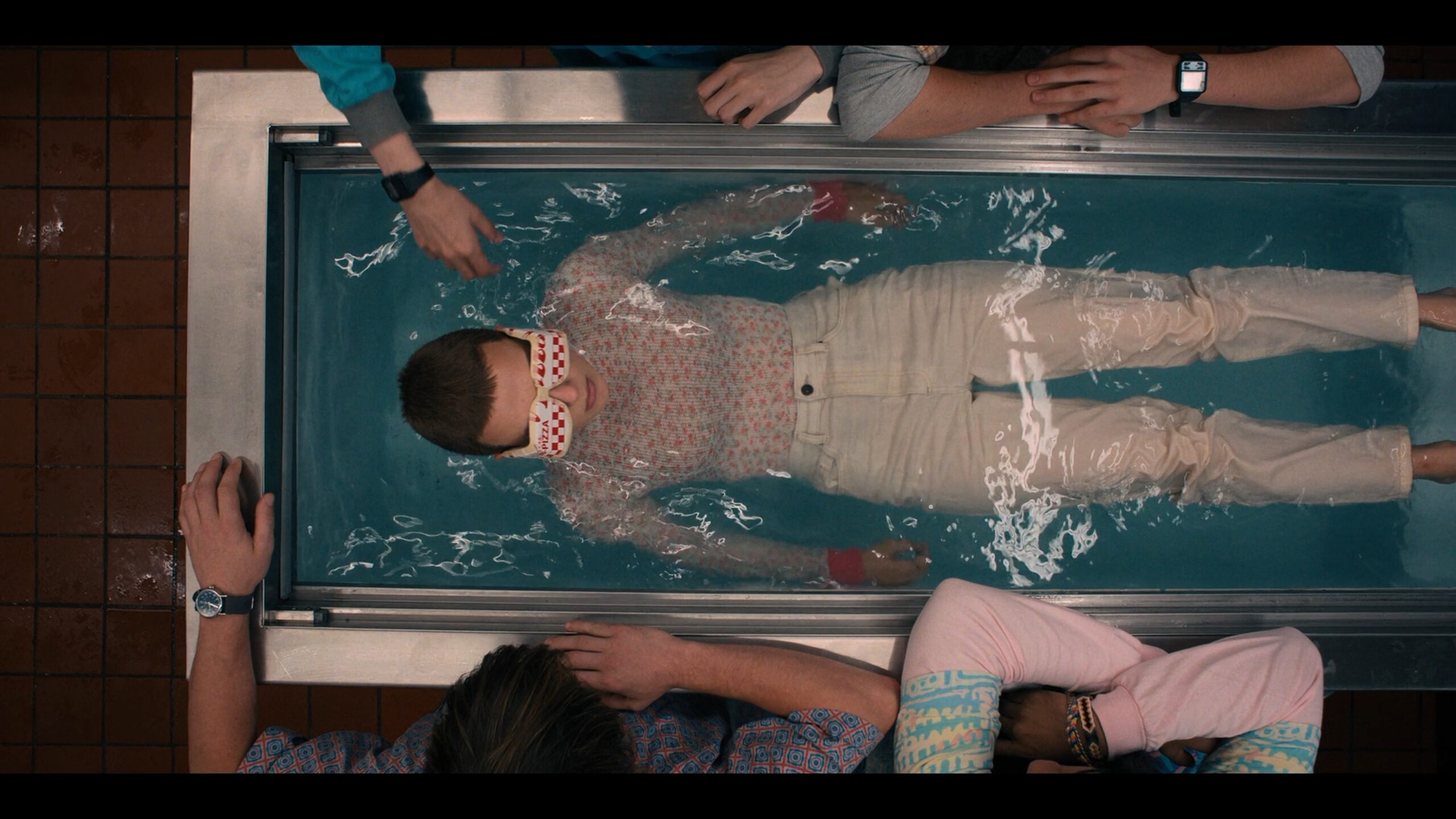
Without a bathtub, Eleven is like Li Xunhuan after throwing all his throwing knives away, or Luke Skywalker after losing his lightsaber—her power gets cut by ninety percent.
If I had to give Eleven a nickname, I’d call her—
the Bathtub Fairy!
So why a bathtub? Why does soaking in a tub of salt water let Eleven’s out-of-body superpower work at full blast?
This setup wasn’t something the screenwriters pulled out of thin air. It has a historical precedent.
The idea that a bathtub can trigger psychic travel comes directly from a real ‘mad experiment’ carried out in history.
The Mad Experiment
In 1954, American medical doctor and psychiatrist John C. Lilly became fascinated by how the human brain works. What he especially wanted to know was this: what happens when all external stimuli are blocked? If the eyes, ears, skin, and nose stop sending signals to the brain, what changes? Would the brain go dormant without external stimulation? Or would it stay active through some internal regulatory mechanism even without outside input?

To solve this puzzle, Dr. Lilly decided to use himself as a lab rat. In an isolated building, he built an isolation tank that looked a lot like an oversized bathtub (the prototype for all those bathtubs and water tanks in Stranger Things).
Before the experiment began, he filled the tank with water at 34.5 degrees. When your skin is immersed in water at that temperature, you can barely feel any stimulation.
And with your entire body floating in the water, your sense of gravity also becomes very faint.
The room containing the tank was completely soundproof, so his ears couldn’t receive any information either.
Once the experiment started, the room stayed pitch-black, blocking his vision.
With all these conditions in place, Dr. Lilly had almost completely cut off external stimulation.
After the experiment began, John C. Lilly put on an oxygen mask and lay down in the isolation tank—
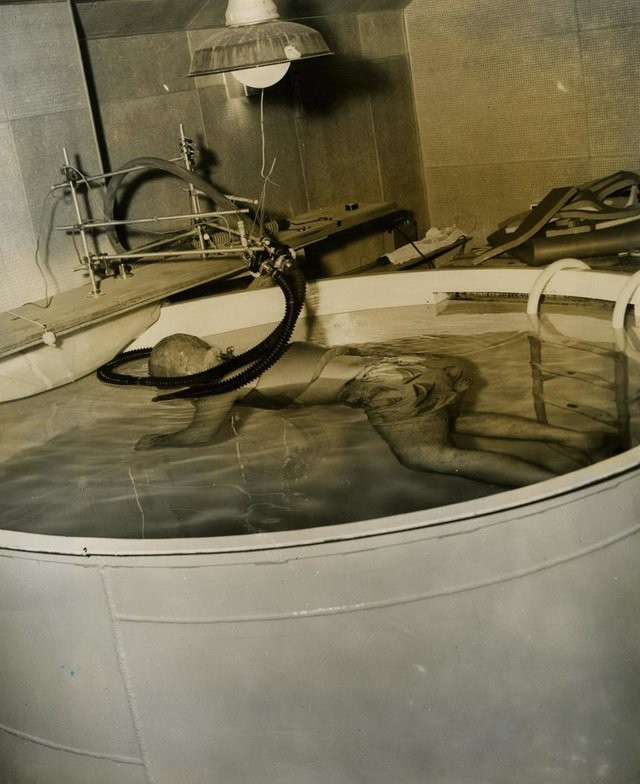
He repeated this experiment many times, often lying in the tank for several hours at a stretch. So what did he experience?
An out-of-body experience?
In a paper he published later, he described his time in the tank like this. For the first 45 minutes, he simply replayed trivial details from daily life. After an hour, he became bored and restless and desperately wanted external stimulation. After 45 minutes, he began to relax and told himself he didn’t have to do anything. An hour later, he again craved external stimulation. All his attention focused on the mask and the rubber strap around his feet (a device to keep him from drifting); those were the only two things he could feel.
But once he got through this stage, the boredom and restlessness gradually faded. The experience began to turn a little magical. His brain seemed to switch into a ‘creative mode.’ Lilly felt his thoughts suddenly become extremely active. His mind wandered, producing all kinds of images and ideas that normally wouldn’t occur to him.
After that stage came something even stranger: John C. Lilly began seeing hallucinations. Once, after floating in the water for two and a half hours, Dr. Lilly suddenly saw the darkness in front of him disappear. All kinds of bizarre shapes appeared, their edges glowing, and he even saw a tunnel shining with blue light.
At this point, it was as if his body were still trapped in the bathtub, while his mind had flown free and was soaring through another astonishing dimension.
This final stretch in the bathtub deeply shocked Lilly. He said, ‘I discovered many secrets. I didn’t dare write them down before, because at the time I was a researcher at the National Institute of Mental Health.’ But he gradually let himself go. He wrote articles linking his experiences in the isolation tank to telepathy, speculating that once the senses were blocked by the tank, certain supernatural potentials in the human mind would be awakened—yes, what Lilly was thinking was basically: ‘So I’d awakened some kind of paranormal human ability! I was literally freeing my soul from the body and sensing things in another dimension!’
Of course, looking back now, John C. Lilly’s hallucinations in the isolation tank merely show that when external stimulation is absent, the brain isn’t willing to sit around bored. When there’s nothing in the outside environment, the brain will get itself hyped up and manufacture its own information. There’s nothing supernatural about it.
But in the 1950s and ’60s, psychology was still living in an age when psychics were everywhere. Parapsychology, which studied paranormal human abilities, was treated as a respectable field, and the public lacked even basic scientific literacy about the mind.
Against that backdrop, John C. Lilly’s experiments and statements spread rapidly and left a mark on an entire generation’s memory.
That’s why the ‘Bathtub Fairy’ setup appears in far more screen works than just Stranger Things.
In Minority Report, the three precogs who can foresee crimes through telepathy are also soaking in bathtubs.
In the American TV series Fringe, there’s also a storyline in which the female lead enhances her psychic abilities by soaking in a bathtub.
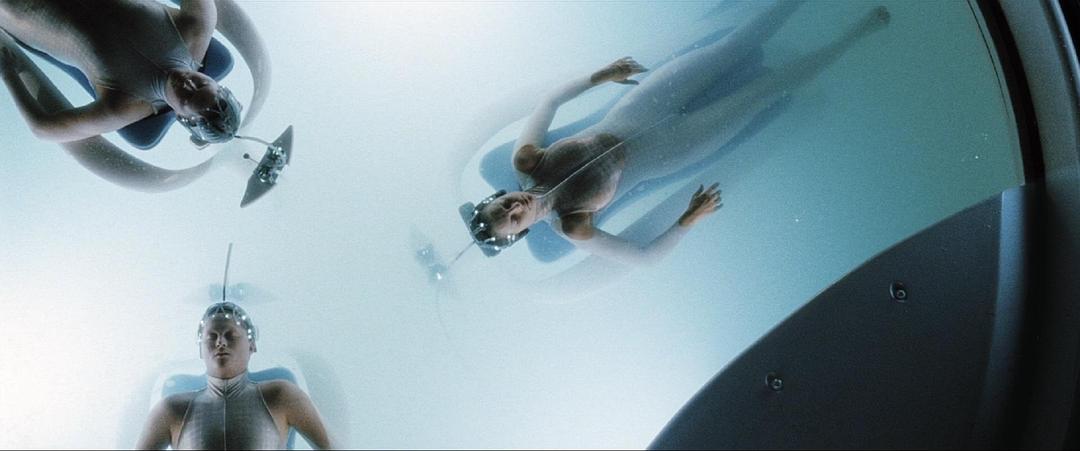
‘Use the bathtub right, and your soul leaves your body and goes beyond the sky’ has long been one of those jokes that makes Western viewers smile knowingly the moment they hear or see it.
The U.S.–Soviet Rivalry
What’s even more interesting is that Lilly’s bathtub experiments became famous in the 1950s and ’60s, right in the middle of the Cold War. The two blocs would stop at nothing to get one over on each other. Parapsychology, with its focus on paranormal human abilities, naturally caught the attention of government and military agencies on both sides.
Throughout the Cold War, the United States and the Soviet Union poured plenty of money and manpower into researching paranormal human abilities. Did the U.S. military’s parapsychology research use bathtubs to stimulate telepathy? Most likely, yes.
—That’s the historical background behind Eleven being made the ‘Bathtub Fairy’: in real history, there really was a mad scientist who locked himself in a bathtub and experienced his soul leaving his body and traveling beyond the sky.
The bathtub setup for Eleven’s psychic travel is even remarkably ‘true to history’ in many details. For example, when John C. Lilly hallucinated, the crucial procedure was ‘sensory deprivation.’ The bathtub’s main function was to block external sensations. In Stranger Things, Eleven also has to put on a blindfold after getting into the bathtub, specifically to block vision.
Likewise, Eleven’s bathtub is filled with salt water, and in Season 1 the ratio is even calculated by a reliable science teacher. In real life, John C. Lilly later made various improvements to the isolation tank. The most important was replacing fresh water with salt water, which allowed a person to float easily without sinking. In later experiments, Lilly no longer needed to wear a mask, which made things much easier.

There’s another extremely ‘true to history’ element in Eleven’s bathtub setup: the Cold War backdrop. In Stranger Things, Eleven’s powers were developed specifically to counter the Soviet threat. In reality, plenty of boys and girls had experiences similar to Eleven’s. But in the real world, research related to paranormal human abilities ultimately went nowhere in both the United States and the Soviet Union.
The Cuban Missile Crisis was ultimately resolved by political maneuvering, not Magneto and Professor X’s ‘one hug for a thousand years.’
(There are plenty of fun stories about the mad experiments of the U.S.–Soviet Cold War era. I’ll leave this as a little loose thread for now; if I get the time, we’ll take it apart properly.)
P.S.:
John C. Lilly grew more and more eccentric. In the 1960s, he spent years studying dolphins. He took psychedelics at the same time as dolphins, hoping that once the drugs triggered telepathy, he could talk directly with them.
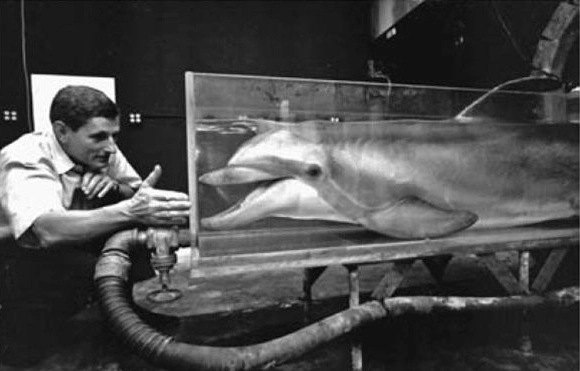
Later, Lilly came to believe that a mysterious organization called E.C.C.O. (Earth Coincidence Control Office) existed on Earth, and that it was responsible for all the coincidences in his life.
After Lilly died in 2001, someone created a website introducing him: www.johnclilly.com. The visual style is like this:

All I can say is, extremely… Flying Saucer Exploration.
Leave a Reply