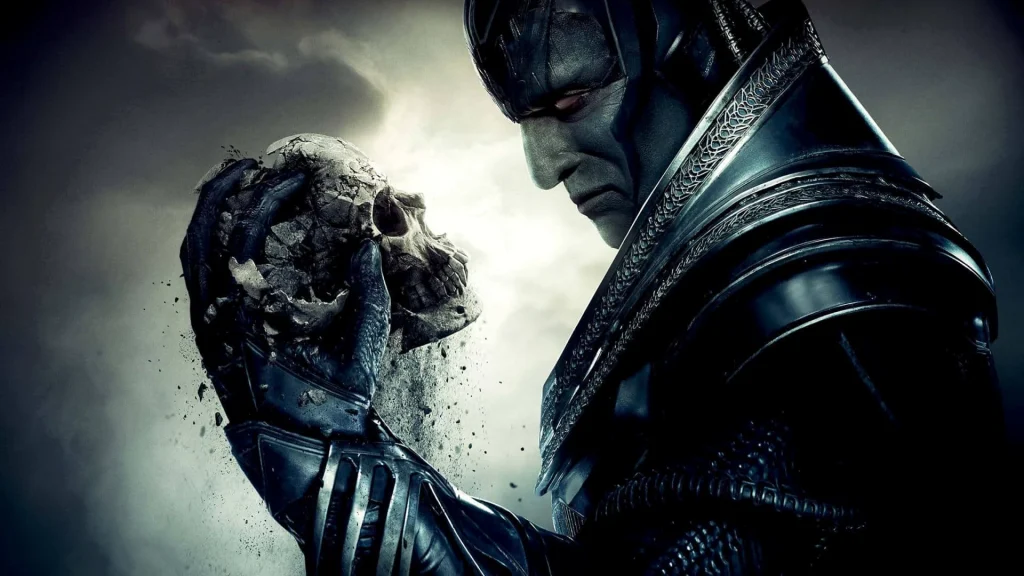
Let's talk about Apocalypse's absolute combat power, relative combat power, emotional intelligence, and IQ.
After watching X-Men: Apocalypse, a lot of people said this Boss—Apocalypse—wasn’t much of a fighter. He was supposedly the strongest mutant in history, yet Jean Grey took him out in seconds.
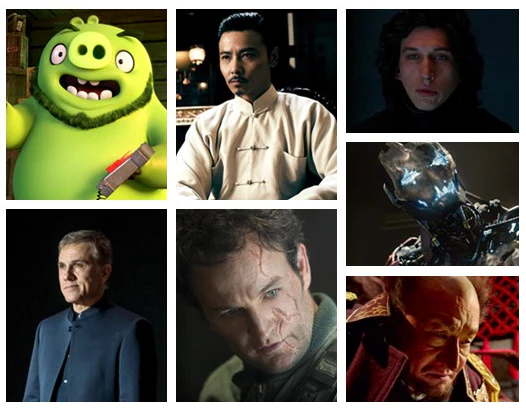
That got me thinking about the Bosses in the movies I’ve seen lately: the green pigs in The Angry Birds Movie, the pain-free guy in Deadpool, the handsome rickshaw puller in Ip Man 3, the horse-faced guy in Star Wars: The Force Awakens, Ultron in Avengers: Age of Ultron, Bond’s adoptive brother in Spectre, black John in Terminator Genisys, and the Vulture in Mr. Six… These recent Bosses have been weaker than the last, and their combat power seems generally pretty poor. Compared with them, Apocalypse is actually doing fine.
I actually want to ask that pile of Bosses from before Apocalypse: what happened to you guys?
Bosses weren’t like this in the old days.
When I was a kid, an arcade game called Knights of Valour was all the rage (where I grew up, we called it ‘Board Knife Noodles’). Anyone who played it has just revealed their age. Even a button-mashing wreck like me could get through the first level’s mini-Boss, but if you asked me to fight the final Boss, I’d have to keep feeding in credits until I went bankrupt.
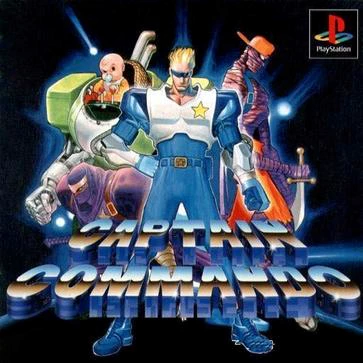
Only that level of destructive power really qualifies someone as a Boss. Action movies back then were a lot like side-scrolling beat-’em-ups: the good guys could look impressive while beating up small fry, but when they met the final Boss, they were bound to get flattened first and then turn things around by feeding in more credits.
A Boss’s absolute combat power: the blood-spilling index and the gang-up index
If we wanted an objective measure of a Boss’s combat power in an arcade game, without question it would be ‘the number of extra credits needed to beat it.’ The arcade games I played as a kid all had Bosses with sky-high credit counts. But what about movie Bosses? Is there a way to measure their combat power?
I’m a die-hard Tsui Hark fan. Three of his representative works from around the 80s and 90s—A Chinese Ghost Story, Swordsman II, and New Dragon Gate Inn—shaped part of my worldview and my sense of aesthetics, and their Bosses were seriously formidable. Let’s see exactly how formidable the Bosses in these three films were.
First, Black Mountain Demon from A Chinese Ghost Story.

Even his minions could make the good guys’ strongest fighter, Yan Chixia, spit blood:
Then he stepped in himself and gave both Yan Chixia and Ning Caichen penetrating injuries:

After coming back to life in the third film, he even made the old monk bleed golden blood all over:
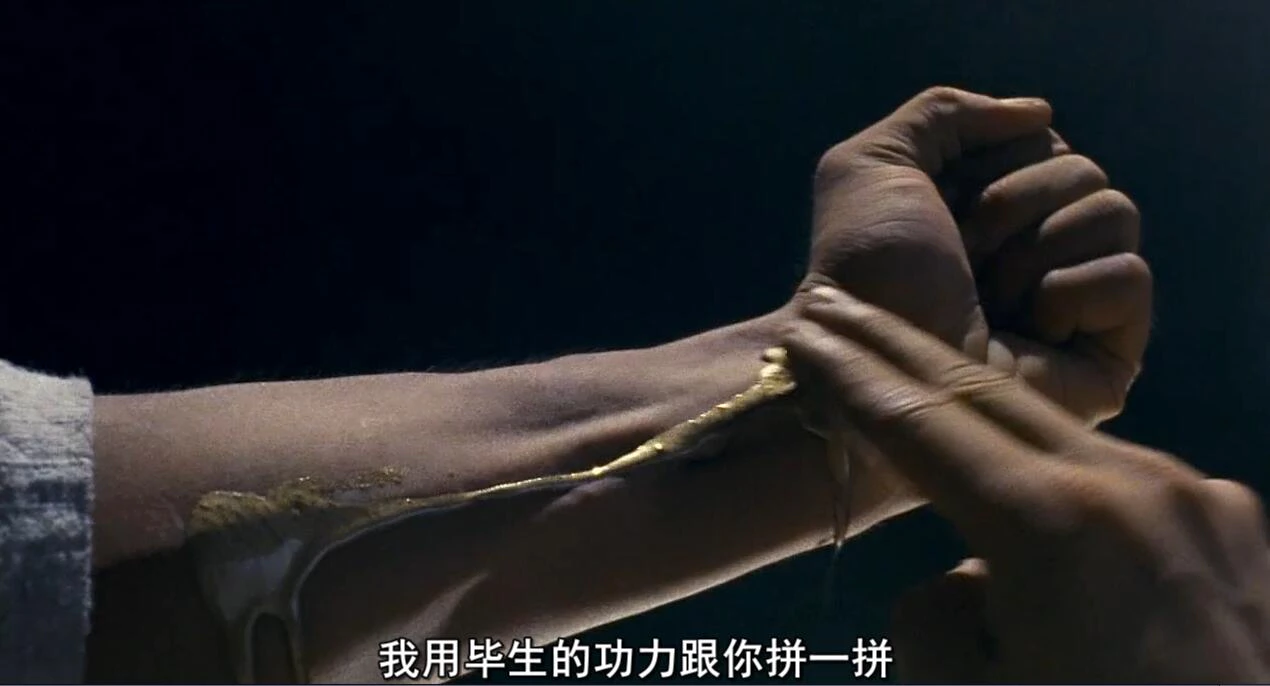
If a Boss is this hard to beat, the good guys are bound to spill some blood and break a few bones. And so the first indicator for measuring a Boss’s combat power practically announces itself: the blood-spilling index. A Boss’s combat power is directly proportional to how much blood the good guys spill.
Now let’s look at the combat power of Asia the Invincible.
First, a Japanese warrior spied on her after betraying his comrades, and ended up beaten into a puddle of blood:
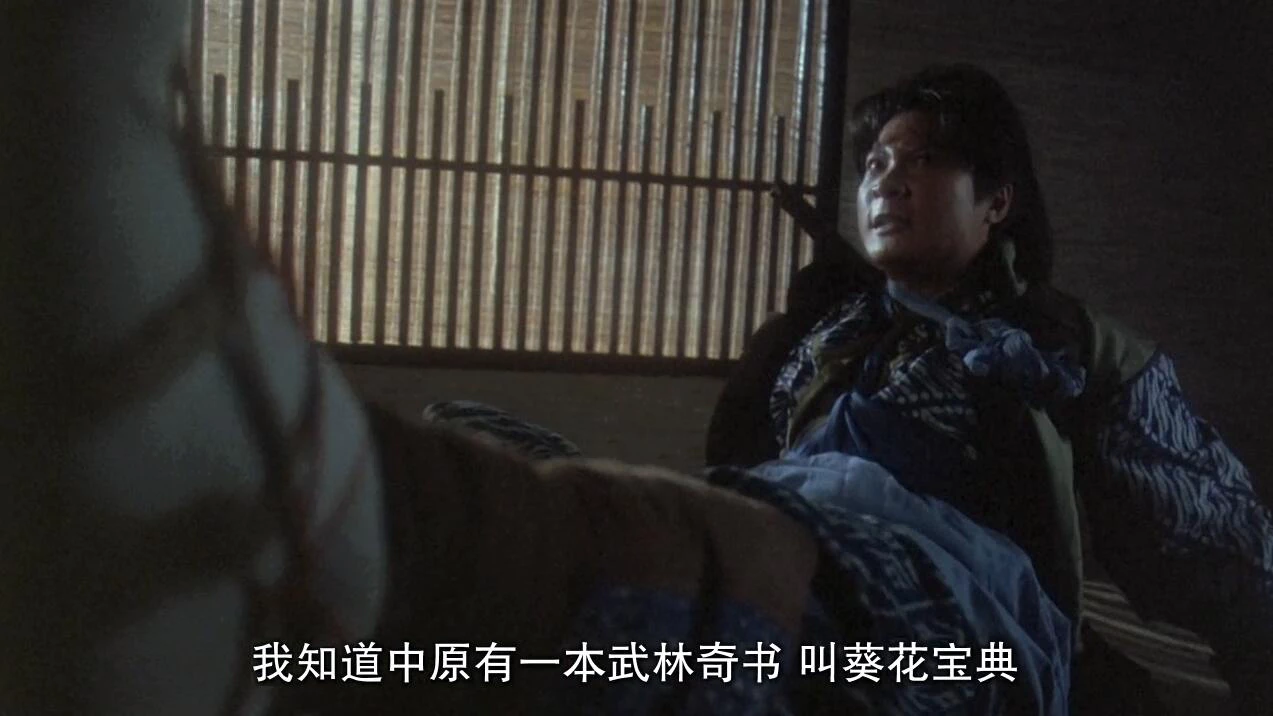

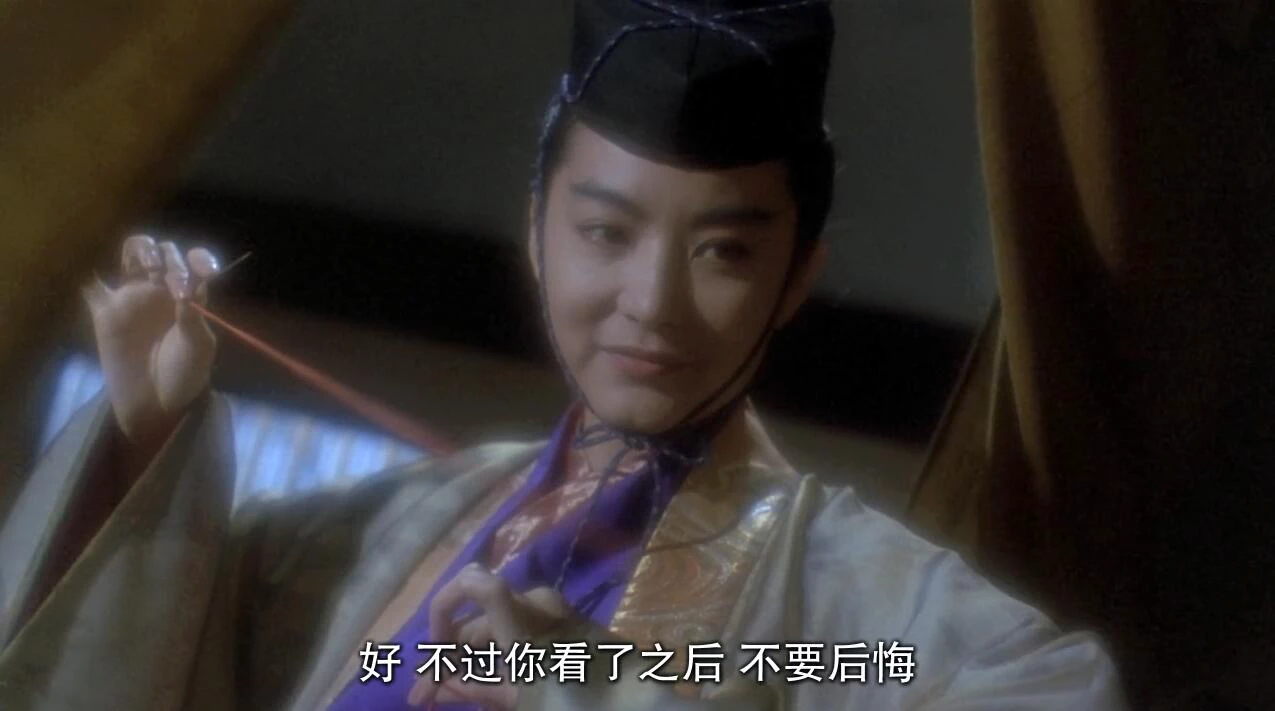
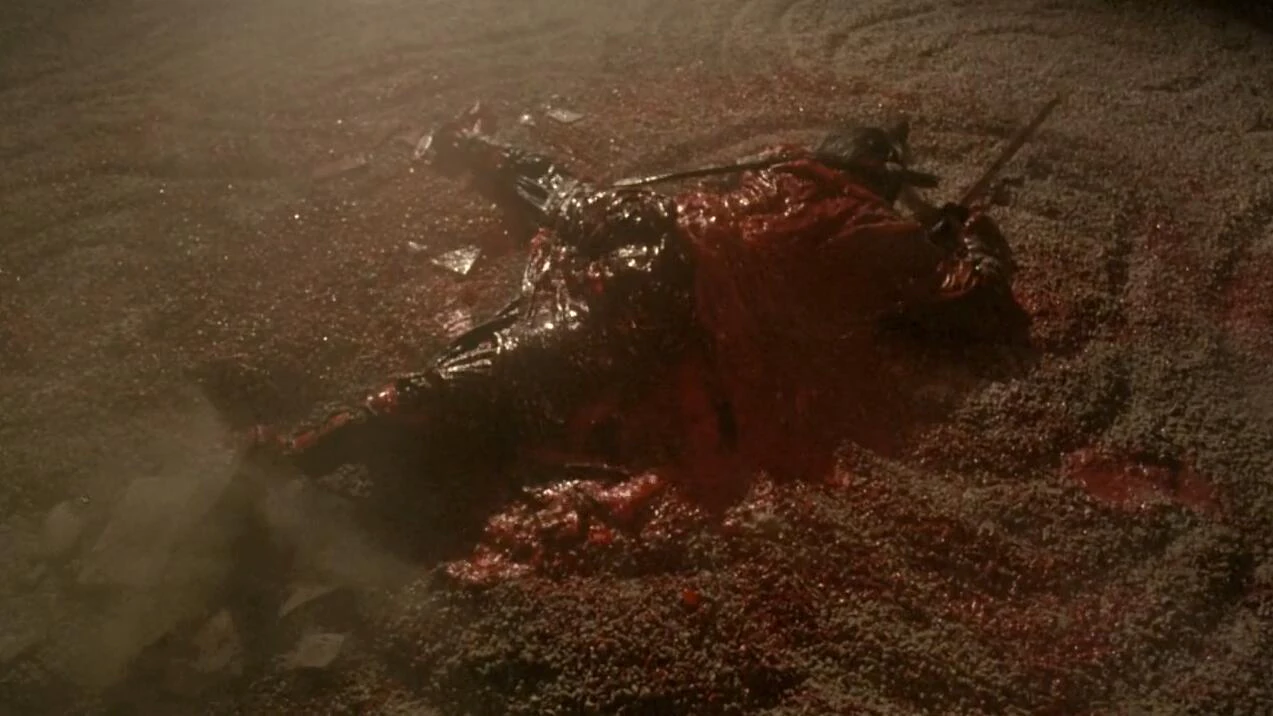
Then she was jumped by a crowd of extras from the Mount Hua Sect:
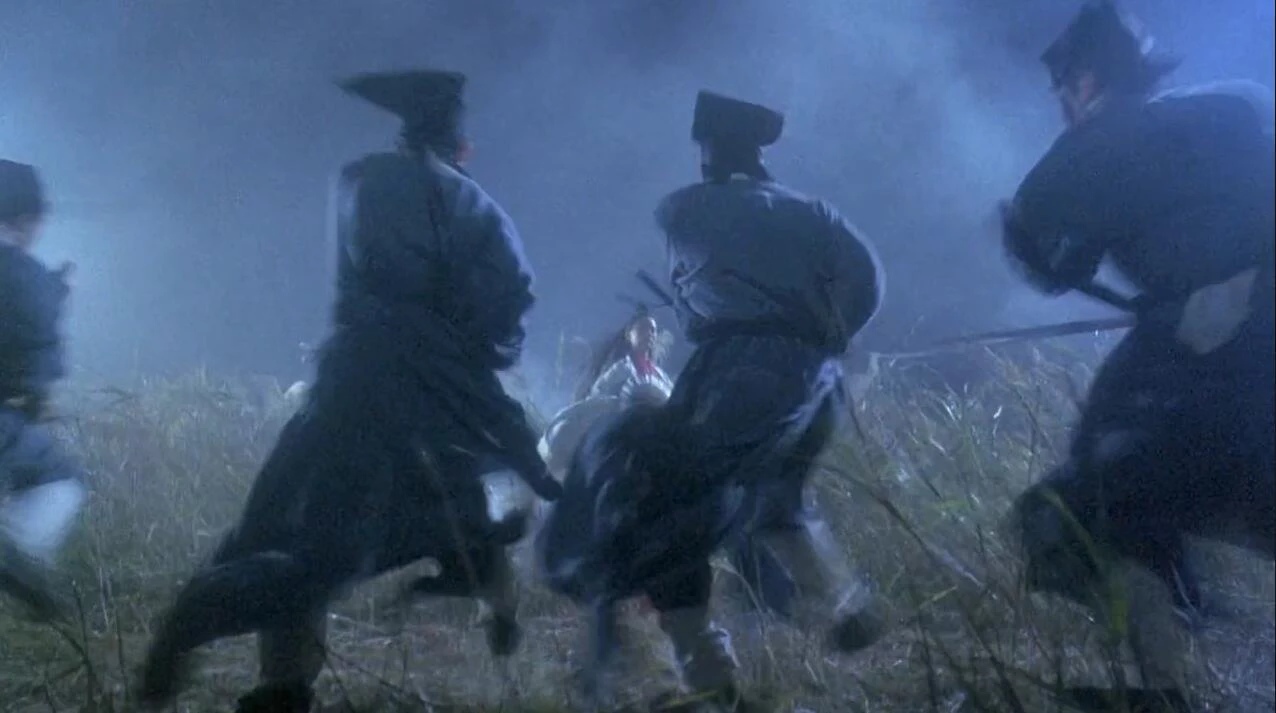
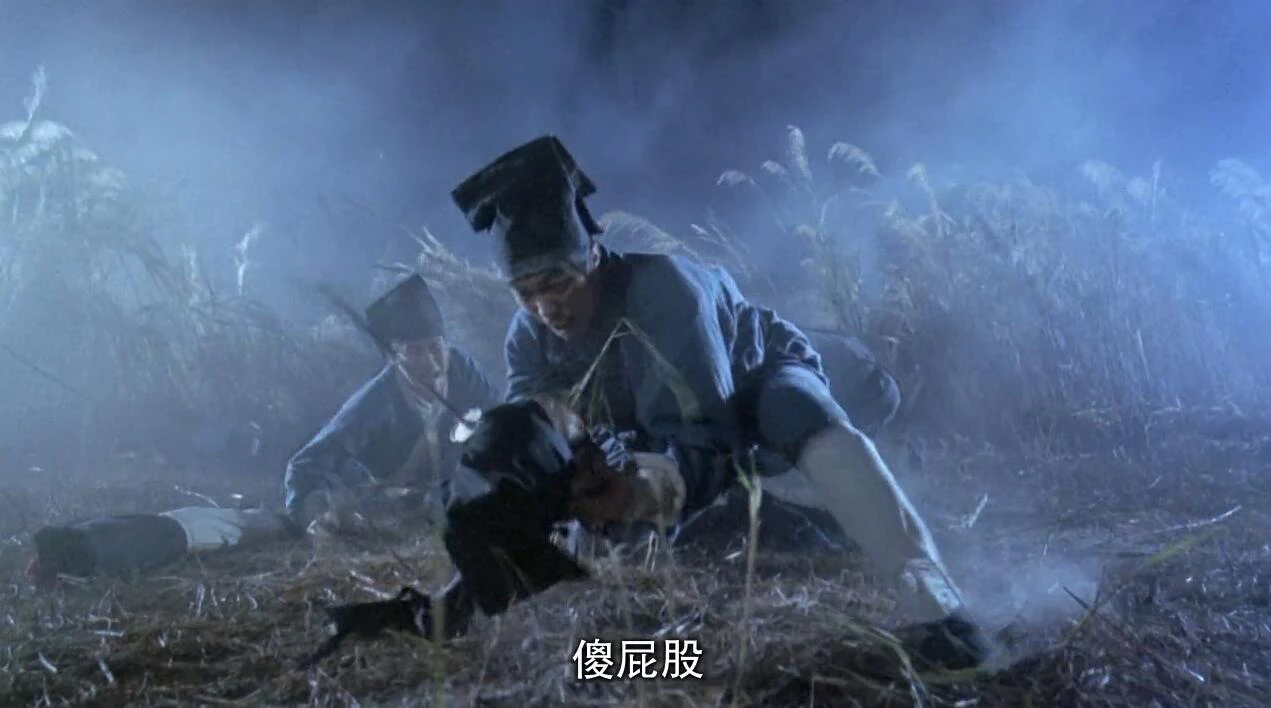
The result: Mount Hua’s extras were smashed all over the floor:
Finally, every top fighter on the good guys’ side ganged up on her:
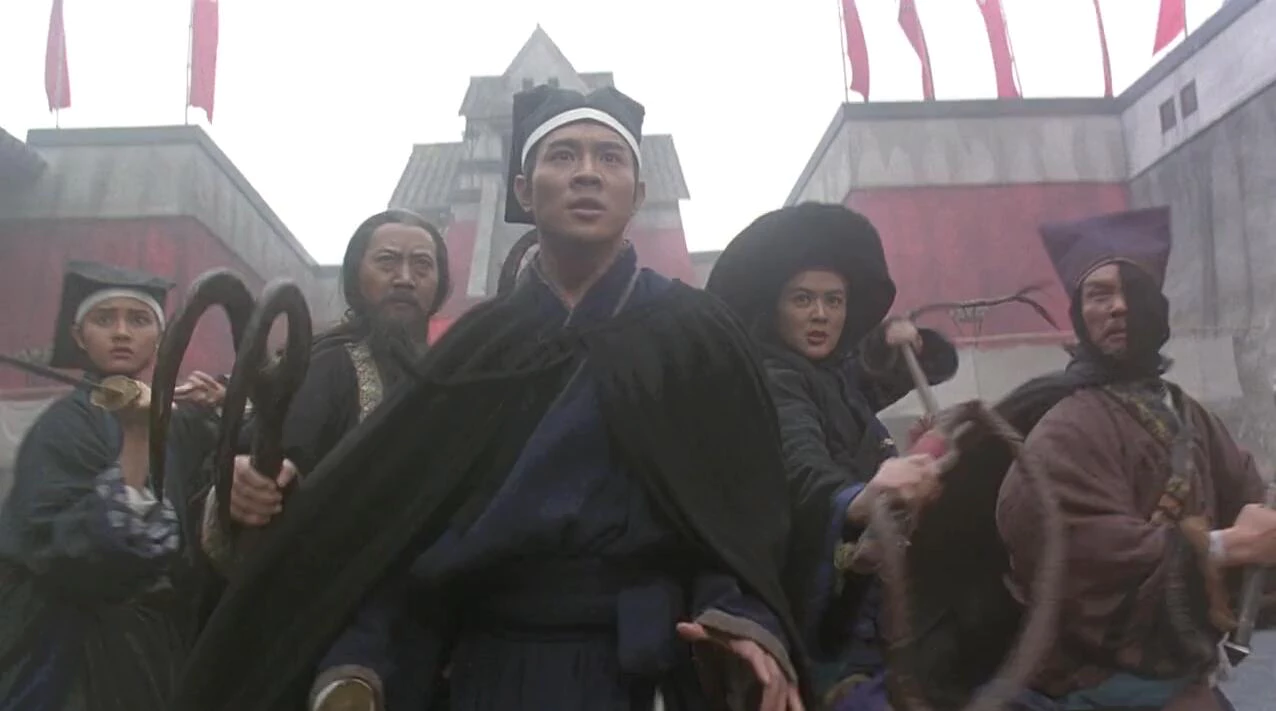
The result: some were pierced, some spat blood, and some were disfigured:

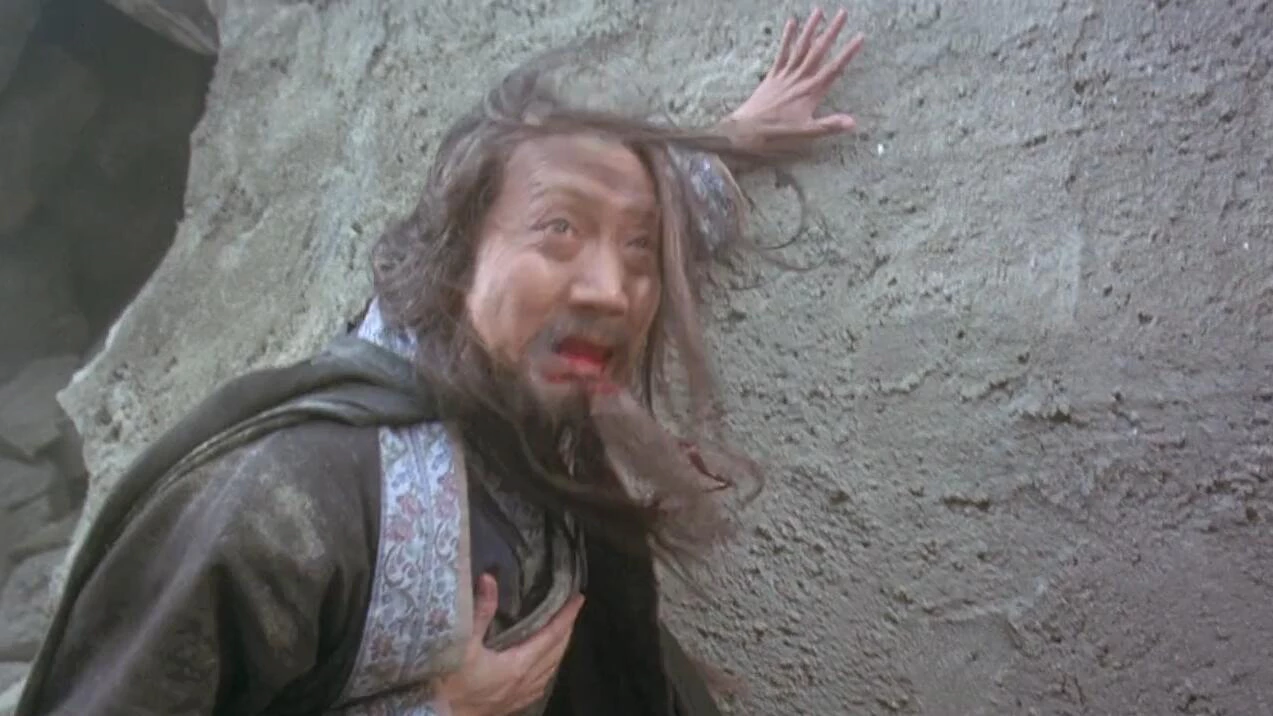
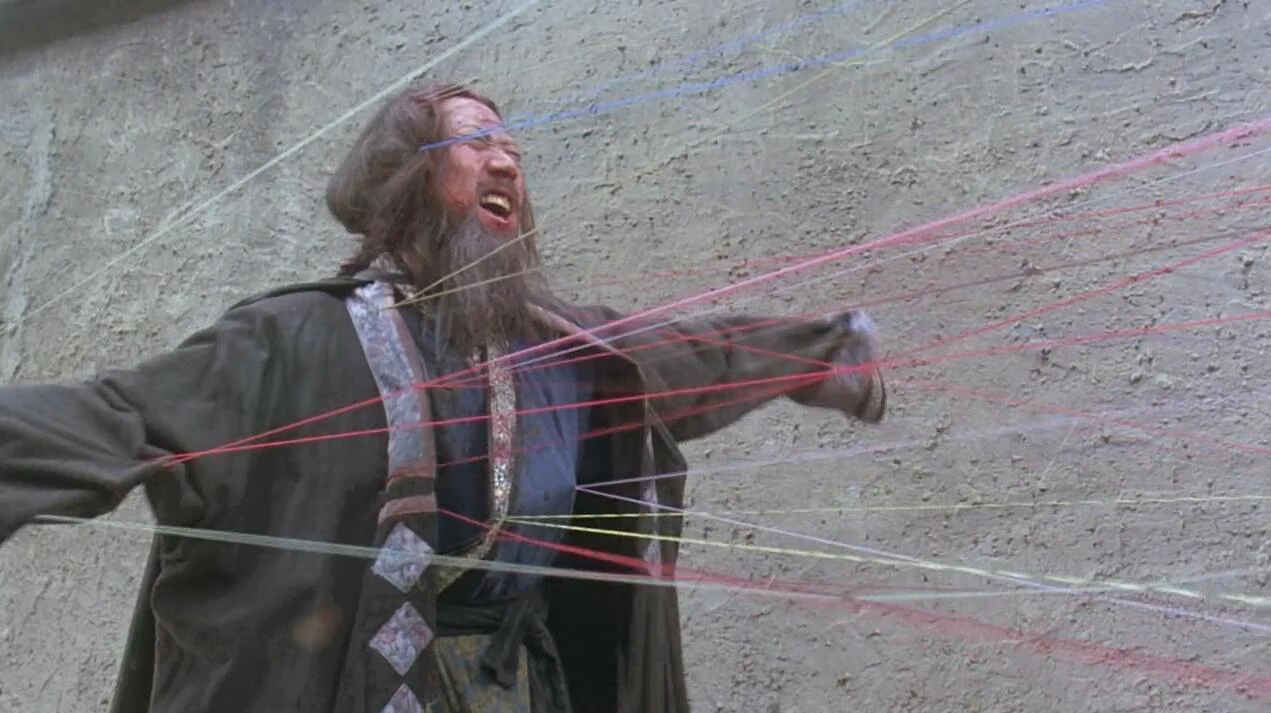
Clearly, Asia the Invincible’s blood-spilling index is off the charts.
And the second indicator for measuring a Boss’s combat power also announces itself: the gang-up index. A Boss’s combat power is directly proportional to the number of people who join the good guys in fighting him.
Without a doubt, Asia the Invincible’s gang-up index is off the charts too.
To be a competent Boss, you generally can’t have a low blood-spilling index or a low gang-up index.
In New Dragon Gate Inn, Eunuch Cao spills blood:
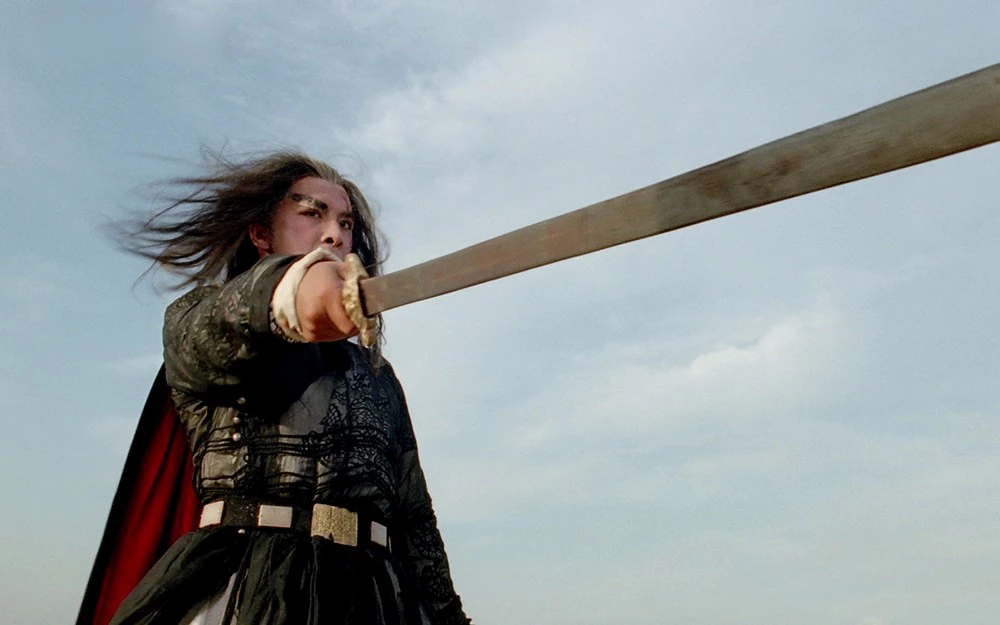

And is eventually beaten to death by a gang:
Eunuch Cao in the contemporaneous The Nerve Racking Sword and the Flying Cat also starts by spilling blood:
Then he is beaten to death by a gang:
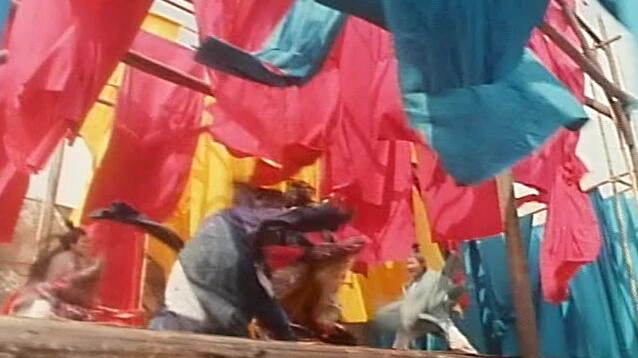
Eunuch Cao in the contemporaneous The New Flying Swordsman is still made to bleed first (why were all the Bosses back then surnamed Cao? And why did they all look like eunuchs?):
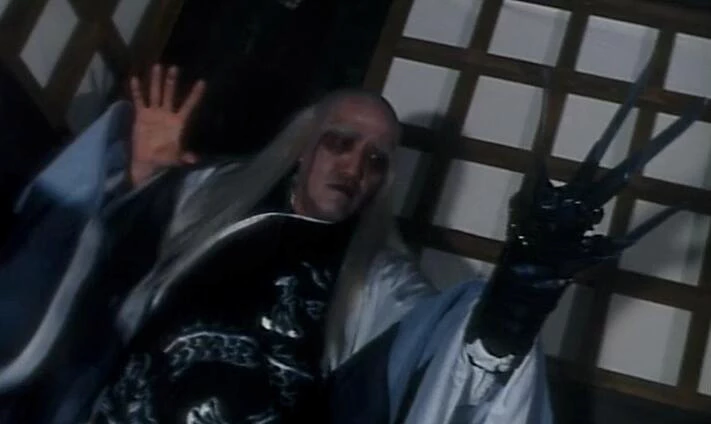
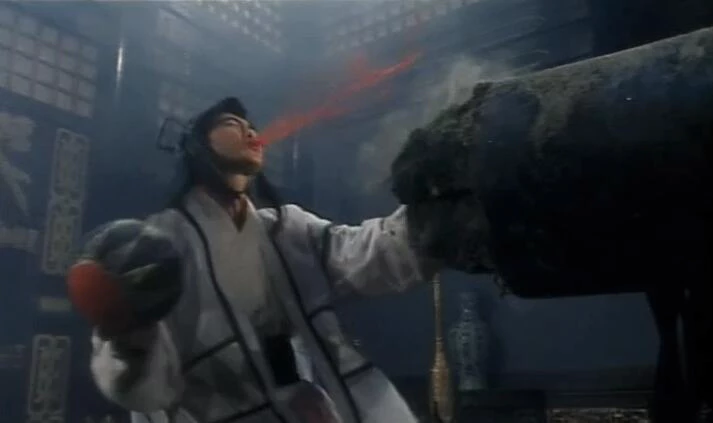
Then he is beaten to death by a gang:
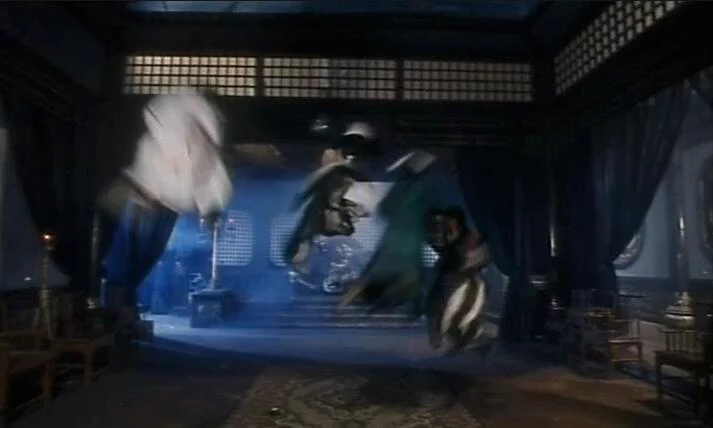
You see, it wasn’t just those three Tsui Hark classics. In a lot of Hong Kong wuxia films from that era, the Boss was basically a mass-murdering god.
But later, things changed. In Tsui Hark’s Once Upon a Time in China, the male lead changed from a master into a hero—and those are very different things.
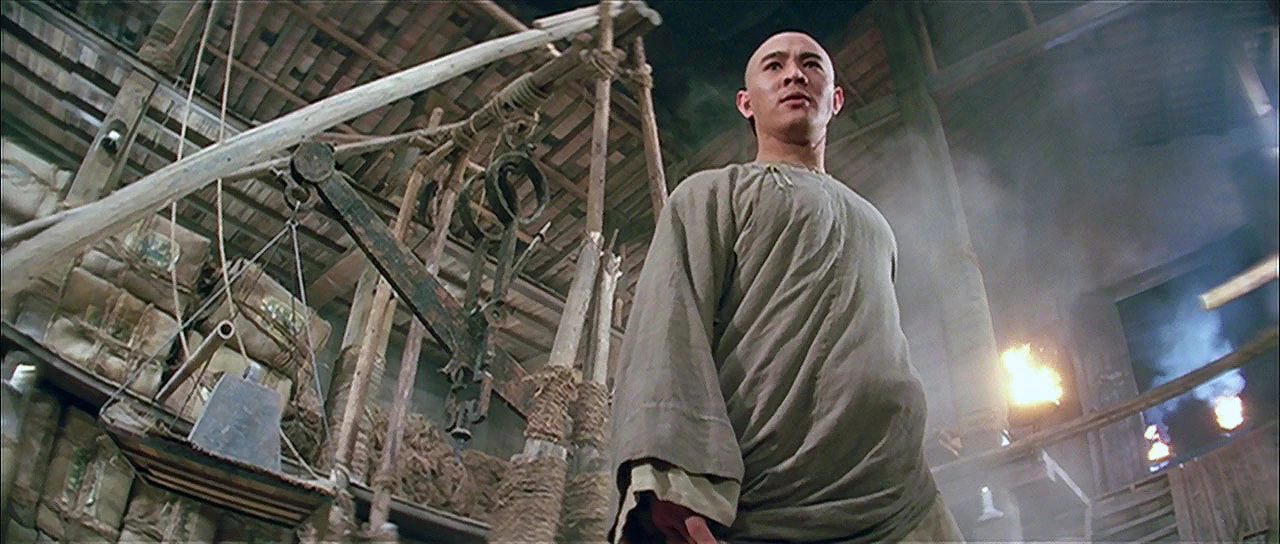
Once he’s a hero, forget about ganging up on the Boss. The Boss may not even manage to leave a scratch on Wong Fei-hung. Even so, the Boss’s blood-spilling index remains robust. Wong Fei-hung can’t be hurt, but his students can. So before Wong Fei-hung deals with the Boss, his unlucky students inevitably have to spill some blood to raise the Boss’s blood-spilling index:
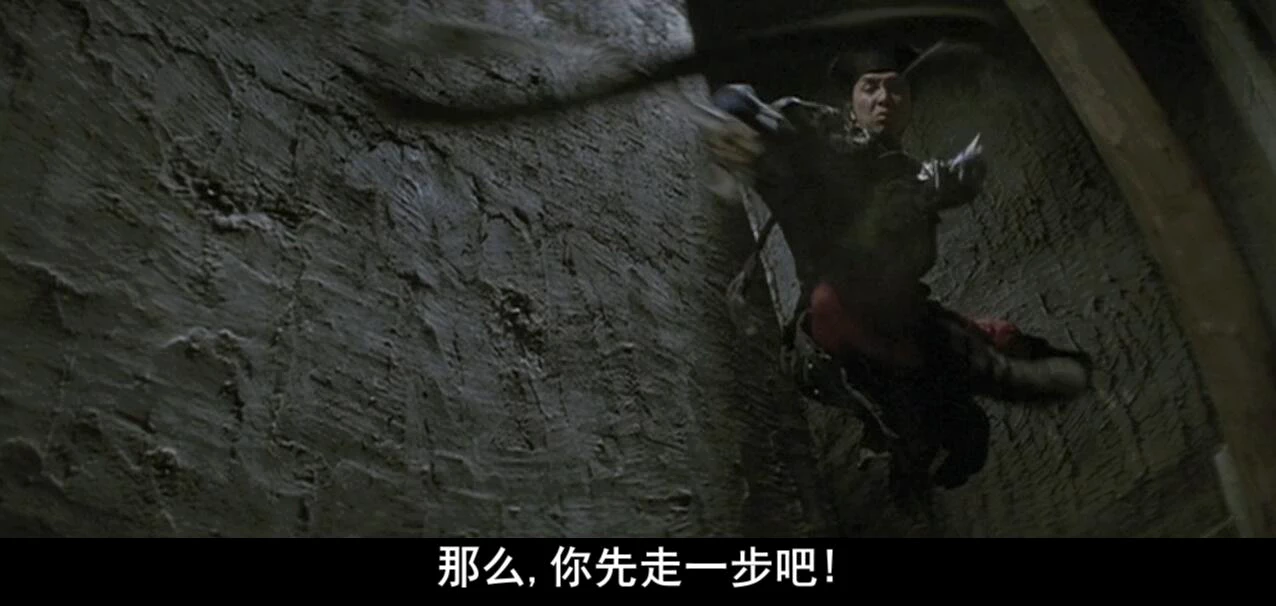
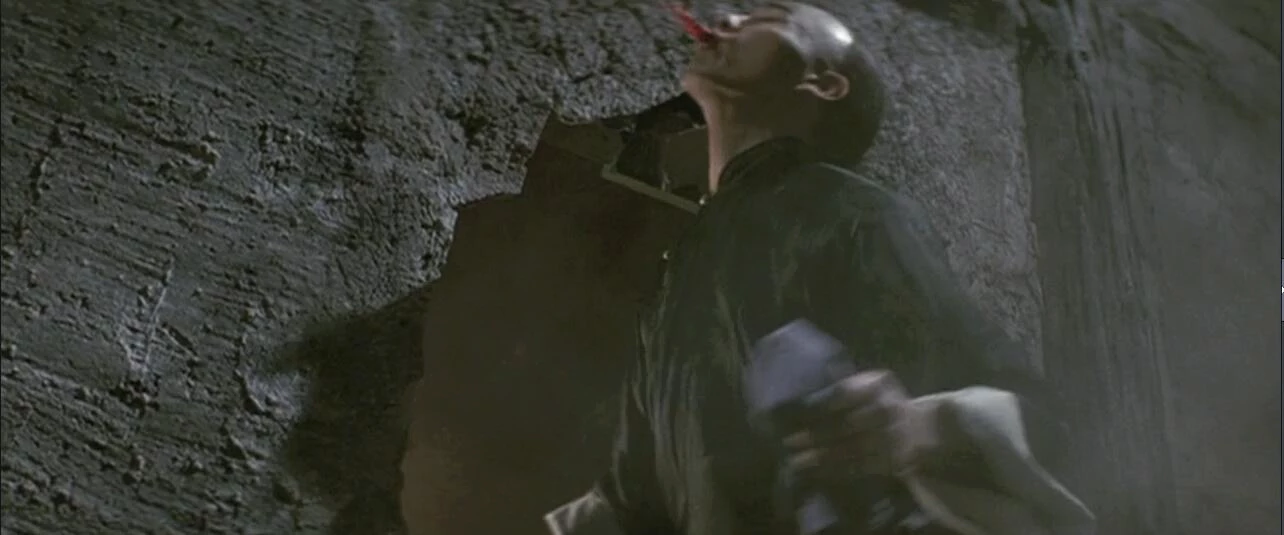



Later still, the blood-spilling index got flattened too. In my memory of watching movies, this started with Tsui Hark. In his Seven Swords, the protagonists’ side has at least seven great fighters, and the film is realistic enough (realism means there can be plenty of blood). The prerequisites for both ganging up and blood-spilling are there, yet when they finally fight the Boss, Fire-Wind, Chu Zhaonan from the Seven Swords somehow handles him alone without even getting injured. Both indices go down the drain at once.
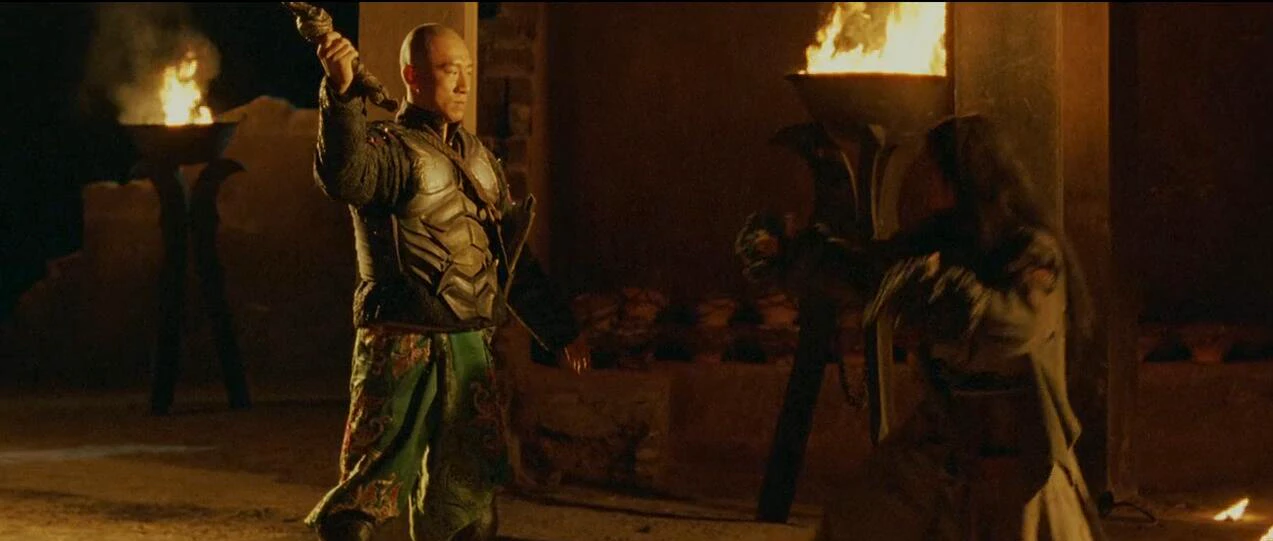
And among the recent Bosses I mentioned earlier, the handsome rickshaw puller in Ip Man 3, the horse-faced guy in Star Wars: The Force Awakens, Bond’s adoptive brother in Spectre, and the Vulture in Mr. Six all have both indices going down the drain. The heroes practically fight alone, suffer no serious injuries, eat hot pot, hum a little tune, and casually take care of the Boss. In a game, that’s a one-life clear. What a bore.
The ones that retain at least a little dignity are the aliens in The Avengers (I genuinely can’t remember what kind of aliens they were; their faces were too blurry) and Ultron in Avengers: Age of Ultron. At least they made the heroes suffer a bit, so the blood-spilling index is acceptable (though the rating kept us from seeing much actual blood). The unfortunate thing is that these Bosses are plural. There are loads of aliens in The Avengers, and although Avengers: Age of Ultron has only one Ultron, he has countless duplicates. So it’s a pile of heroes versus a pile of Bosses, and the heroes are often the ones getting surrounded. Fighting this kind of Boss feels like—‘Huh? There’s still more?’—not ‘Huh? Why won’t it die?’ Clearly, the latter is more fun.
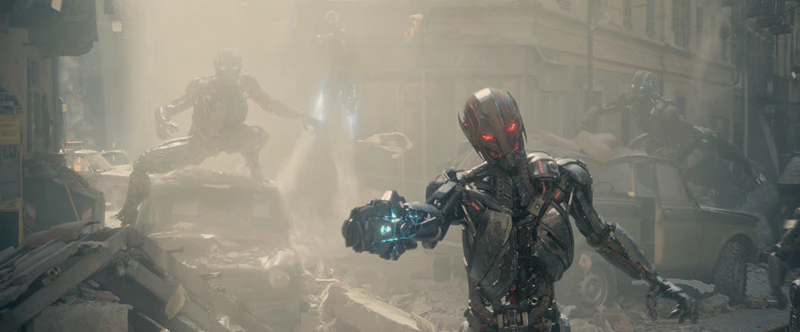
A Boss’s relative combat power: Sequels, sequels
Why have so many Bosses recently developed problems with their combat power? For some films, I think the culprit is the sequel.
One situation is to hold something back for the sequel.
Why is Fire-Wind in Seven Swords so weak? I think the biggest reason is that Tsui Hark originally planned a sequel. In this first film, a force much more powerful than Fire-Wind has already emerged, and when the film ends, the Seven Swords really do set off toward it. In other words, an even tougher Boss was originally reserved for the Seven Swords sequel. Sadly, because the first film bombed at both the box office and with critics, we’ve still never seen where that stronger Boss was.
The weak solo combat ability of the Bosses in The Avengers and Avengers: Age of Ultron may also have been part of the plan. After all, there’s still a world-destroying kingpin named Thanos waiting to appear. With this ultimate Boss around, the earlier Bosses can’t be too strong. The horse-faced guy in Star Wars: The Force Awakens also seems to have been weakened so he could level up into a tougher Boss in the later Star Wars: The Last Jedi.
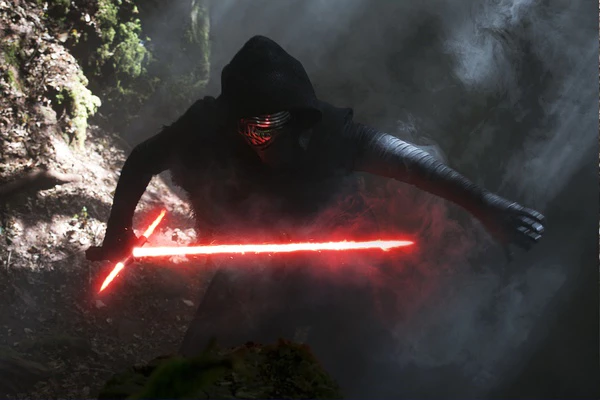
Audiences always expect the challenges facing heroes to get bigger and bigger, so the Bosses in sequels have to get stronger and stronger. Thus, in the examples above, the writers and directors sacrificed the combat power of the early Bosses to leave room for the new Bosses who would appear later.
The second situation is that the earlier Boss forgot to hold something back, and the later sequel was literally strangled by its predecessor.
For example, the Terminator series received a critical drubbing after the second film. I think one reason is that the liquid-metal robot T-1000 in the second film was too powerful—almost the strongest possible version of a robot Boss. When designing the Boss for each later film, the filmmakers kept trying to surpass T-1000, but whether it was the arbitrarily shapeshifting female Terminator T-X or magnetic black John, they were all just variants of T-1000 and never truly surpassed it. Fight basically the same Boss three times in a row, and even if the later ones aren’t weaker, they still feel like each crab is worse than the last.
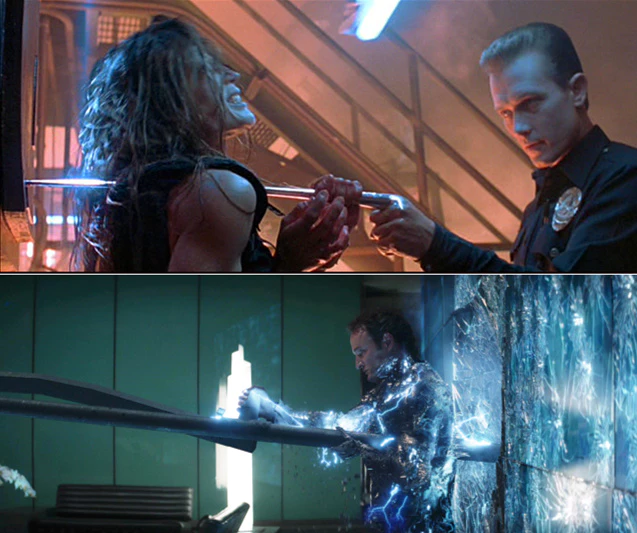
In other words, the blood-spilling index and gang-up index reflect only a Boss’s absolute combat power. But audiences also measure the Boss’s relative combat power against the previous one. Sometimes the Boss’s power hasn’t actually declined; the audience is simply suffering from aesthetic fatigue.
The same goes for this generation of 007 films. Starting with Casino Royale, every film’s Boss was set up as a minion of the ultimate Boss in this latest film, Spectre. In theory, he should be much harder to beat than those minions. Since 007 is a lone hero, ganging up can’t show the ultimate Boss’s power, so they have to rely on blood-spilling—can he make Bond pay an unprecedented price? The problem is that in the very first film, Casino Royale, that Boss had already sent the blood-spilling index through the roof—he nearly smashed Bond’s balls.

What are the later Bosses supposed to do now? How can they surpass that? You can’t exactly have the ultimate Boss in Spectre actually smash Bond’s balls, can you? So the ultimate Boss in the later film shows no more combat power than his underlings’ mini-Bosses.

In one sentence: a Boss’s relative combat power depends on comparison.
I think this is exactly why everyone feels that the Boss in X-Men: Apocalypse isn’t up to much.
Apocalypse’s absolute and relative combat power
Compared with the pile of Bosses above, Apocalypse’s absolute combat power is actually pretty high.
As for the blood-spilling index, in the final battle Apocalypse breaks Quicksilver’s leg, chokes Mystique, buries Cyclops alive, knocks out Nightcrawler, and beats Professor X until he is crawling for his life in a psychic battle… His blood-spilling index is quite high.
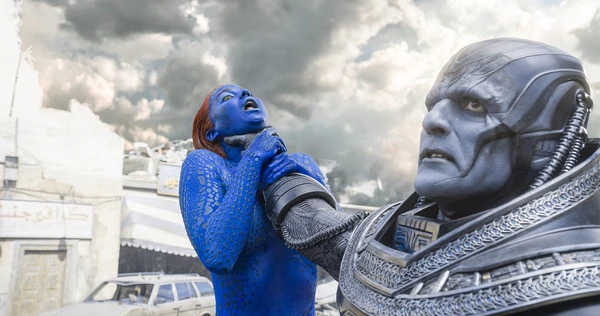
As for the gang-up index, Apocalypse wasn’t simply killed in one shot by Jean Grey’s Phoenix power. Jean got the chance to land the final blow only because Magneto, Cyclops, Storm, and Professor X in the psychic battle worked together to hold him down. The X-Men fighting Apocalypse is a textbook gang-up. So his gang-up index is high too.
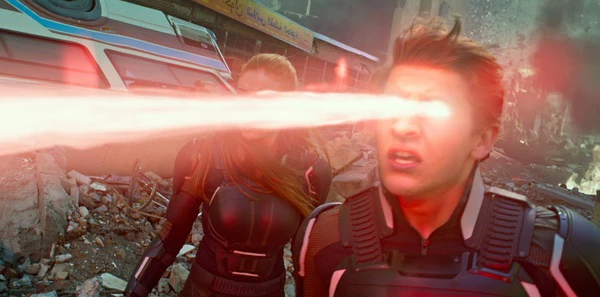
So if you look at Apocalypse’s strength by itself, it’s actually acceptable. But once you compare him with all the Bosses in the earlier X-Men films, it’s over.
In terms of superpowers, Apocalypse claims to have lived through hundreds or thousands of cycles, absorbing one mutant’s power every time he is reborn. So surely he should have eighty or a hundred superpowers in him, right? Yet in practice he displays only five pitiful ones: (1) upgrading other mutants; (2) teleportation; (3) turning things into sand; (4) an energy shield and shockwaves; and (5) blocking and resisting telepathy.
Compared with the abilities of the Sentinel robots in the previous film, X-Men: Days of Future Past, that’s incredibly weak. The Sentinels only needed to fight the X-Men for a few minutes to learn their opponents’ powers. They knew far more than eighty or a hundred powers.
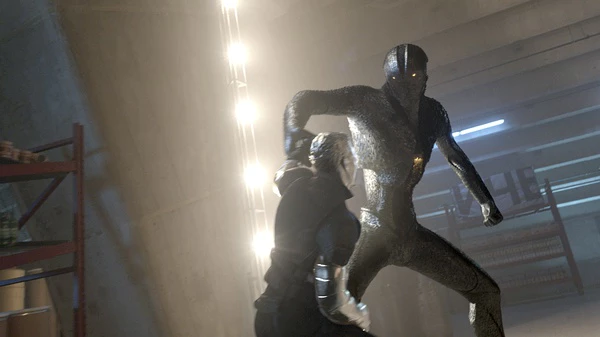
And Apocalypse can’t even beat a young Jean Grey, so don’t even mention the fully corrupted Phoenix in X-Men: The Last Stand.

Apocalypse’s emotional intelligence and IQ
More damningly, besides combat power, we naturally compare the Bosses’ performances in other areas too—for example, their emotional intelligence and IQ.
Compared with some Bosses in earlier X-Men films, Apocalypse’s emotional intelligence and IQ are both pretty alarming.
What is the core of high emotional intelligence? First, being able to hold back—to have self-control and not be so impulsive. Psychology has a famous marshmallow experiment: adults brought in a group of children, put marshmallows in front of them, and promised them a double reward if they could resist eating for 15 minutes. Most of the kids still couldn’t wait and secretly ate them. Yet those few children who had the self-control to hold out generally grew up to be more successful than the impatient ones.
See? Who gets to be a cut above the rest? People who can hold back!
Could Apocalypse hold back? Nope—not even a little.
In theory, after sleeping for almost 5000 years, what was the rush? Take choosing the Four Horsemen, for instance. It was a pretty important job (after all, he’d need those four to keep him alive when he was at his most vulnerable), yet he didn’t bother to look carefully. He just impulsively turned the four easiest people to find into his Horsemen.

And what was the result? The result was that these four hastily chosen people—Angel, Storm, Psylocke, and Magneto (Magneto was probably the only one he made a halfway serious effort to find)—all had straightforward, brute-force, physical-attack abilities when fighting people. Even when we’re playing online games, we understand that combining physical and magic classes is the sensible way to fight. Yet Apocalypse somehow didn’t get it. If one or two of the Four Horsemen had psychic superpowers, the X-Men probably wouldn’t even have lasted until Jean Grey went berserk.
What’s the second core of high emotional intelligence? Knowing how to read the room and understand people’s hearts. There’s no need to overanalyze this one: Apocalypse continued to crash and burn—two of his four Horsemen rebelled.
Now let’s look at IQ.
Apocalypse’s goal was to eliminate the weak through survival of the fittest. His method was to have Magneto trigger a global earthquake, so that everyone left alive afterward would be strong. You don’t need more than your toes to figure out that, after such a shake-up, the people most likely to survive would basically be mutants with superpowers. So what he did was no different from what those Bosses in the earlier X-Men movies did: wipe out humanity and leave the mutants behind.
Magneto had already tried this once in X2: X-Men United. Put simply, while a brainwashed Professor X was connected to Cerebro, Magneto ordered him to link up with every human brain and kill them all.
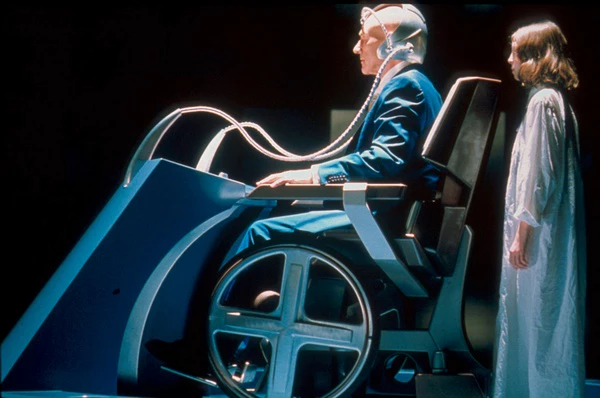
And in X-Men: Apocalypse, almost the exact same opportunity came up again. Apocalypse used Professor X to connect to the brains of everyone in the world. At that point, he could have simply used Cerebro to wipe out humanity. Why go to all the trouble of causing the later earthquake? Yet Apocalypse just let the opportunity slip away.

If the Magneto from X2: X-Men United could travel into X-Men: Apocalypse, he would surely grab Apocalypse by the throat and yell:
Are you stupid?
Are you stupid?
Are you stupid?
The second Boss to try to wipe out humanity and leave the mutants behind was Sebastian Shaw in X-Men: First Class. His method was to manipulate the Cuban Missile Crisis into triggering a nuclear war between the United States and the Soviet Union. Humanity would perish in the radiation, while mutants would thrive.
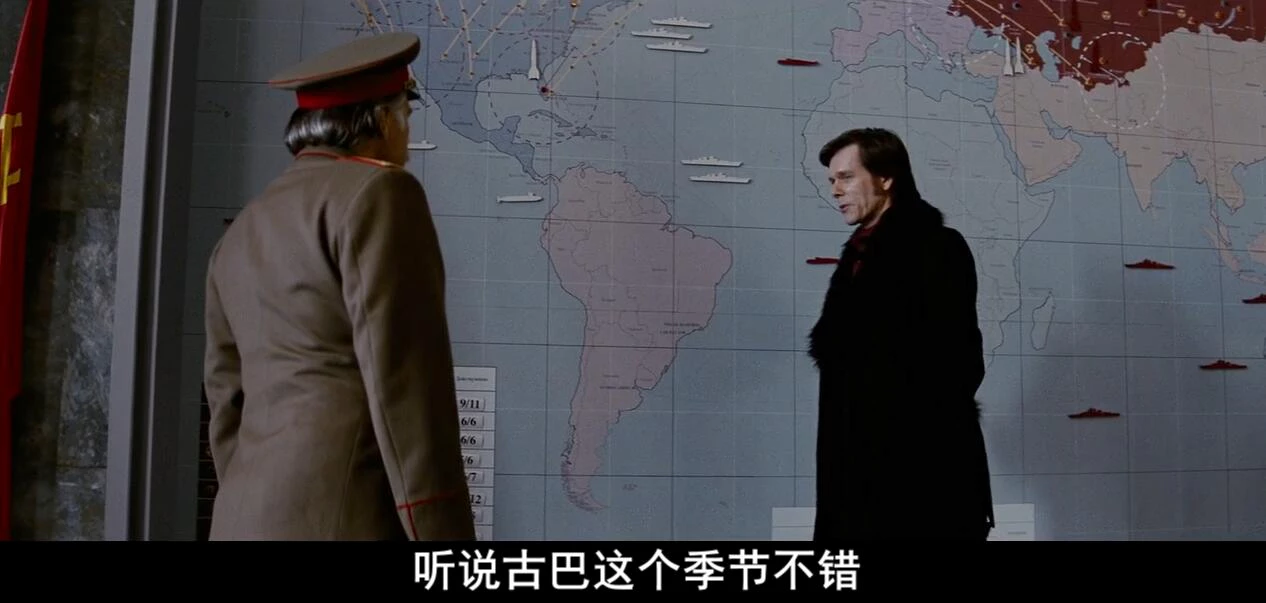
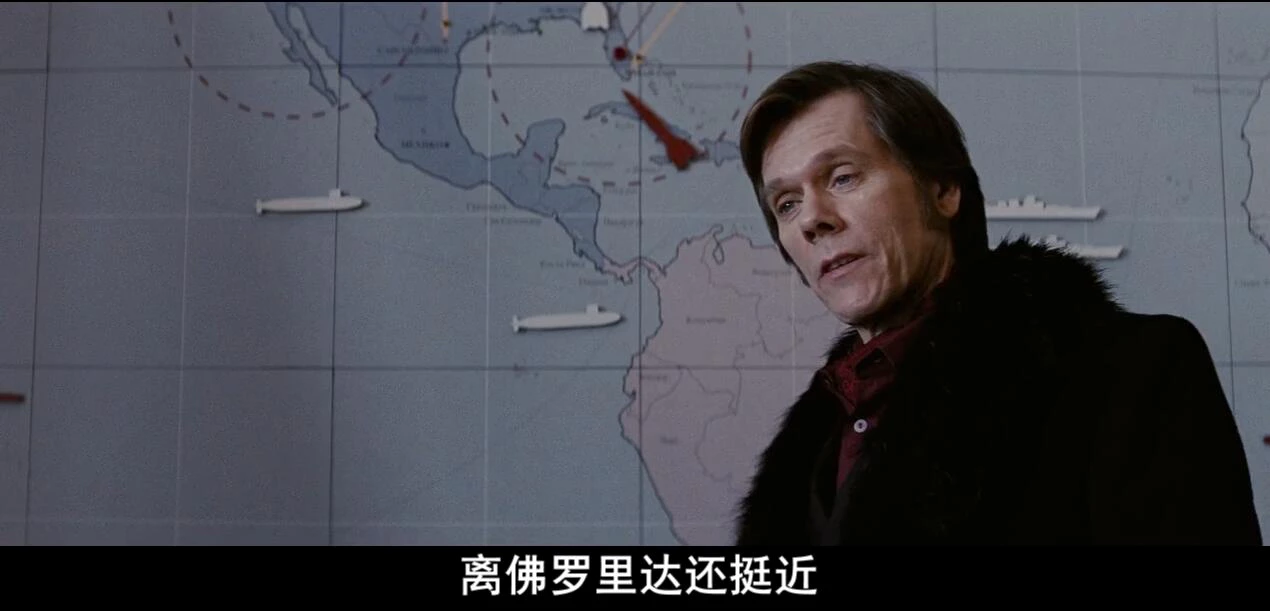
That opportunity was also recreated almost exactly in X-Men: Apocalypse. It came once again when Apocalypse, through Professor X, connected to the brains of everyone in the world. At that moment, Apocalypse had his finger on the launch button for the world’s nuclear weapons. Wasn’t that exactly what the Boss Sebastian Shaw from X-Men: First Class had gone to such absurd lengths to achieve? Yet Apocalypse’s answer was to launch all the nuclear weapons into the sky.

If Sebastian Shaw could crawl out of his grave, he would surely grab Apocalypse by the throat and yell:
Are you stupid?
Are you stupid?
Are you stupid?
The previous movie forgot to keep a card up its sleeve, and the sequel was killed by sheer incompetence. That’s Apocalypse—the fate of a sequel Boss.
Leave a Reply