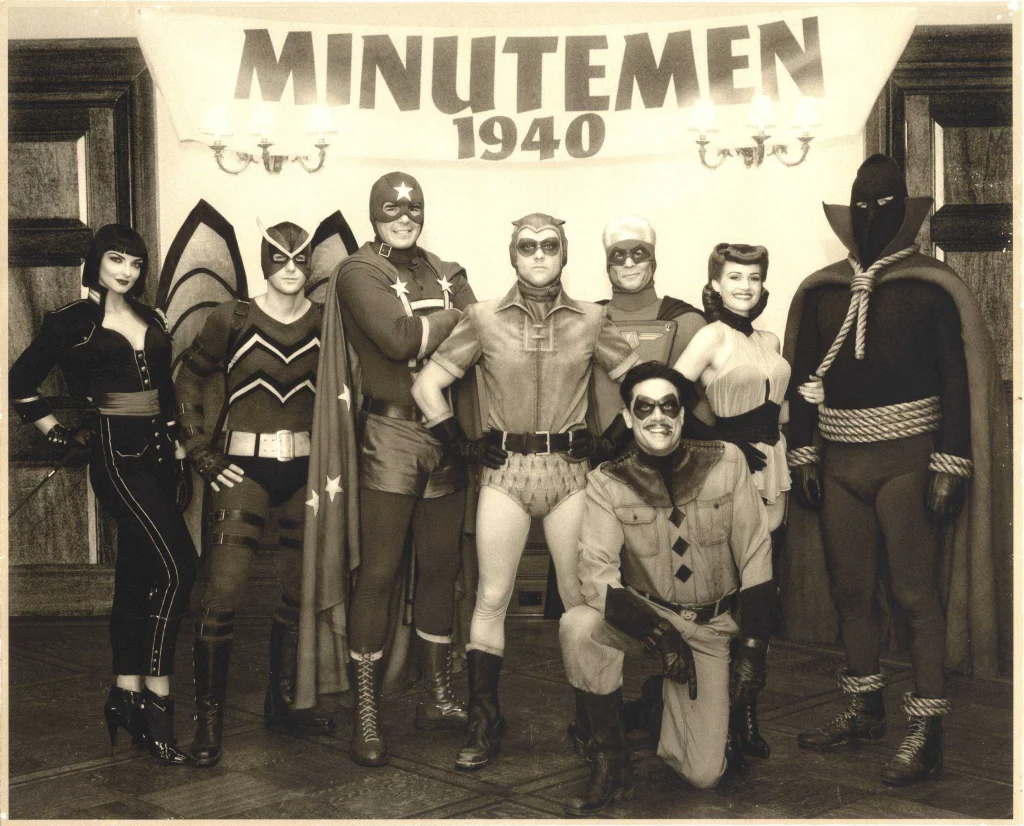
Of all the films adapted from superhero comics, perhaps only Watchmen has truly shown what comic-book heroes might face in the real world.
1. Up in the Clouds
For most comic-book stories set in a fictional world, the easier way to turn them into films is to keep doing what the original does on the screen: sever the superheroes’ connection with reality, let them keep floating up in the clouds, and unfold their cinematic legend in an ethereal fictional world.
The advantage of such a fictional setting is that the film only has to follow the logic of its own imaginary world. It can be self-contained, self-consistent, and completely insulated from reality, freeing the story’s progression from the constraints of real-world logic. Once that’s done, the story seems free to gallop wherever it likes. But the difficulty is that building a fictional world that is both fun and logically coherent is no easier than following the logic of reality (and often much harder). ‘Free to gallop wherever it likes’ does not mean ‘bound by no rules at all.’
Tim Burton’s old Batman films use precisely this ‘up in the clouds’ approach. In Tim Burton’s Batman, Gotham City is a fictional world with absolutely no connection to the real world; Gotham itself is the entire universe of the story. And clearly, the rules of this universe are highly surreal, so every character can behave like someone in a stage play, and the audience doesn’t find it odd. No one in reality talks like the characters in the film, wears the clothes they wear, or fights with their moves. But none of that matters. As long as it is coherent within its own universe, the audience buys it.
In Nolan’s later Batman series, the Joker, played by Heath Ledger, is shaped into a high-IQ antisocial criminal in the real world. In Tim Burton’s Batman, Jack Nicholson’s Joker is more like someone from a stage play. The former may seem to have much more ‘depth’ than the latter, but we actually like both Jokers a lot. If Jack Nicholson played the Joker the way Heath Ledger did, it would feel jarringly out of place.
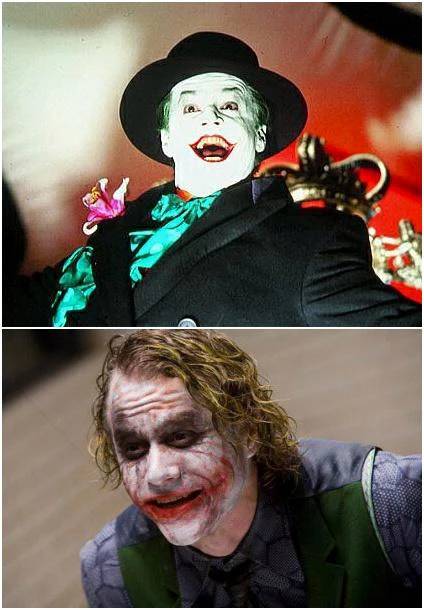
Looking back, most comic-book films before this century followed the path of the old Batman: the heroes on screen had little connection with the real world. And this approach was not limited to comic-book material. For example, the James Bond films of earlier generations were much more ‘cartoonish’ than the current generation. By ‘cartoonish,’ I mean that many elements in those films simply could not stand up in reality.
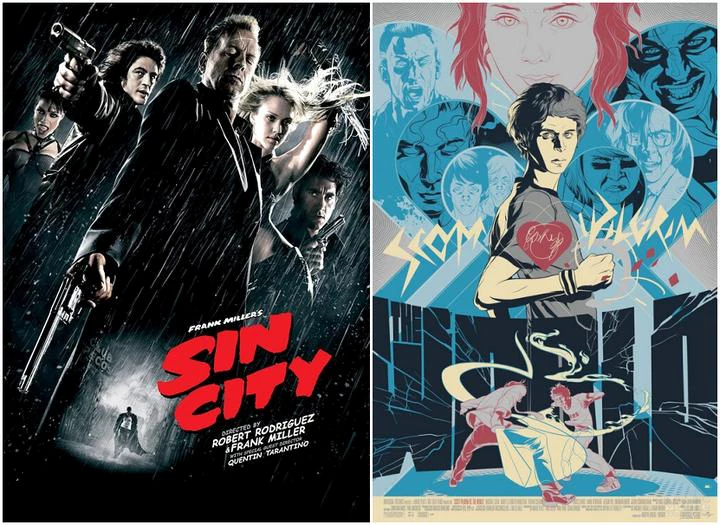
But failing to stand up in reality does not make something bad. As long as a film is logical within its own setting, there is no problem. In the new century, technological progress has made it increasingly possible to create more interesting fictional worlds. So this approach has not become outdated; it has actually flourished in a series of films. Sin City and the much-underestimated Scott Pilgrim vs. the World, for example, both use new technology very effectively to present fascinating fictional worlds on screen.
2. Grounded
But in the wave of comic-book adaptations that began at the start of this century and continues today, a different approach has gradually become popular. That is to ground the comic-book heroes—to take these larger-than-life heroes soaring in the clouds and embed them in a solid, down-to-earth real world.
In the first ten years of this century, we could clearly see this trend in a series of comic-book films, including Hulk (Ang Lee version) (2003), Superman Returns (2003), and Iron Man (2008). This trend later reached its climax in Christopher Nolan’s Batman trilogy. The most important contribution of Nolan’s Batman series was to tell the story of a fundamentally unrealistic comic-book hero against a fairly realistic backdrop. We had always imagined comic-book heroes soaring in the clouds, but Nolan successfully grounded them.
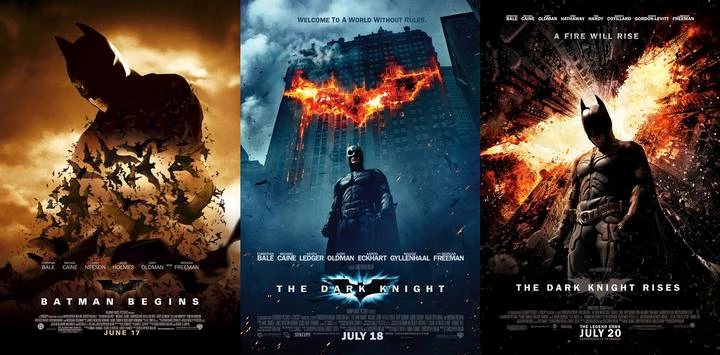
But once a surreal comic-book hero enters the real world, he has to obey the logic of the real world. His original freewheeling imagination must now be confined by reality’s framework; many plot points that make sense up in the clouds may not hold up on solid ground. In Tim Burton’s Batman, for example, Gotham City is the entire world, whereas in Nolan’s Batman, Gotham is merely a city in the United States. Don’t underestimate this difference. The exact same event could provoke completely different reactions in these two Gothams. A reaction that might be reasonable in the first Gotham would be a bug in the second.
So the setting that supports a story is extremely important.
I used to think a story’s setting was no big deal. I was especially fed up with fantasy novels that obsess over world-building: they always invent a continent, create some races, then come up with a chronicle or something. What’s the point?
The novelist Giddens Ko once said that for a story, ‘one beautiful cross-section is enough.’ I used to agree with him—if the story itself is a steaming pile of crap, what good does it do to make the setting more detailed?

But I no longer think that way. A story’s setting is actually like poetic meter. How important is meter? Important enough to determine almost everything about a poem. Write the finest Tang poem in the tune pattern of a Song lyric, and it is still a failing Song lyric. If you tell a story in a particular setting, you have to follow the meter that belongs to it. The setting itself is therefore part of the story.
So whether a story is ‘up in the clouds’ or ‘grounded’ is really a question of what kind of story logic it follows. In Story, the bible of screenwriting, the godfather of screenwriting, Robert McKee, offers this piece of chicken-soup wisdom: ‘Logic is nothing more than child’s play. Only imagination can get you onto the screen.’ After reading through half a book on the various kinds of logic in screenwriting, suddenly seeing that sentence left me completely confused.

Although this book gives me an epiphany every three pages on average, as a logic maniac I can’t help questioning old Mr. McKee’s statement. My view is: Imagination can get you onto the screen, but only logic can keep you there.
So in those grounded comic-book hero films, imagination is certainly important, but getting surreal comic-book heroes to follow the logic of reality is the harder challenge.
That’s because the premises of most original comics are absurd, while the real-world setting ought to be quite respectable. If ‘up in the clouds’ and ‘grounded’ are fundamentally contradictory, how are we supposed to make the absurd respectable?
3. Why Does Thor Look Like He’s in a Stage Play?
Take Thor, the hardest case when it comes to reconciling ‘up in the clouds’ with ‘grounded.’
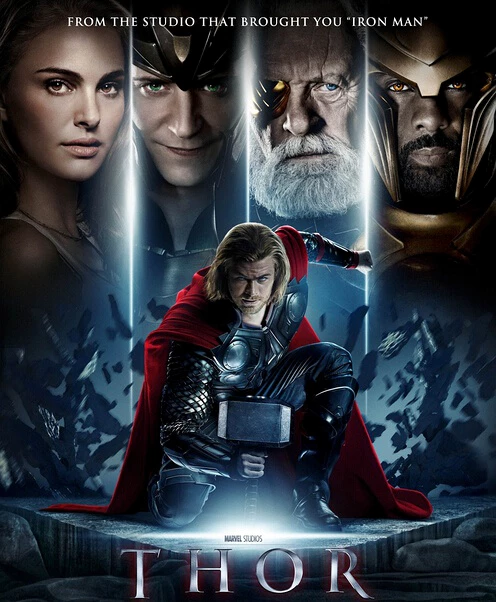
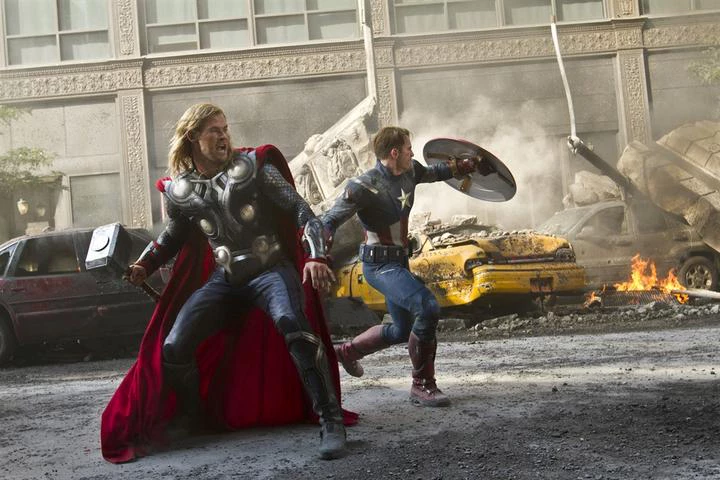
It is said that Joss Whedon, director of The Avengers, initially opposed bringing Thor into the Avengers universe. I imagine his reasoning was simple: Thor’s setting was too difficult to reconcile with those of the other heroes. In The Avengers, Tony Stark mocks Thor as someone who has jumped out of a Shakespeare play. That is really the writers poking fun at this mismatched setup through Iron Man’s mouth.

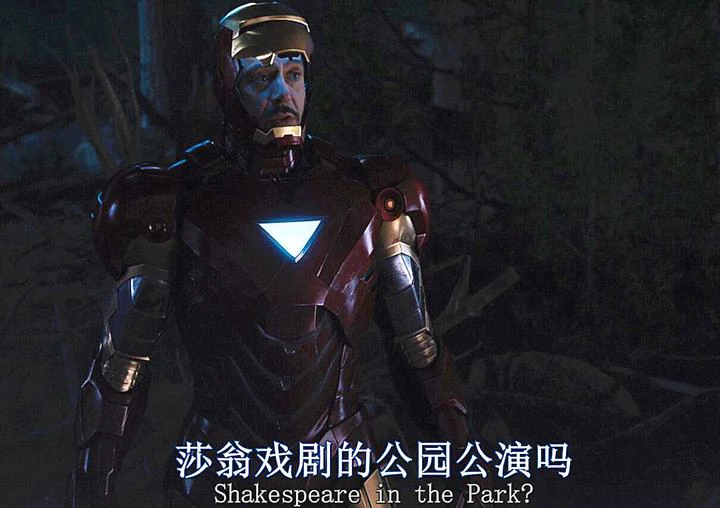
Of course, this mismatch had already appeared when Thor was presented as a standalone story. Even in Thor, we can see the filmmakers trying to ground this heavenly hero.
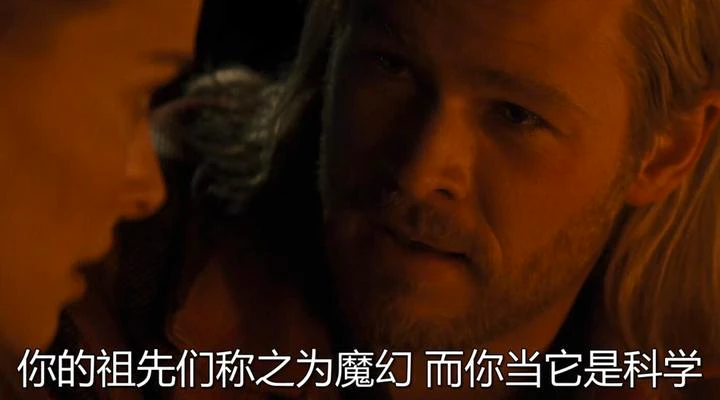
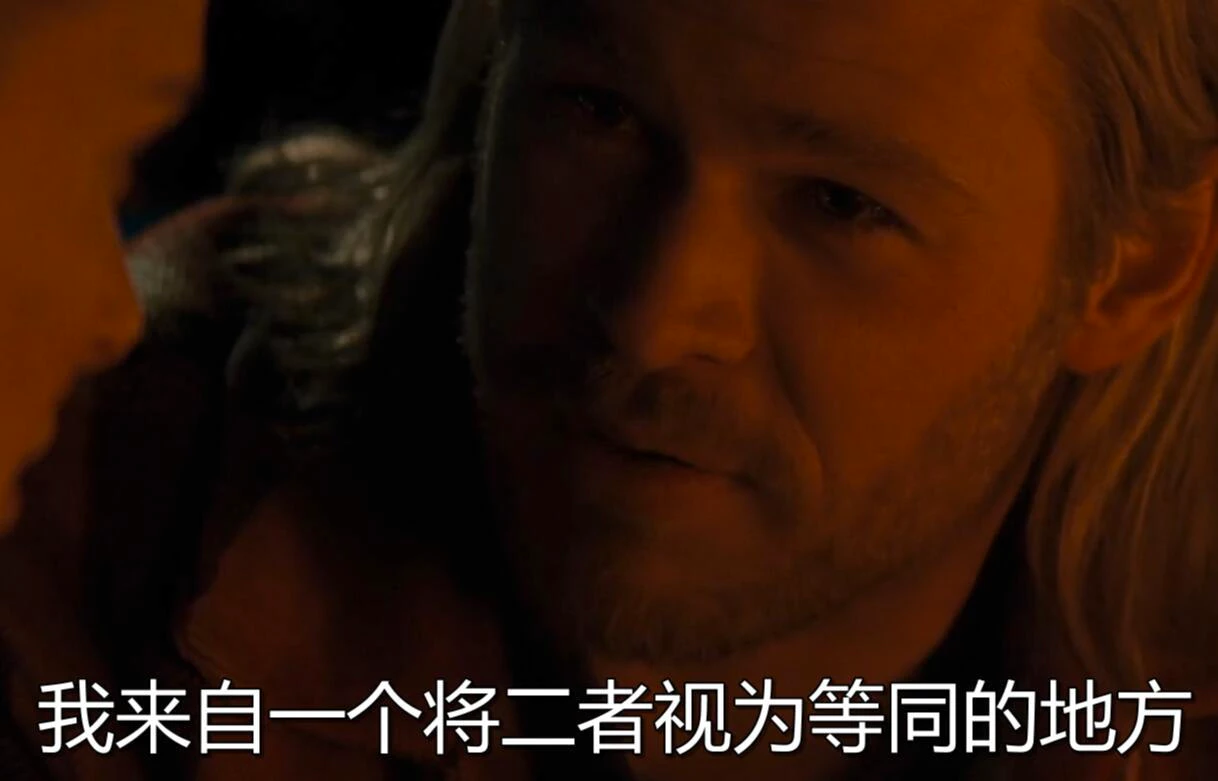
In Thor, what is above is magic, and what is below is science. The heavenly side is basically a fantasy setting with a theatrical bent, while the earthly side is essentially a realistic science-fiction setting. On one side are scientists who can’t go three sentences without scientific jargon; on the other are people who seem to have walked out of a Shakespeare play. When these two sides stand together, what play are they even performing?
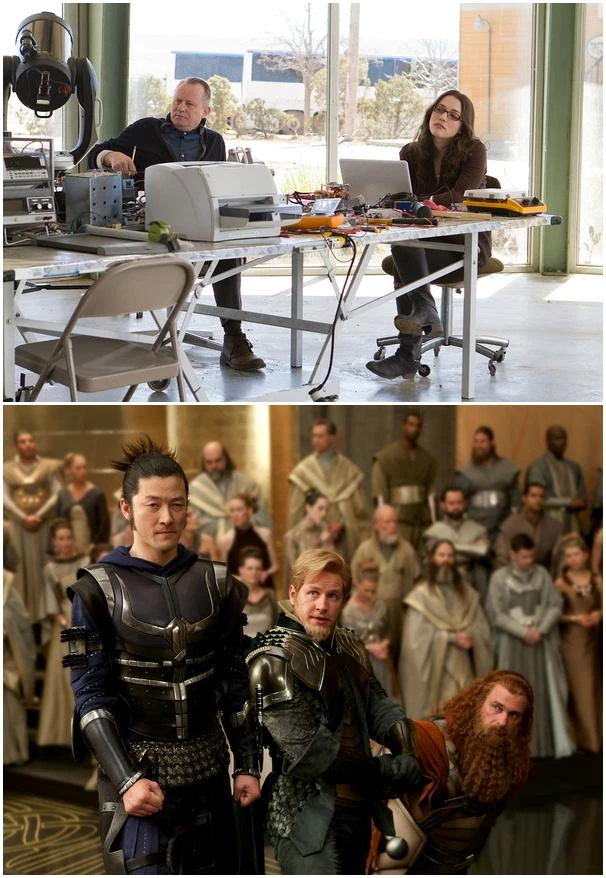
How do you reconcile the ‘magic’ in the clouds with the ‘science’ on the ground? The filmmakers solve the problem with a setup similar to the psychological distinction between ‘tacit knowledge’ and ‘explicit knowledge.’
In psychology, ‘tacit knowledge’ refers to knowledge (or skills) that we can use without knowing how they work. At first glance, that sounds impossible—how could you use a piece of knowledge without knowing anything about the reasoning behind it? Surely a programmer has to learn a programming language before writing a program, right?
But in fact, there are an enormous number of such kinds of knowledge and skills. The classic example of tacit knowledge is language. A preschool child can use most of the complexities of a language, yet even the most authoritative linguist may not be able to explain every grammatical rule in that child’s speech. Most of us never figure out even the simplest grammar rules in the things we say every day, but that does not stop us from using them fluently. That is tacit knowledge. Skills like programming, by contrast, require us to understand their principles rationally before we can use them. That is ‘explicit knowledge.’
Another example is a bat’s ability to use sonar to fly and hunt. To us humans, this skill looks almost like impossible high technology. Even today, the radar systems we have created with all our ingenuity cannot match bat sonar in many respects—not by a long shot. But can you say that bats are more intelligent than humans? Obviously not. For humans, such a sonar system is explicit knowledge: we have to understand it rationally, which makes it extremely difficult. For bats, however, it is tacit knowledge, an ability bestowed by nature over their long evolutionary history without their consciously recognizing it themselves. It is extraordinarily precise, effortless to use, and unrelated to intelligence.
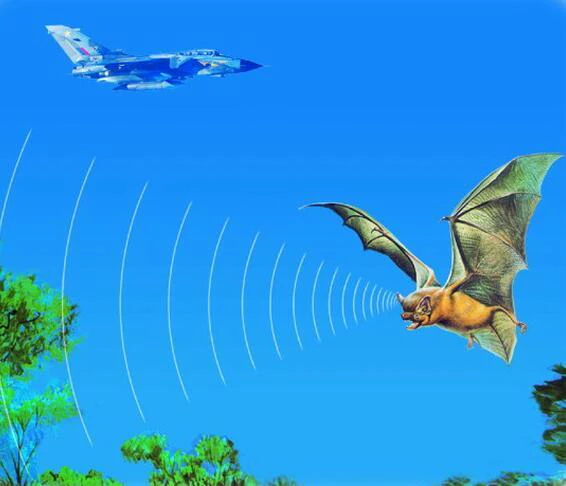
We can use this to understand the magic and science in Thor. For Thor and the civilization of his Asgardian realm, those astonishingly advanced ‘powers’ that resemble divine force are tacit knowledge. They can control them effortlessly, relying on instinct alone. So to Thor, those powers are magic. To people on Earth, Thor’s powers become explicit knowledge: something that can only be understood through intelligence, and therefore, in human eyes, advanced science. This is why Thor might not even be able to solve a middle-school math problem on Earth, while the scientific powers he commands leave Earth’s greatest scientists struggling to catch up. Here, Thor is a bat that can hunt with sonar while knowing absolutely nothing about sonar.
And precisely because they can command the most badass technology without lifting a finger, Thor and the civilization of Asgard have ‘stopped trying’ and developed into something resembling a giant stage. The supposedly ‘backward’ humans, by contrast, have evolved into something that looks thoroughly modern.
Since “magic and science are one and the same,” Thor—the comic-book hero with the least connection to reality—can at least be said to have been grounded in reality. That is also why, in the later The Avengers, the fantasy-oriented Thor could just about be reconciled with the science-fiction-oriented Iron Man and Hulk. At least they were all doing science—just from different angles, and with different ways of understanding and applying it.
4. Why the Decepticons Can’t Beat the U.S. Military
This overly charitable excuse for Thor can actually help us understand why the Decepticons in Transformers somehow can’t beat the U.S. military. In Transformers, those robots who have traveled all the way from a distant alien planet ought to be, by any account, billions of times more technologically advanced than humans, right? So why does it sometimes look as though they can’t even shoot as accurately as American soldiers?
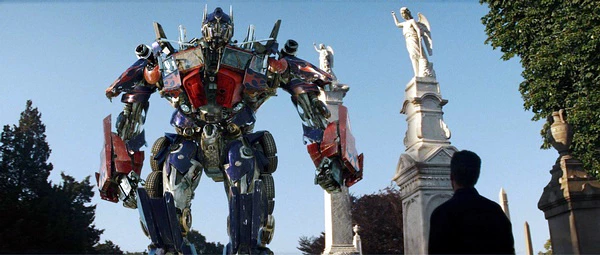
The logic is exactly the same as above. The Transformers look like robots, but in the end they are a kind of “life-form” (in Professor Liu Cixin’s terms, they should count as “silicon-based life”; humans are “carbon-based life”). It’s just that their physiological foundations are more like our computers, so all kinds of things that look like high technology to us have “grown” on them. In other words, the Transformers are bats too: like Thor, they use things that look like high technology to us “instinctively.” Their technology is also a kind of inexplicable “tacit knowledge” to them. So just as the saliva we spit at someone isn’t necessarily going to hit the mark, what the Decepticons spit out—whether lasers or missiles—may not hit the mark either.
By this logic, the fact that the Decepticons can’t beat the U.S. military is, very, very, very reluctantly, still explainable.
5. The Hulk’s Underpants
Still, even with all my special pleading, I can’t convince myself that Thor managed to make itself feel grounded in reality. In fact, it did a pretty terrible job. For most of Thor, I found it hard to reconcile the scenes in the divine realm of Asgard with those on Earth. The whole viewing experience kept pulling me out of the movie, as if two different reels had accidentally been spliced together. In practice, the existence of Thor’s people also made the later setup of The Avengers rather awkward.
Making a surreal subject satisfy all the demands of a realistic setting requires an absurd number of details to be accounted for. How could one sentence—“I come from a place that regards the two of them, magic and science, as equals”—possibly settle everything?
For example, even if magic and science are the same thing where you come from, surely that doesn’t mean your native language is English too, does it?
Don’t laugh at me for being so picky. If Thor took place in a setting completely detached from reality, I could even accept them speaking Japanese—let them speak whatever they want. But once the story takes place somewhere that looks like the real Earth we live on, this isn’t a nitpicky complaint anymore. In the real world, there is no reason an alien’s native language should be English. If the filmmakers had really cared enough, they should have done what James Cameron did in Avatar and actually created a language for the Na’vi.
Once the setting becomes realistic, all sorts of similarly nitpicky questions start popping up.
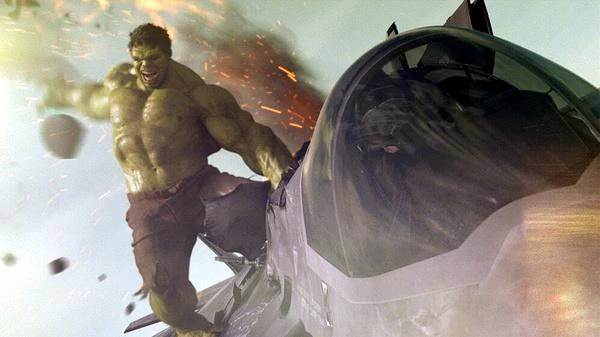
For example, why don’t the Hulk’s underpants burst open when he transforms in The Avengers? Of course, this is partly a question of the film-rating system. But it isn’t impossible to address the detail. Edward Norton’s The Incredible Hulk, for instance, answered this nitpicky question with a pair of extremely stretchy jeans (though it was still pretty unreasonable).
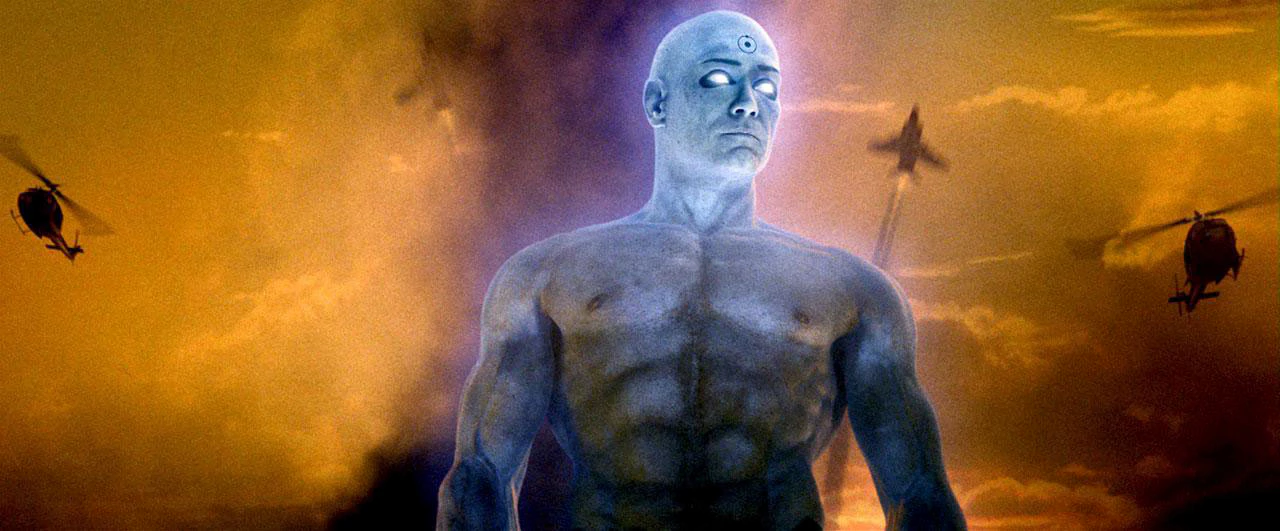
Of course, the most extreme example is how Zack Snyder handled Doctor Manhattan’s enormous penis in Watchmen. His solution was simply not to handle it at all (image omitted ^_^; you can see the enormous penis only in certain versions).
6. Nolan’s Batman
So if you want a surreal subject to feel grounded in reality, there are an enormous number of levels and details to take care of. In this respect, Nolan’s Batman trilogy took comic-book material as far as it could go. Looking back now, that was the trilogy’s landmark contribution.
Nolan made a great many efforts to make his Batman story more realistic—
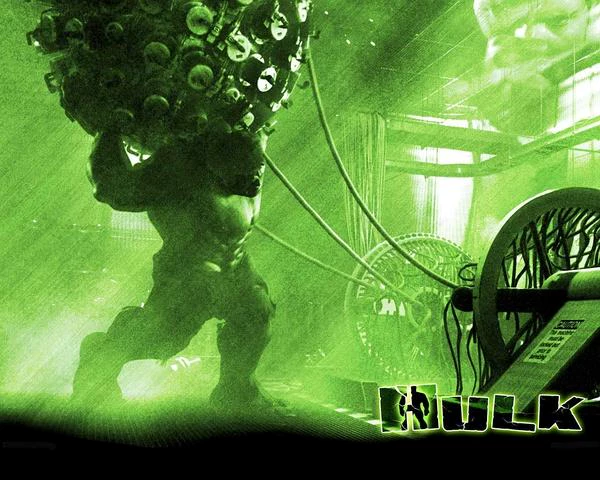
Take his psychological portrayal of Batman, for example. We may not necessarily share Bruce Wayne’s confusion, fear, and growth, but there is no problem understanding him as a person in the real world. In terms of reaching this level, the only series that might compare with Nolan’s Batman trilogy is Ang Lee’s Hulk (yes, I’ve always thought Ang Lee’s Hulk was seriously underrated).
There are also plenty of less noticeable details that help Nolan create a realistic world. Take the way Batman conceals his identity. In the first installment, Batman Begins, there is a delightful little scene: Batman borrows his suit from Fox at his company, but has to order the cowl himself. This leads to the following exchange between Wayne and Alfred:
Alfred: The components for the cowl—we order them from Singapore.
Wayne: Through a dummy corporation.
Alfred: Exactly. Then we order a set of bat ears separately from another Chinese company.
Wayne: And assemble them ourselves.
Alfred: But it has to be a bulk order, to avoid arousing suspicion.
Wayne: How many?
Alfred: About 10000.
Wayne (with a surprised look): At least we’ll have spares.
Alfred: Exactly.
This simple, humorous explanation suddenly makes Batman’s method of concealing his identity feel plausible in the real world.
But none of that is the most important part. What Nolan did best was the aesthetics.
In production design and cinematography, Nolan did his utmost to place the entire story in a real city. As mentioned earlier, the Gotham City in Tim Burton’s old Batman was a fairy-tale world, whereas Nolan’s Gotham is simply an American city in the real world—and that feeling grows stronger and stronger as the trilogy progresses.
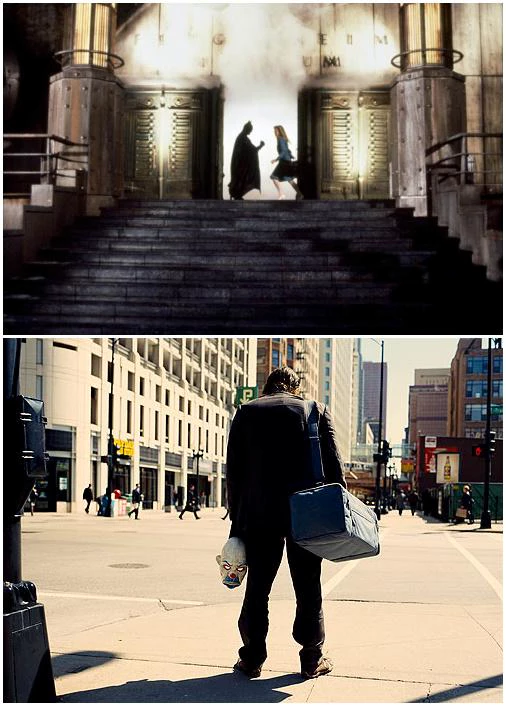
Beyond the big-picture urban setting, the tiny details of the production design are equally excellent. Consider the Batsuit. Superhero costumes in American comics often have a bit of an “underwear on the outside” vibe. Even now, I still have trouble accepting that aesthetic tendency, and the Batsuits in previous versions all retained, to some degree, an inescapable sense of being stage costumes. But in Batman Begins, Nolan made the audience believe that this new Batsuit was more like a high-tech protective suit than a costume.
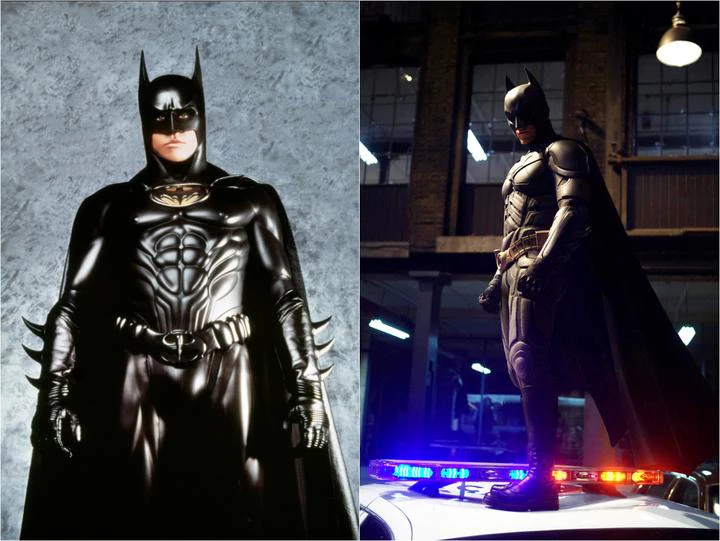
Nolan not only tells you through the plot that this could be a story set in the real world; he also makes your eyes believe that it is the real world. What Thor did worst in terms of feeling grounded in reality was precisely this aesthetic mismatch. On one side was the real world; on the other was a stage. The clash may have been required by the plot, but the enormous aesthetic conflict still pulled the audience out of the movie.
7. Naoki Urasawa’s Boy
Of course, the most important part of feeling grounded in reality is still that the plot itself has to be plausible in the real world. In this respect, the second film in Nolan’s trilogy, The Dark Knight, did the best job, while the third, The Dark Knight Rises, had quite a few flaws in plausibility. One especially obvious problem is that during the six-month siege of Gotham City, the U.S. government did absolutely nothing.
In Tim Burton’s Batman, Gotham City is the entire world. So once Gotham’s government loses the ability to resist the criminals, Batman naturally becomes the last force capable of fighting back. But in Nolan’s Batman, after Nolan has spent so many details convincing us that Gotham is merely a city in the real United States, when an American city faces annihilation, the U.S. government would inevitably intervene with overwhelming force.
This problem barely appears in the first two films, for a simple reason:
In the first film, Batman Begins, most of what the villain does looks like limited-scale criminal activity; only at the very end does it suddenly turn into a terrorist attack. So although it is a textbook terrorist attack, it is also a sudden event that gives the government no time to respond. The government simply has no time to intervene.
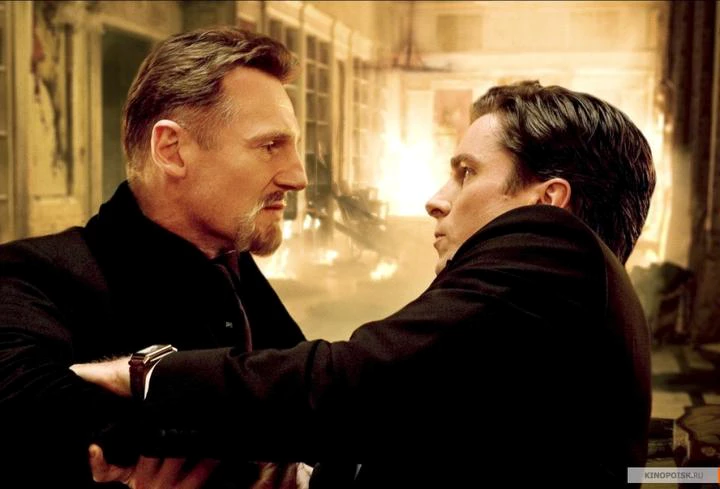
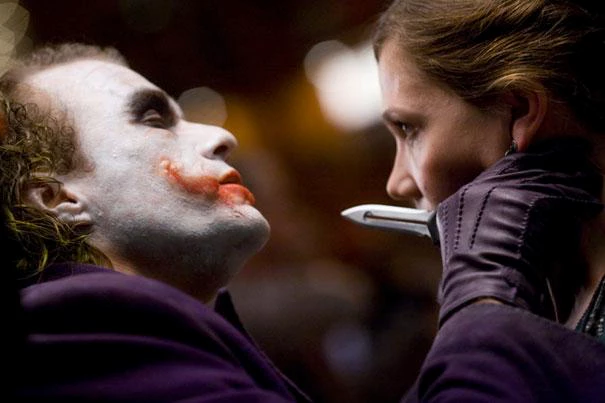
In the second film, The Dark Knight, the Joker likewise doesn’t escalate his crimes to the level of a terrorist attack threatening the entire city until late in the story. The shift happens more or less when he threatens to blow up hospitals. That is also when Gordon mentions that the National Guard is beginning to mobilize, so the timing of outside intervention is reasonable. And in essence, even after that, what the Joker does still looks more like the work of a criminal than a terrorist. He keeps hiding in the shadows, so even if the U.S. government intervenes, it can only deal with him in much the same way as the Gotham City police. There isn’t much more they can do than the Gotham police.
But in The Dark Knight Rises, an American city falls into the hands of terrorists and the U.S. mainland faces a nuclear threat—yet the U.S. government supposedly tolerates this situation for months? During that time, apart from sending in a special-operations unit that is promptly wiped out, the U.S. government does absolutely nothing. Even if it is trying to avoid provoking a nuclear threat, this is unimaginable!
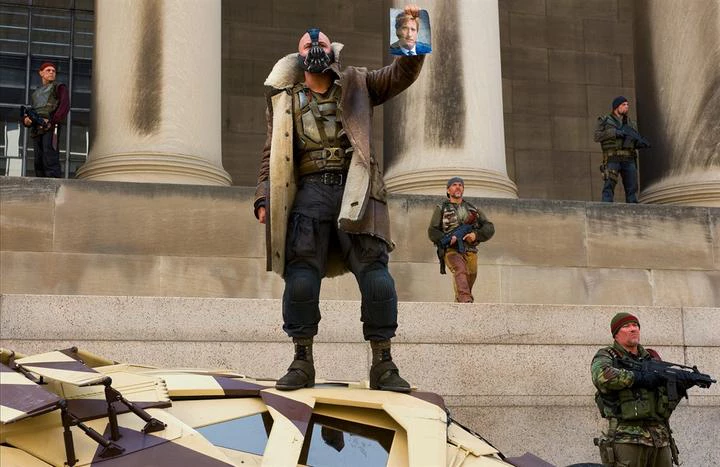
I suspect that viewers raised on the finest counterterrorism shows and films, such as 24, had already drawn up n possible plans for the U.S. government to resolve the crisis. Even a nuclear threat would be no big deal. For example, given the U.S. military’s formidable intelligence, surveillance, and precision-strike capabilities, how could it possibly have no way to locate and destroy the trucks carrying the nuclear bomb in the film? (Anyone who thinks an external strike would detonate the bomb should go watch True Lies.)
In the real world, once a crisis threatening national security breaks out, forceful government intervention is unavoidable. The resources and capabilities available to an entire national government for handling a crisis would presumably far exceed those of a masked vigilante like Batman. So in a crisis of this scale, there is actually very little room for Batman to do anything. Nolan made a mistake here: in the third film, he should not have escalated the crisis to the level of national security. Escalating the event to the point where the U.S. government had no choice but to act, while still making Batman shoulder the entire burden in the end, sent the course of events far beyond what was plausible in the real world.
Some other comic-book genres that try to stay grounded run into the same problem: once the events in the story escalate, the protagonists’ room to act shrinks dramatically, because by any reasonable real-world logic, this is when the government should step in and do whatever the protagonists are supposed to do. In the latter half of Naoki Urasawa’s 20th Century Boys, as the villain’s actions escalate into global events, the governments of the world simply stand by and let a global threat go unchecked, unmoved by an obvious con. And so this “half” of a masterpiece is effectively ruined by its own lack of plausibility in the real world.

8. Watchmen
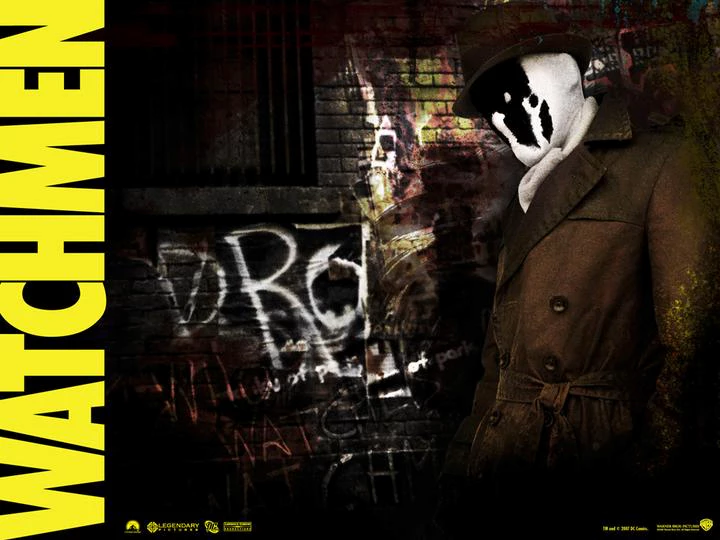
The work that actually gets at the possible fate of comic-book heroes in the real world is, ironically, the not-particularly-realistic Watchmen.
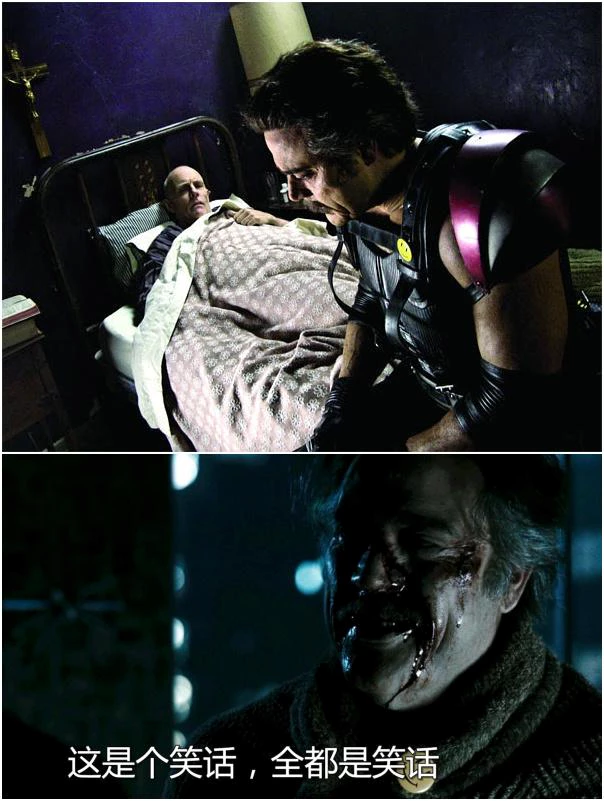
What role would comic-book heroes really play in the real world? In Watchmen, the Comedian spells out the most helpless and heartbreaking truth before he dies: “It’s a joke. It’s all just a fucking joke.“
Stephen Chow actually told the same joke—
In Sixty Million Dollar Man, after a superchip is thrown into Stephen Chow’s mouth,
Elvis Tsui: You have now become a superhero who can transform into seventy-two different forms and maintain world peace!
Stephen Chow (expressionless): What did you say?
Elvis Tsui: Maintain world peace!!
Ng Man-tat (expressionless): Maintain what?
Elvis Tsui: Maintain world peace!!!
(Ng Man-tat gets up expressionlessly.)
Elvis Tsui: Where are you going?
Ng Man-tat: I’m going to wipe out the invaders from the five planets of the Milky Way.

Maintain world peace?—Now that’s a joke!
In Watchmen, almost every superhero ultimately becomes someone to be used and fooled. Even Rorschach, the one most consumed by hatred of evil, unknowingly ends up as a government enforcer.
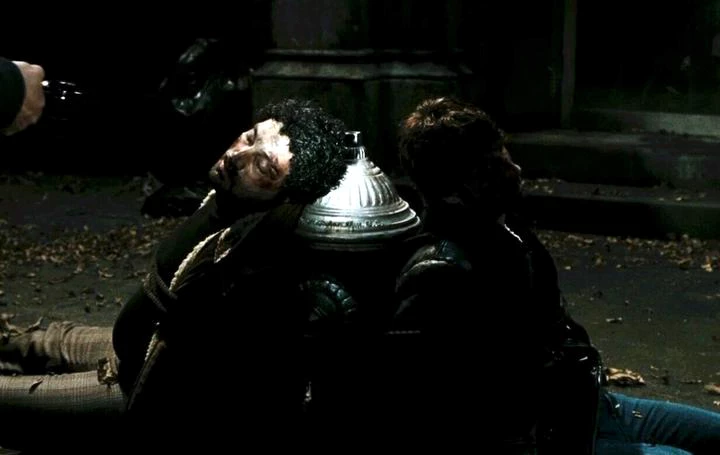
In the real world, faced with the abyssal darkness and inscrutability of the human heart and the labyrinthine complexity and treachery of conspiracies, these masked “heroes” in underwear and underpants, out there dispensing justice, are nothing more than one joke after another.
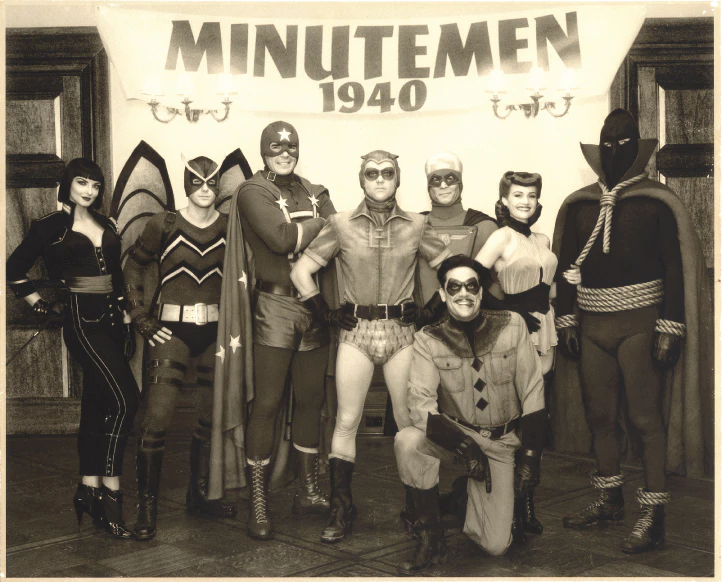
This is probably what comic-book heroes in the real world would truly be up against. In the face of reality’s dangers and brutality, even the most solemn masked vigilante is still just a childish joke—you are simply no match for the evil of reality!
Because the real world contains far too much terrifying evil—an earthy reality that the comic-book heroes up in the clouds can never quite connect with.
In the real world, Heaven is blind, and all the chivalrous heroes withdraw, vanishing without a trace.
Leave a Reply