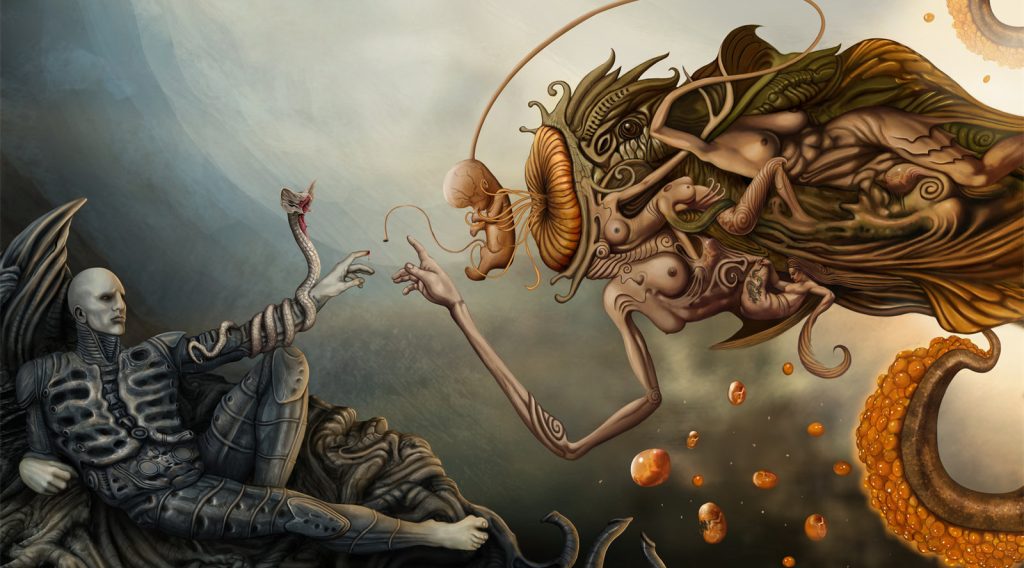
Prometheus is one enormous pothole left unfilled, with far too many questions left unanswered.
Of all of them, these three big questions do the most damage to the story:
1. Why did the alien “Engineers” in the film create humanity?
2. Why did they later want to destroy humanity?
3. What was the motive behind the android David’s “harming people”?
These three big questions form the skeleton of the entire film, yet old Sir Scott, the director, refuses to explain a single one of them. What on earth was he thinking?
This “I’ll never tell, even if you kill me” attitude seems to suggest that Prometheus saw itself merely as the first installment in an entire series—what, there are still unfilled potholes? Well then, tune in next time for the rest of the story.
But films and television series are different things, after all. A TV show’s first episode doesn’t have to worry much about telling a complete story; it can just pile on the mysteries, because viewers will be able to watch the next episode soon enough. If a film is going to have a sequel, though, viewers may have to wait three to five years. Even just out of responsibility to the people who paid to sit in a theater, the first film should at least tell a reasonably complete story, shouldn’t it? Even if a sequel is already planned, the first film can only leave a few small clues and bits of foreshadowing outside that complete story. But Prometheus seems to have mistaken itself for a television show.
When it comes to the making of Prometheus, everyone naturally focuses on its famous director, Ridley Scott, but probably not many viewers noticed that one of its screenwriters was none other than Damon Lindelof, the “notorious king of screwing things up” in American television.
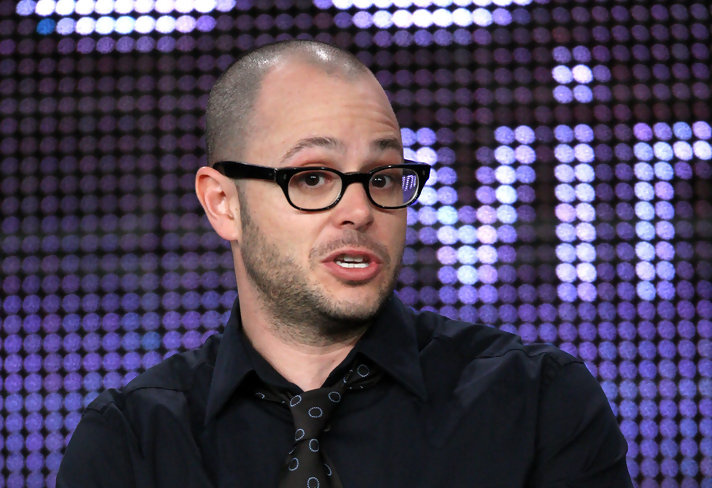
This fellow was the executive producer and screenwriter of the divine series LOST. From the second half of LOST all the way to its ending, he and another executive producer, Carlton Cuse, were in charge.
Anyone who watched the finale of LOST can probably understand why Prometheus looks so much like one enormous unfilled pothole: digging potholes and leaving them unfilled seems to be Damon Lindelof’s trademark.
Probably more than 99% of viewers would say that LOST dug one of the most compelling potholes in television history, then turned into a huge scam by failing to fill it in at the end—with spectacular irresponsibility. The ironic thing is that the person who felt most thoroughly cheated, the number-one fan, happened to be another “king of unfilled potholes”: George R. R. Martin, author of A Song of Ice and Fire. Uncle Martin used to be a hopeless LOST superfan, but after watching the finale he completely lost it and traded profanities with Damon Lindelof in the media (if you’re curious about the gossip, just Google their names). Martin also declared that he would never be a liar like Lindelof: every bit of foreshadowing in his own A Song of Ice and Fire would eventually be explained. Of course, the fans who had been following A Song of Ice and Fire for nearly twenty years and planned to wait another twenty all just smiled in silence—and prayed that Martin would live to a hundred.
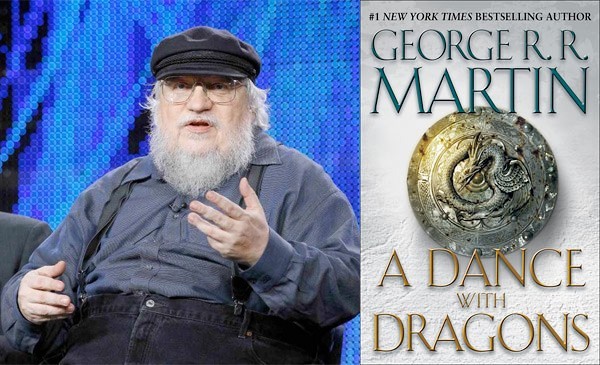
If Martin is the person in the world who hates Lindelof the most, then I should be the person who loves him the most. A few years ago, I did something I considered more important than finishing my doctoral dissertation: I wrote a doctoral-dissertation-sized piece of prose that filled in the pothole in LOST, helping Lindelof wipe his backside clean, so to speak.

But even if I hadn’t filled in that pothole, I would still feel that the finale of LOST, with its digging and leaving the pothole unfilled, was perfect in a certain way. This time, though, there’s no reason for me to wipe Lindelof’s backside a second time, because Prometheus’s unfilled pothole is very different from LOST’s.
1. Do Potholes Have to Be Filled?
Before joining the chorus condemning Scott and Lindelof, we should first ask a question: do all the mysteries planted in films and television really have to be explained? Do all the potholes that get dug really have to be filled?
I think the answer is quite obviously—no.
Because many films and television shows considered classics somehow manage not to explain every mystery clearly.
Take Kubrick’s classic science-fiction film 2001: A Space Odyssey. By the end, at least these mysteries remain unresolved:
1. Why did the monolith on Earth awaken the apes’ intelligence?
2. What was the other monolith doing in orbit around Jupiter?
3. And why did it turn the protagonist, Bowman, into the Star Child?
These questions likewise hold up the skeleton of 2001: A Space Odyssey, and the film likewise gives no explanation for any of them (the corresponding explanations actually appear in Arthur C. Clarke’s sequel novel 2010: Odyssey Two). So why has almost nobody questioned Kubrick’s refusal to explain?

In another Kubrick film, the classic horror movie The Shining, Kubrick likewise never tells us what causes the protagonist to become possessed—although the film does contain some very oblique hints. Again, why has nobody questioned his refusal to explain?

Why, when both films dig potholes and leave them unfilled, have Kubrick’s two movies faced far less criticism than Prometheus? What is Kubrick’s secret for getting away with leaving potholes unfilled?
I think the secret is actually very simple: in these works, Kubrick successfully makes the audience believe that the reason hidden behind these questions, or the force driving events into existence, is fundamentally “unknowable.”
Once the audience believes it is “unknowable,” it naturally becomes “unsayable,” and therefore need not be said.
This is really a question of figuring out the audience’s expectations. Before digging a pothole you don’t intend to fill, the writer and director have to understand which things, in the audience’s mind, have causes that are “unknowable.” Only when the mystery created by the story falls within that range will the audience refrain from asking whether the pothole will ever be filled.
In other words, as long as the bottom of the pothole is visible, the audience will naturally demand that you fill it.
Unless you dig the pothole into a black hole. If it is unfathomably deep, there is no need to fill it.
I think there are probably two aspects like this that can turn a pothole in a story into a “black hole”:
2. The “Mysterious” Aspect
The first aspect is the supernatural. Forces that lie far beyond the reach of human knowledge have their own behavioral logic, which we simply cannot understand. The less we understand these mysterious divine powers, the more frightened we become. And because they stand high above us, fear often turns into awe. Once fear or awe takes hold, we no longer have either the ability or the inclination to speculate about the intentions of these mysterious forces.
So once a work successfully opens up enough distance between the force behind an event and the audience’s rational mind, creating an atmosphere sufficiently “mysterious” and inspiring awe toward the forces shown on screen, the audience will naturally be willing to believe that a will so far beyond their powers of comprehension is something we cannot reach and is therefore “unsayable.”
In my view, this is exactly why 2001: A Space Odyssey and The Shining can leave potholes unfilled without being questioned. Kubrick successfully makes the audience feel that the godlike civilization behind the monoliths in 2001: A Space Odyssey and the vengeful spirits driving the protagonist into possession in The Shining are both “mysterious beyond mystery”—you can only stand in awe of them, never get a grip on them. If you’re interested, try revisiting these two classics from this angle. Broadly speaking, the camera perspectives, music, and even pacing are all almost entirely in service of creating this “mysterious” atmosphere. Of course, this is a high-difficulty craft: “mysterious beyond mystery” and “pretentiously mysterious” are separated by only a hair’s breadth.
That is the “mysterious” aspect.
3. The “Real” Aspect
The paradox is that the other aspect of a black hole is the most solidly real thing of all: “life” itself. The mysterious side awakens the audience’s awe, while this side of life awakens a feeling almost every viewer knows all too well: the lack of control and predictability in life. Reality is inherently full of impermanence. Far too many people, events, and things appear unexpectedly, then vanish for no apparent reason. So much of what arises and passes away in life is beyond our own will to control or anticipate.
Therefore, if a film or television show can successfully evoke the audience’s experience of life’s impermanence and project it into the story, the audience may not feel such a powerful craving for the “cause” behind events. In that case, leaving the answer blank may not provoke anger at all; it may instead become the finishing touch.
In Bong Joon-ho’s Memories of Murder and David Fincher’s Zodiac, two celebrated mystery films, the filmmakers show us only the protagonists’ process of pursuing the truth behind the murders; the endings offer no definite answer. Yet audiences have been remarkably forgiving toward these works that dig potholes and leave them unfilled. I think that is because, in direct contrast to Kubrick’s mysteriousness, Bong Joon-ho and David Fincher successfully convince us that in the tangle of real life, truth is not indispensable—it is even a luxury. Life itself is a bottomless black hole.

Of course, this aspect is not limited to stories grounded in reality. In the monster movie Cloverfield, the filmmakers present the monster’s assault on New York entirely from the protagonist’s subjective point of view. Even by the end, the audience has no idea where the monster came from or whether it was ultimately destroyed. But this enormous blank space actually elevates the film. It makes the audience feel that this is just like life: not everything has a cause and an effect.

That is the “real” aspect.
4. The Potholes in Prometheus
The “real” and the “mysterious” both lie inside the black hole; both are domains our rational minds cannot completely control. When it comes to things that cannot be said, the writer and director have the right to remain silent.
My guess is that Scott and Lindelof originally chose the “mysterious” side for Prometheus, but only managed to do it halfway.
As I mentioned earlier, Prometheus leaves us with three major questions: the Engineers’ motives for creating and destroying humanity, and the motive behind the android David’s behavior.
If Scott boldly chose to dig potholes and leave them unfilled, then he had to make the Engineers and David unbelievably mysterious.
As far as the Engineers are concerned, Prometheus does a fairly successful job of building them up at the beginning, giving them precisely that mysterious quality. In this scene, the Engineer looks less like an alien and more like a “god.”

As for the motive behind God’s creation of humanity, there is a conversation between the archaeologist Holloway and the android David. David raises the question of why anyone creates, while Holloway replies, we create simply because we can.—The inscrutability of divine will.
If the film had been able to maintain this image of the Engineers throughout, the logic behind God creating humanity would have been a black hole that human beings could not peer into, and this question could naturally have remained unsaid.
Unfortunately, that mysterious quality gradually falls apart in the middle and later sections of the film, as the Engineers’ image slides further and further from the “gods” they seemed to be at first toward a “high-tech alien civilization” whose logic Earthlings might actually be able to fathom.

And so the black hole slowly turns into a shallow pothole.
Then, later on, the only surviving Engineer awakens, and the will of the god shifts from creation to destruction. In this scene, faced with humanity’s request, the Engineer’s answer is astonishingly an act of slaughter without explanation.

Scott could actually have turned things around in this scene. Because behind this kind of “refusal to engage,” the unspoken line could really be: “I created you—or killed you. What’s it to you?”
To fully convey the force of that unspoken line, the Engineers would have to be placed back in an atmosphere where they felt unimaginably distant from humanity and exerted an overwhelming pressure on it. In that atmosphere, the Engineers could once again become gods. Unfortunately, the film’s treatment falls far short of that kind of power. So when most viewers see the Engineers’ murderous actions, what they feel is not awe before a divine will they can never fathom, but simple bewilderment.
As for the android David’s motives, they’re even more baffling. Based on the limited clues we have, David may very well have received a revelation from the writing carved on the temple door (when asked whether he could recognize the writing, he dodged the question in a very unnatural way). That would mean he had learned something about the Engineers’ will, which in turn led to his bizarre later attempt to breed the creature. If David really did receive a “revelation,” Scott should have spent far more time conveying its mystery. As I said, it has to be mysterious enough, or viewers will stop wondering what’s behind it.
The unfortunate thing is that David’s actions in the film are mysterious, while the atmosphere surrounding the character lacks any sense of mystery. So “mysterious” ends up becoming “baffling.”
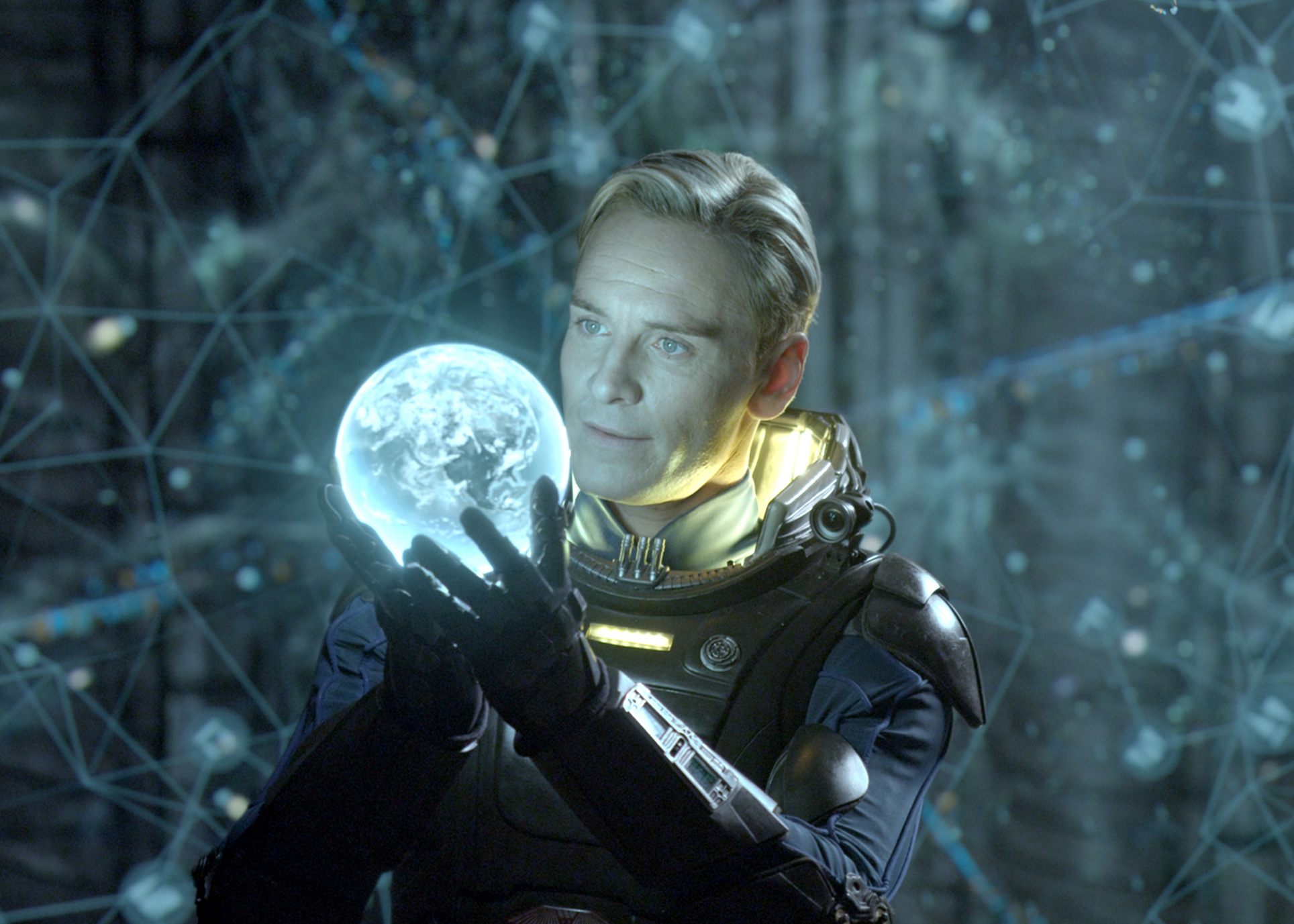
Ultimately, whether a hole needs filling depends on the way it was dug. Either make it “mysterious beyond mystery,” keeping your distance from the audience and inspiring awe; or keep your feet on the ground and plunge the audience into the experience of real life. Holes left unfilled in any other manner will probably invite the audience’s questions. Many viewers felt that Prometheus was too mysterious, so mysterious that it became downright baffling. But in my view, Prometheus’s problem is that it wasn’t mysterious enough. It set out to dig a black hole, but somehow ended up digging only a shallow pit.
Version history
- Zhihu Q&A version: How should the film Prometheus be evaluated?
- Beijing Youth Daily, “Too Mysterious, Yet Still Not Mysterious Enough”:

Collected in
- After revision, the article’s central argument was included in The 24-Frame Psychology Code: The Secrets of Psychology in Film.

Leave a Reply