
The last psychological barrier before games swallow reality.
Today, let’s talk about when games might swallow up the real world. We won’t discuss specific game technology—only the psychological logic of the question.
A Game Industry That Breaks Through the Sky
In recent years, the idea of “games swallowing reality” has grown increasingly popular. Some people worry that the game world is gradually taking over our world. If current trends continue, there will be more and more gamers worldwide, and they’ll spend more and more time gaming.
Sooner or later, they say, this world will become something like The Matrix: everyone on Earth will have a tube down their throat to feed them, and another tube in their head to connect their senses to the game world. Then they can play, play, play 24 hours a day without interruption.
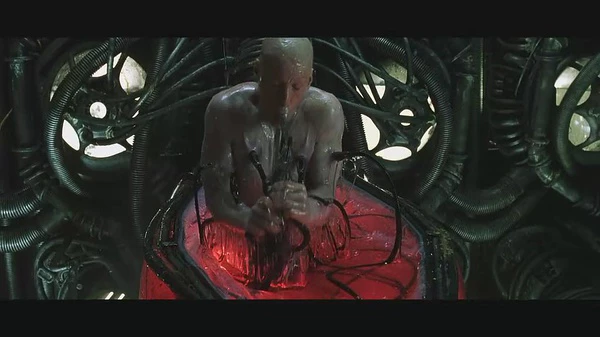
Will that day really come? Some people think it definitely will, because they see young people already spending far too much time on games.
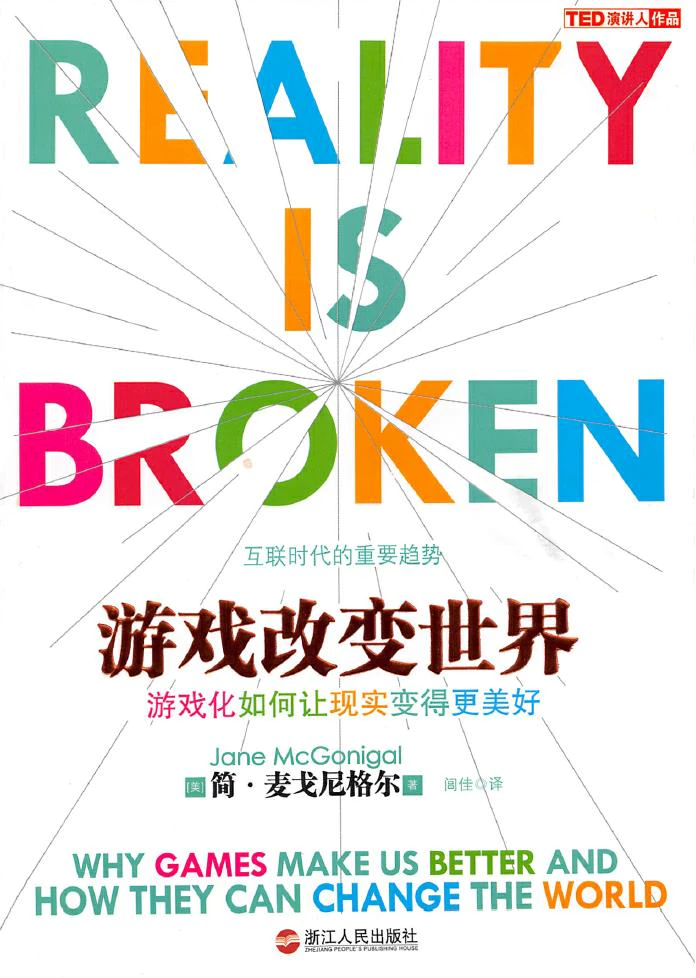
A bestseller called Reality Is Broken estimates that, across the entire world, people spend 3 billion hours playing games every week. By age 21, young Americans have already spent an average of more than 10,000 hours playing various computer and video games.
And the trend seems to be getting more intense. You can see hints of it in the game industry’s increasingly booming sales figures. In recent years, game-industry statistics have repeatedly broken through the sky:
- In 2012, when the FPS game Call of Duty: Black Ops II was released, it brought in $500 million in its first 24 hours.
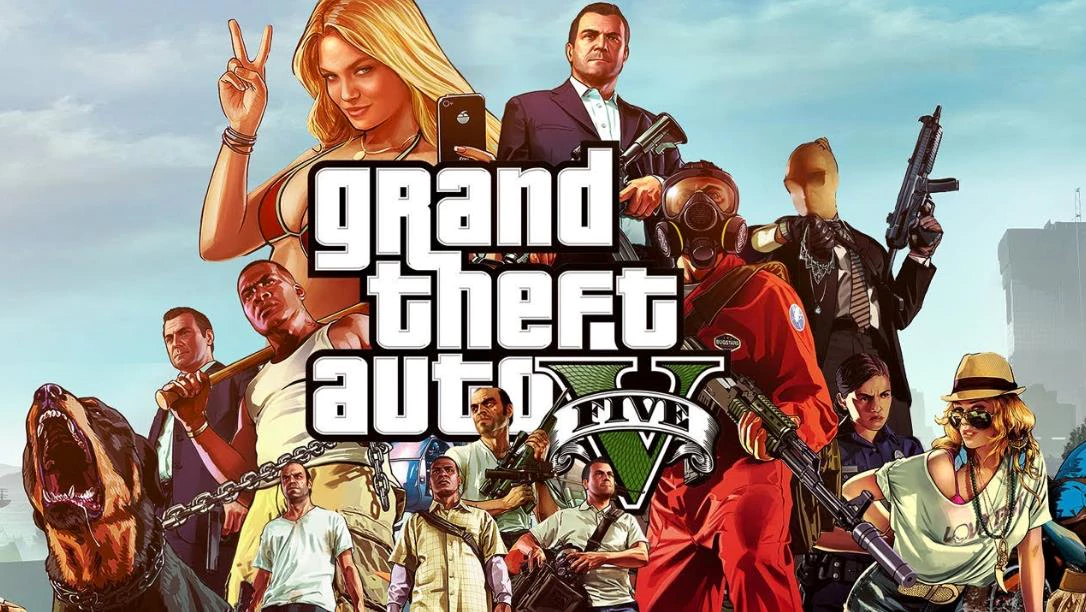
- In 2013, on the day Grand Theft Auto V (GTA5) was released, more than 8,300 game retailers across North America opened at midnight, taking in $800 million on the first day. Then, in just three days, GTA5 surpassed $1 billion in sales. Even the highest-grossing films in history—the earlier Avatar and the later Star Wars: The Force Awakens—probably weren’t in the same league.
- In 2015, Counter-Strike: Global Offensive, already three years old, still sold as many as 5.63 million copies on Steam that year.
- In 2016, just twenty days after Overwatch launched, its sales surpassed ten million copies.

Entertainment Without Equal
How do games create such spectacular numbers?
The key, of course, is entertainment without equal. Compared with other forms of entertainment, games are simply way too much fun!
Whether we’re playing a game, reading a book, or watching a movie, we put ourselves into it. The pleasure an entertainment activity brings is directly related to that immersive experience.
This “immersion” has two levels:
- Feeling
- Emotion
Emotional Immersion
The feeling-level experience is relatively shallow and closer to instinct. Think of the involvement, excitement, and satisfaction you get from watching a car chase or a gunfight in a movie, or controlling a character through a level in a game.
When it comes to this kind of “emotional immersion,” movies usually can’t compete with games. After all, in a game, you can control the character.

Emotional Involvement
The other kind of immersion is emotional involvement. In terms of experience, emotion is deeper and more complex. Generally speaking, it’s things like a character’s fate, the unfolding plot, or the atmosphere of a story that draw you in emotionally.
We used to think that when it came to these higher-level experiences—characters, stories, atmosphere—movies and literature were far above games. Aren’t games just about hitting and killing things?
But actually, even in this respect, games have now caught up with and in some cases surpassed movies by a wide margin.
Recently I played a game called Inside, made by the developer that released the widely acclaimed Limbo in 2016. The atmosphere it creates is so enchanting, it’s completely on the level of the finest art-house cinema.
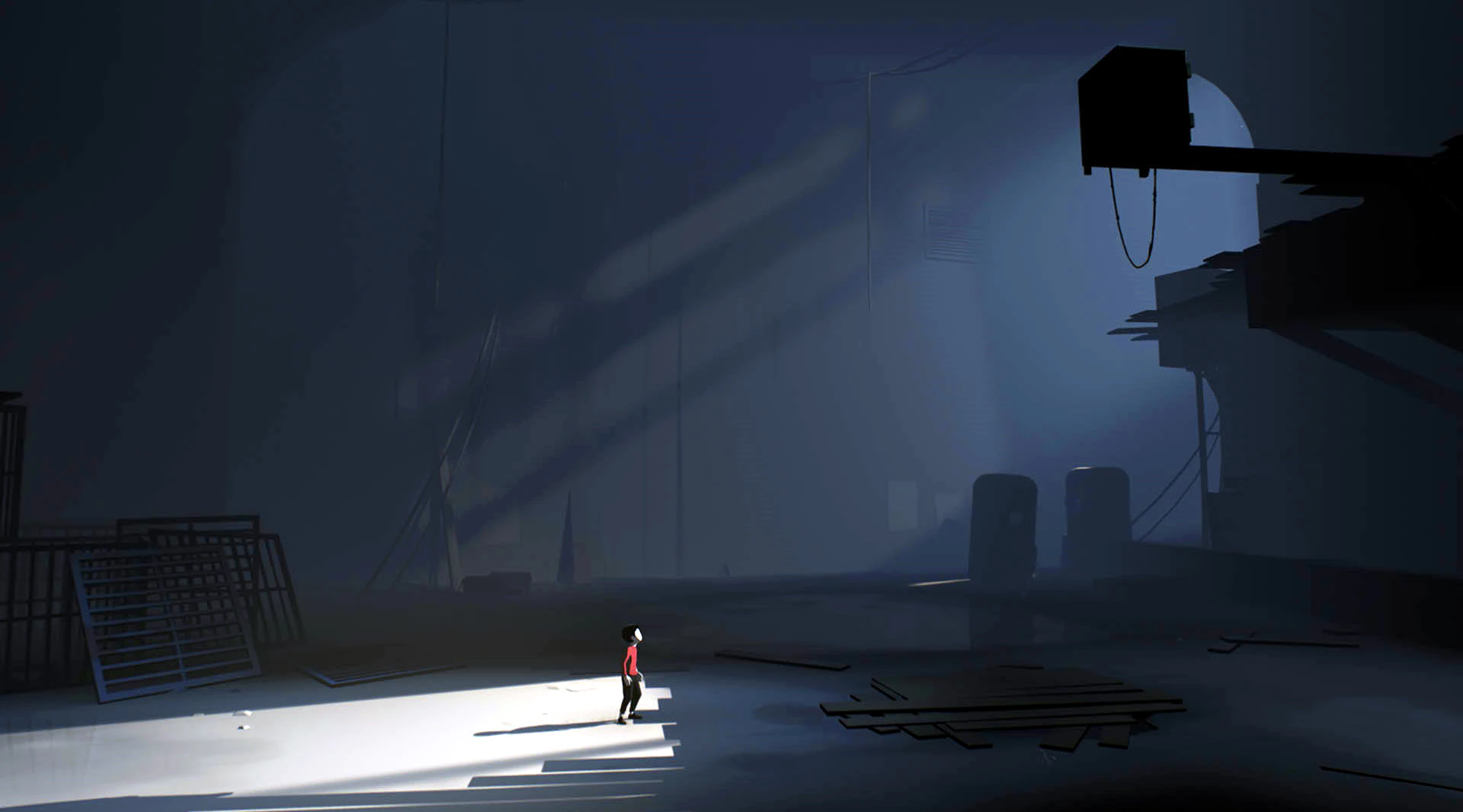
So my own feeling is this: today’s games surpass movies of comparable production scale by at least one level, both in emotional immersion and emotional involvement. The pleasure one truly top-tier movie gives you may now be available from a similarly excellent game.
A Sense of Achievement
What’s more, games have another killer feature: you can gain a sense of achievement at any moment.

In most excellent games, within five minutes of picking them up, you may already have killed a few minor enemies and cleared a few small levels. The sense of achievement just keeps pouring in.
Even in extremely difficult games, such as the famous “suffering” series developed by Hidetaka Miyazaki—like Bloodborne—a clumsy player like me can die a dozen times fighting a minor boss.
But even games difficult enough to make you want to throw your controller are still too easy compared with success in the real world.

Compared with the game world, the real world can fairly be called difficult and boring.
No wonder countless players become addicted to the game world, which is so alluring.
A Barrier on the Road
By this logic, is the trend of games swallowing reality unstoppable?
Not necessarily. In the captivating glow games give off, a shadow surfaces from time to time. Sometimes, this shadow unintentionally cancels out the game’s appeal. And so it becomes a barrier on the road to games swallowing reality.
What is this barrier?
Emptiness
It’s the sense of emptiness almost every gamer may have experienced: the higher you get while playing, the more lost you feel the instant you turn off the console.

Games have everything going for them, except that they’re ultimately empty.
So quite a few players end up leaving games and returning to reality because they can’t stand that sense of emptiness.
As long as players can still feel this emptiness, games cannot completely swallow reality.
Why the Emptiness?
So why does this sense of emptiness arise? What exactly is its psychological mechanism?
I had read quite a bit about this online, but felt none of it got to the root of the issue. Then I came across a book called The Demise of Guys. One perspective in it blew my mind.

The author is Philip Zimbardo, the scientist behind the most famous psychological experiment of all: the Stanford prison experiment.
If I had to name the five most famous living psychologists, I’m pretty sure he’d make the list.

The Demise of Guys sums up his research interests in recent years. Its main target is games, porn, and similar things, which it criticizes for turning young men into shut-ins and making them increasingly useless.
But those criticisms are pretty trite. What really stayed with me was its explanation of why playing games produces a sense of emptiness.
Not Enough People Play Games?
Why do games feel empty? The Demise of Guys says it’s simple: not enough people play them.
Huh? Doesn’t that contradict all those glorious game-industry statistics we just discussed?
Not at all.
Where Is the “Meaning”?
The book presents this idea somewhat messily, so I distilled it myself. The basic logic goes like this:
A sense of emptiness is basically the same as feeling that something has no meaning. The emptiness you feel the instant you shut off the console is really the realization that no matter how much fun you had in the game, no matter how high you leveled up, it has no real-world meaning.

So when do people feel that doing something is meaningful? Actually, one factor is especially simple:
- The more people doing it with you, the more meaningful it feels.
You must be thinking, wait, that doesn’t sound right. By this logic, games should be more meaningful than reality.
When you play an online game, thousands, tens of thousands, or even hundreds of thousands of people may be fighting the same battle—many people doing the same thing together.
In reality, you might work at a small company with only a dozen or so people, and everyone is doing something different. The you in reality is the one who isn’t doing things together with many people.
A Connected Real World
So why is it that when the lonely you in reality accomplishes something, it feels meaningful, while in a game, even though you’re sharing breath and fate with so many people, deep down you feel it has no value?
Because although, on the surface, everyone in reality appears to be doing their own thing, the real world has a shared standard!
This shared standard can measure the value of all those different activities. For example, two of the most vulgar standards:
- Money;
- Social status.
The book puts it this way:
A salesperson’s motivation is certainly different from a dentist’s. But because different professions are economically comparable—that is, because there is a reward system based on money and social status—each industry can still understand what people in other professions are pursuing.
Through financial indicators and social status, people can reach a consensus.
You and I do different things, but we’re actually in the same system and can be compared with each other. Put bluntly: let’s see who makes more money.

An Isolated Game World
But what about games? The book says:
Every video game has its own “economic ecosystem,” just like salespeople and dentists each have their own circles in the real world.
The difference is that the economic circles of the real world are accepted by almost everyone, while a virtual “economic circle” is not recognized beyond the boundaries it constructs for itself. As a result, it has pitifully little that can be exchanged with the outside world.
Therefore, to outsiders, it has no value beyond being something to joke about over tea.
Reality Is Broken says that, added together, the amount of time all the players on Earth spend gaming is extraordinarily large.
But the perspective we just discussed reveals another side: that gaming time can’t actually be added up in full. In reality, it’s divided into separate chunks.
People who play different games are, in reality, completely isolated from one another.

So even if you’re playing the most popular game in the world, its scale still can’t remotely compare with the real world.
The real world is the biggest online game on Earth.
Even if a game has ten million people online at once, so what? The real-world online game has 7 billion people online simultaneously. The biggest game is nothing beside it!

So which feels more meaningful to you: doing something in reality or in a game? Which leaves you with a greater sense of emptiness?
The Game World’s “Universal Yardstick”
All right, now we can answer the question raised at the beginning: when will games swallow reality?
It should be the day the game world invents a universal yardstick analogous to “money” in the real world.
So far, this universal yardstick exists in only a small number of games. In some competitive games, for example, placing well in a tournament can genuinely earn you prize money in the real world.
I don’t think professional players of these competitive games experience the same sense of emptiness as ordinary players.
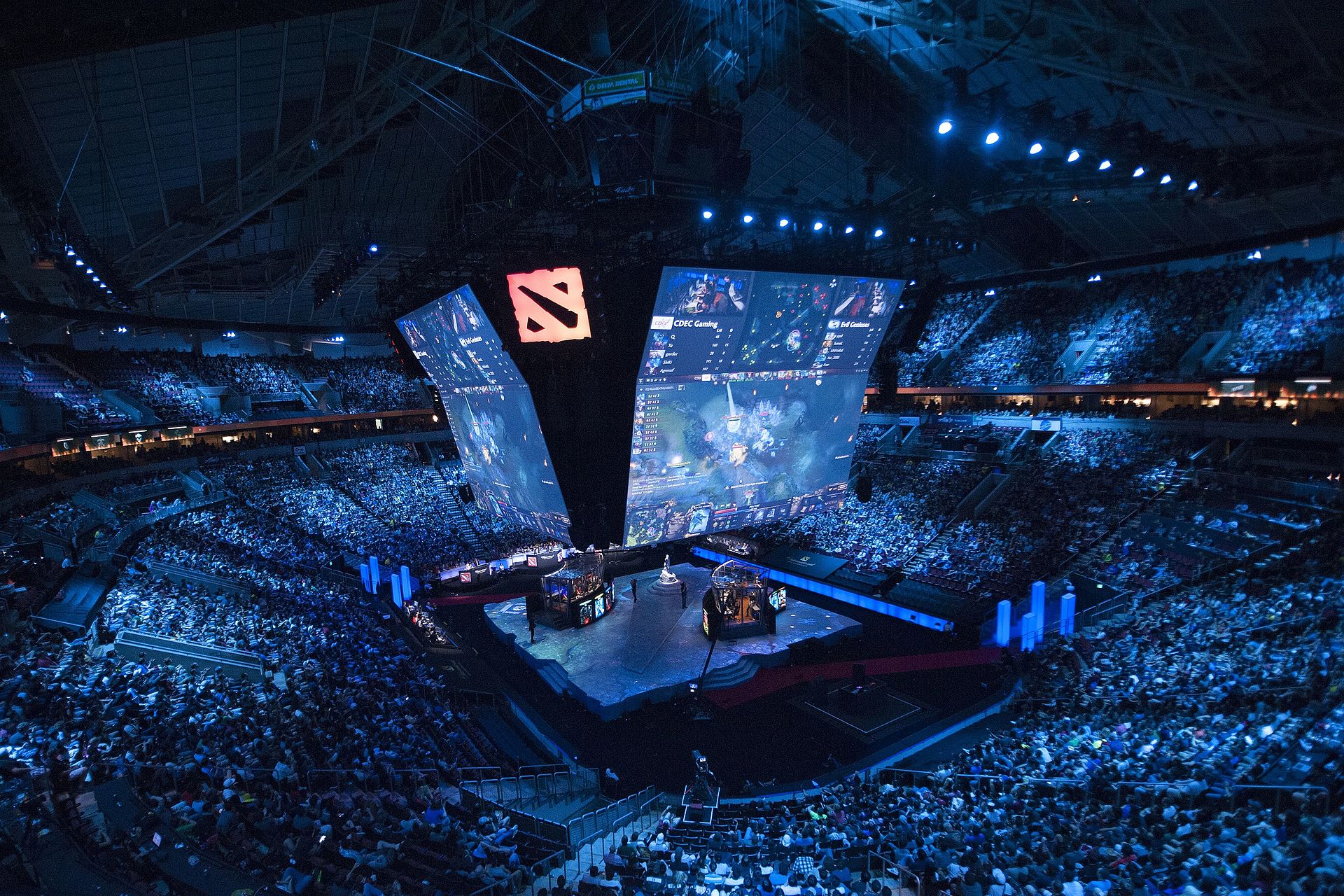
But this is still only a tiny minority of players in a tiny minority of game genres—and the standard of measurement is still that key in the real world.
A Shared Player Community
I don’t know whether there really will be a universal in-game currency in the future, but once one is invented, the entire game world will be connected.
By then, every game’s achievements could be compared with one another, and all the players in the world would form a shared player community.
That way, playing games would no longer be something pointless that leaves people feeling strangely empty, because tens of millions of people would be doing the same thing as you.

The day when the game world has a unified system of measurement is the day games officially begin to swallow the world.
After that, the world will be hell in the eyes of anti-gamers, and paradise in the eyes of game players.
If old Granddad Hu Ba-duo were still alive then, the thing he’d have to worry about wouldn’t be whether gamers were going to say game over—it would be whether the entire real world was going to hear game over.
1. Two Fiercely Opposed Books About Games

When it comes to attitudes toward games, Games Change the World and The Decline of Men are two books that take sharply opposing positions.
The former treats games like a flower, while the latter agonizes over them, arguing that games are one of the chief culprits behind the decline of young people.
Reading them together is quite meaningful. Of course, the former wins hands down in terms of structure and readability.
2. The Scientist Whose Reputation Didn’t Survive
I don’t recommend The Decline of Men.
Although quite a few of the book’s conclusions are logically plausible, they may not have much reliable evidence behind them.
The author, Jordan Peterson, was once a scholar at a leading university, yet he cites very little solid scientific data when making his case in this book. It is, in a way, a case of a reputation failing to make it to the finish line.
Leave a Reply